
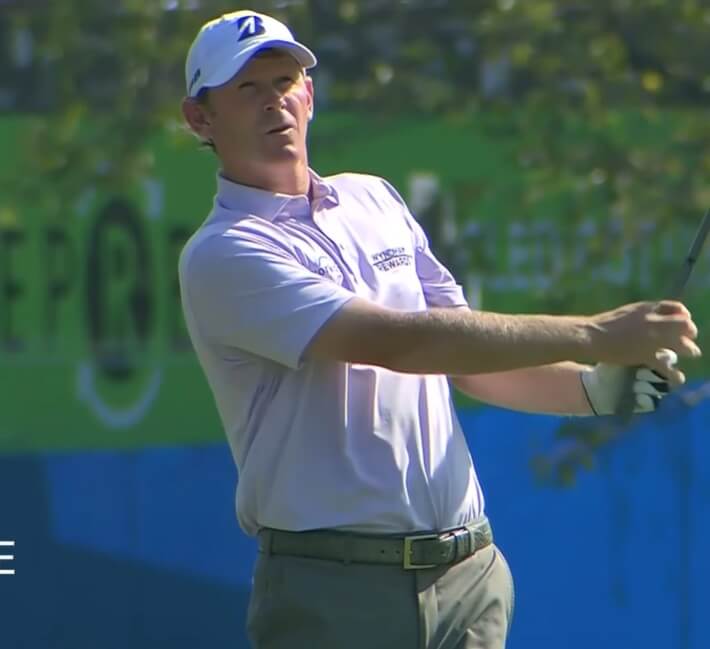
There’s a particular kind of decline in professional sport that the public rarely gets to see up close. It’s not the sudden knee blowout caught on camera or the tearful retirement press conference. It’s the slow, invisible erosion a player showing up week after week, grinding through tournaments with results that don’t match the talent everyone remembers, while something nobody quite understands is eating away at him from the inside. That’s the story of Brandt Snedeker’s illness, and it lasted far longer than most people realized.
Go back to 2012 and Snedeker was one of those golfers who made the game look almost unfairly simple. He’d won the FedEx Cup, collected a ten million dollar cheque, climbed to fourth in the world, and was playing Ryder Cup golf for his country. He’d burst onto the PGA Tour five years earlier like someone who belonged there immediately 23 cuts made in 29 events as a rookie, six top 10 finishes, and a Wyndham Championship trophy. By the time he fired a 59 in the first round of that same event in 2018, his ninth career win, Snedeker seemed like a golfer who could keep contending well into his forties. It’s possible that’s what he believed too.
| Detail | Information |
|---|---|
| Full Name | Brandt Elideah Snedeker |
| Date of Birth | December 8, 1980 |
| Birthplace | Nashville, Tennessee, USA |
| Nationality | American |
| Sport | Professional Golf |
| Professional Since | 2004 |
| PGA Tour Wins | 9 |
| Notable Victory | 2012 FedEx Cup Champion (US$10 million) |
| Highest World Ranking | No. 4 |
| Ryder Cup Appearances | 2 (2012, 2016) |
| Diagnosed Condition | Manubrium Joint Instability |
| Surgery Date | December 2022 |
| Surgeon | Dr. Burton Elrod, Nashville |
Then the results just stopped. His world ranking fell from the top five to somewhere below 700. One top 10 finish in 2019. Two the next year. Then nothing at all for two full seasons. The golf world does this thing where it quietly moves on when a player fades new names arrive, storylines shift, and someone like Snedeker just slips off the leaderboards without much explanation. What nobody on the outside understood was that Brandt Snedeker was playing through a condition so rare that only about a dozen people in the world had ever been diagnosed with it.
The trouble had actually started years before the decline became obvious. In 2009, he missed seven consecutive tournaments with what was described vaguely as a rib injury. Two years later came hip surgery. Then another rib problem forced him out of the 2013 WGC Matchplay. Doctors eventually identified something called low bone turnover, which required daily injections to build bone mass.
But the real culprit, the thing that would shadow his career for nearly seven years, was an unstable manubrium joint the upper portion of the sternum, essentially wobbling loose without any traumatic cause. No car accident, no collision, no fall. Just the repeated act of hitting a golf ball, thousands and thousands of times, slowly destabilising his chest.
There’s something quietly devastating about that. A man’s livelihood and passion undone not by a single dramatic moment but by the accumulated force of doing the thing he does best. Snedeker himself seemed to connect the dots reluctantly, suggesting he assumed the damage came from repeated trauma of hitting a golf ball. It’s the kind of injury that doesn’t photograph well, doesn’t draw gasps from a crowd, and doesn’t generate the sympathy that a torn ligament might.
But it consumed his life. He took a cocktail of Tylenol, Advil, and steroids just to make it through rounds. For six years, he flew to South America for stem cell treatments, chasing relief that never quite arrived. Watching the timeline of those trips year after year, continent to continent it’s hard not to feel the weight of someone running out of options.
The surgeon who eventually agreed to operate, Dr. Burton Elrod out of Nashville, had actually performed a similar procedure once before, back in 2004, on the late NFL quarterback Steve McNair. But Elrod had sworn he’d never do it again. The risk of infection was too high. Snedeker talked him into it anyway. There’s a certain stubbornness in that decision, the kind that separates professional athletes from the rest of us. Most people, hearing a surgeon say never again, would accept it. Snedeker heard it as a starting point for negotiation.
The surgery itself sounds almost medieval in its directness. Elrod removed a bone the size of a thumb from Snedeker’s hip, split the sternum open, inserted the bone graft into both halves, and essentially reconstructed the joint. Snedeker described it with a disarming casualness kind of like a Lego snapping back into place but spent the next four weeks immobilised in a recliner, feeling like he’d been hit by a truck. For sixteen weeks, he did almost nothing. No golf, no range sessions, nothing. Just sitting still and hoping the bone would fuse.
By April 2023, he was hitting balls again, pain free for the first time in years. He returned to competition at the Memorial Tournament in June, shooting rounds in the low to mid 70s and finishing tied 41st. Not the kind of result that makes headlines, but for a man who genuinely believed he might never play again, it was something closer to a private miracle. A first round 64 at the 3M Open a few weeks later proved the talent was still in there, buried under years of compensating for pain and rust from months away from competition.
The results since haven’t been spectacular, and there’s an honest uncertainty about where Snedeker’s career goes from here. He entered the 2024 season on a Major Medical Extension, needing a specific number of FedEx Cup points in a limited number of starts a target that looked increasingly unlikely as missed cuts piled up. He still has options. His career earnings place him among the top 25 all time on the PGA Tour money list, which grants him a one time exemption. Sponsor invitations and past champion status can fill in some gaps. But the path back to consistent contention, at 43, after everything his body has been through, remains genuinely unclear.
What isn’t uncertain is Snedeker’s own belief. I still know how to do it, he said. I’m not an idiot. I did this one time, I can do it again. There’s a defiance in that quote, the same stubbornness that convinced a reluctant surgeon to pick up a scalpel. Whether it translates into wins, into another chapter on the PGA Tour, or simply into a man playing the game he loves without wincing on every backswing that part is still being written. But Brandt Snedeker’s illness, as rare and punishing as it was, didn’t get the ending it seemed to be building toward. Not yet, anyway.
i) https://www.insidegolf.com.au/news/a-golfing-legend-fighting-back/
ii) https://www.golfdigest.com/story/brandt-snedeker-experimental-surgery-sounds-like-the-most-painful-thing-ever-pga-tour
iii) https://www.sports.yahoo.com/brandt-snedeker-returns-to-pga-tour-after-long-sternum-issue-experimental-surgery-120047779.html
iv) https://www.nbcsports.com/golf/news/bone-condition-source-recurring-injuries-snedeker