
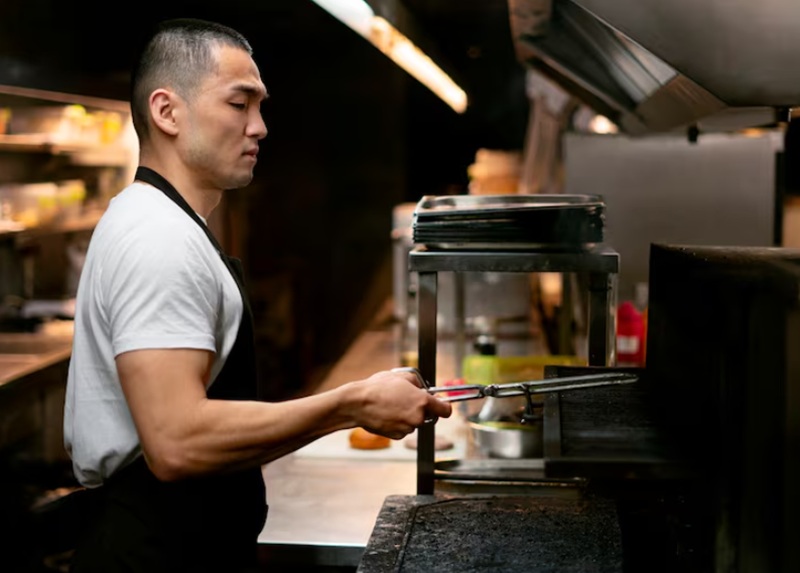
It’s likely that the deep fat fryer is cold when you walk into a gastro pub kitchen on a Tuesday during lunch. Not damaged. Not vacant. Sitting there as a sort of testament to what was once commonplace, just turned off. Instead, the chef is using induction hobs to prepare a seasonal vegetable dish that wasn’t on the menu the previous year. It’s a minor feature that is often overlooked. Scenes like this, however, are subtly contributing to a much bigger change in what pub kitchens are willing and able to cook across Britain.
Since the post pandemic price spike, energy expenses have been crippling the hospitality industry. Although volatility has somewhat decreased, 2026 has not provided the respite that many operators had hoped for. Prices for wholesale gas and electricity are still far higher than they were before 2020, and since April 2026, non commodity charges such as standing charges, network fees, and system costs that appear regardless of the actual amount of energy used have increased even further.
| Category | Details |
|---|---|
| Sector | UK Pub & Hospitality Industry |
| Key Issue | Rising energy costs reshaping pub kitchen operations and menus |
| Typical Monthly Bills (Gastro Pub) | £2,300 – £4,300 (gas + electricity combined) |
| Kitchen Energy Share | 20–35% of total pub energy consumption |
| Electricity Unit Rate (2026)** | 21–24p per kWh |
| Gas Unit Rate (2026)** | 6.5–8.2p per kWh |
| Annual Savings Possible | Up to £2,500 per site with efficiency measures |
| Regulatory Deadline | EPC Band C required from April 2027; Band B by 2030 |
| Non-Compliance Fine | Up to £150,000 |
| Industry Bodies | BBPA, CAMRA, SIBA, CGA by NIQ |
The total monthly expenses for a gastropub with a complete kitchen usually fall between £2,300 and £4,300. That amount might rise above £6,000 for venues with accommodation. Depending on how hard it’s working, the kitchen itself may require between one fifth and one third of the energy used on the premises. That’s not even accounting for cellar cooling, which silently consumes an additional several hundred pounds each month.
It’s likely that diners haven’t yet noticed the full impact of this change. Menus still have a similar general appearance. There are still hamburgers. Sunday roasts continue to be popular. The dishes that have subtly vanished the slow braised meals that required eight hours in the oven, the battered sides that required maintaining a fryer’s temperature for an entire service tell a tale. Chefs are managing energy expenses in ways that are never discussed with the diners. On quieter services, oven temperatures decreased by ten or twenty degrees. Preheating was put back as near to service as feasible. Electric fryers have taken the role of gas fryers in situations where a fixed price electricity contract makes the cost at least predictable, if not affordable.
There’s a feeling that the industry has entered a phase of silent menu engineering, which no one is especially keen to promote. On chalkboards, operators are not posting notices that read, “fewer chips because gas is expensive”. Rather, the changes are subtle, such as a move toward quicker, lighter preparations that require less extraction energy.
Sharers and smaller entry level dishes that preserve the appearance of variety without increasing the workload in the kitchen; and the rotation of core ingredients across several dishes so that nothing needs to be prepared especially for one item that might not even sell. From the perspective of the client, portion sizes have been evaluated in a way that seems to finally address portion creep. It’s something a little more specialized from the operator’s perspective.
Though slowly, the equipment image is also changing. Because induction hobs deliver heat directly to the pan rather than heating the surrounding air, they are becoming the preferred option when anything needs to be replaced. There is a noticeable difference in efficiency in a busy kitchen. Although it’s still uncertain if electrifying pub kitchens on a large scale will be financially feasible for the majority of operators because to the high upfront capital expenditures and lengthy payback periods.
The trend appears to be heading in the right direction. Voltage optimization devices implemented at some venues have resulted in utilization reductions of seven to fifteen percent without any discernible operational changes. By combining multi site energy contracts or changing suppliers more frequently than they would have in the past, others have been able to obtain cheaper rates.
It’s difficult to ignore the fact that the regulatory aspect is putting more pressure on this as it develops. In England, all commercial buildings must currently possess current Energy Performance Certificates, and the minimum ratings are getting closer to Band C starting in April 2027 and Band B by 2030. Fines for noncompliance can reach £150,000, which would completely shut down a smaller independent business. In a way that pure energy cost pressure hasn’t always been able to do, that deadline is focusing minds.
Additionally, the behavioral alterations are mounting. These days, staff procedures usually include daily checklists for shutting off heat lamps, extraction fans, and hobs as soon as they’re not in use. To keep freezers operating efficiently, they are defrosted on time.
Instead of starting complete central heating systems, log burners provide shoulder season heating. To benefit from price reductions, some operators place smaller, more regular orders for heating oil. None of this is dramatic when considered separately. When taken as a whole, it’s yielding quantifiable effects. Some venues have reported reducing overnight energy consumption by over sixty percent, with yearly savings close to £2,500 per location.
The kitchen at the bar has always changed. It took in the trend toward fresh foods, the increase in nutritional demands, and the need for traceability and provenance. With the same practical robustness, it is now adjusting to energy economics. The fryer is still a part of British pub culture. It is working fewer hours than in the past, and the menu has subtly changed to reflect this.
i) https://www.morningadvertiser.co.uk/Article/2023/01/10/How-are-food-led-pubs-dealing-with-the-energy-crisis/
ii) https://www.energycosts.co.uk/sectors/pub
iii) https://emissis.com/2026/02/09/navigating-the-current-uk-energy-landscape-what-pubs-restaurants-must-know-in-2026/
iv) https://www.researchgate.net/publication/291018504_Energy_benchmarking_in_UK_commercial_kitchens