
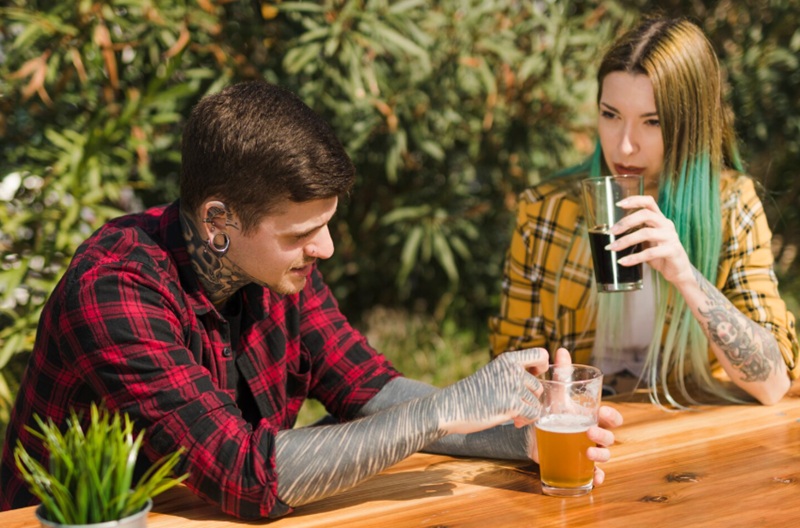
If you spend any time in bars in British cities around half past five on a weekday, you’ll notice something. The tables start to fill up early. That image belongs in a different era, not with office workers loosening their ties and placing rounds as quickly as the kitchen can deliver chips. Rather, a younger group shows up with reservation confirmations on their phones, glides into seats while the light is still decent, and places an order for a photo worthy item. Usually a spritz. An Espresso Martini on occasion. They do not intend to shut down the establishment. They intend to return home by 10 o’clock.
Quietly, this is one of the biggest changes in UK hospitality in recent years. It was always a little simplistic to assume that Gen Z was just choosing not to participate in drinking culture. The bigger picture is more intriguing: this generation has changed the course of history rather than giving up on bars and pubs.
| Category | Detail |
|---|---|
| Topic | Gen Z and early evening drinking culture in the UK |
| Generation in Focus | Gen Z (born approx. 1997–2012; 18–27 in 2025) |
| Key Market Size | UK pub and bar market forecast at £24.1bn (2025), rising to £25.7bn by 2028 |
| Gen Z On-Trade Share | 20% of population, 28% of all on-premise visits (CGA by NIQ) |
| Gen Z Monthly On-Trade Spend | ~£98 per month vs. £102 national average |
| Average UK Dinner Booking Time | 6.12pm (Zonal / GO Technology, 2025) |
| Bookings Before 6pm | Rose from 46% (2024) to 48% (Q1 2025) |
| Gen Z Abstention Rate | 25% of 16–24s had not drunk alcohol in the past year (NHS Health Survey 2022) |
| Cocktail Preference | 50% of 18–29s prefer cocktails over Champagne to celebrate |
| Nightclub Decline | 47% of respondents going to nightclubs less often (Bacardi 2026 survey) |
The average dinner reservation time in the UK is currently 6.12 p.m and the percentage of reservations made between noon and six o’clock increased from 46% in 2024 to 48% in the first quarter of 2025, according to statistics from Zonal and CGA referenced in trade research. After 9 p.m., very few people make reservations. For an increasing percentage of younger consumers, the night out now peaks during what was formerly known as the shoulder period.
The arguments are persuasive because they are sufficiently realistic. 37% of stated reasons for prior trips included convenience. Safety was recorded at 29%. 18% use public transportation. Finishing work, meeting friends, securing a table at a pub that still feels airy and comfortable, eating something, choosing one or two drinks instead of grabbing them from a line, and taking a fifteen minute train ride home are all nearly self explanatory. It sounds nothing like deprivation. It seems like a more enjoyable evening than the other option.
What consumers are ordering and why has changed in tandem with the timing. According to Bacardi’s UK consumer research for its 2026 cocktail trends report, 47% of respondents were going to nightclubs less frequently, while 37% of Gen Z respondents and 42% of millennials consistently chose early evenings out. Of those between the ages of 18 and 29, half indicated they would like to celebrate a special occasion with a cocktail rather than Champagne. Thirty two percent reported consuming more drinks than wine. These are the choices of a generation that has formed certain interests and is willing to spend money on them judiciously, not a generation that is turning away from alcohol.
This could be misinterpreted, which would be problematic from a business standpoint. According to a BMJ study of the NHS Health Survey for England 2022, the greatest abstention rate among adult age groups was 25% of those between the ages of 16 and 24 who had not had alcohol in the previous year. That is a true statistic that is worth clinging to.
Despite making up only 20% of the population, Gen Z accounts for 28% of all on premise visits, and 49% of them drink out at third space venues at least once a week, according to CGA by NIQ statistics. Both of these statements are accurate. This generation includes non drinkers, infrequent drinkers, cocktail aficionados, low ABV devotees, and those who can handle a fast paced Saturday night just fine. It is expanding since the early evening is ideal for multiple groups at once.
As a result, the drink itself has had to put forth more effort. It seems that the basic pint no longer has the same social significance as it did for younger drinkers. A spritz must to taste nice, look good enough to appear on a shared story, sit well on little plates, and conclude at a reasonable hour so that no one will regret it the following morning.
According to panel data from Lumina Intelligence, alcohol free beers increased by 38% and alcohol free drinks by 27% annually, while both spirits and cocktails saw increases in their share of occasions. Someone who is driving, someone who is training, and someone who wants a beverage might all be in the group arriving at six, and a good bar accommodates all three without making anyone feel special.
Slowly, operators are adjusting. Small plate menus, happy hour hours, rosters, and app based reservation systems are all moving toward the earlier time frame. A dark, noisy late night establishment does not feel approachable at six, whereas bars that blur the boundaries between cafe, restaurant, and social area do. This trend in venue design is also evident. A portion of this is structural reservations lessen the turmoil that used to accompany arriving on a busy Friday and hoping for room and some of it is aesthetic better lighting, less music at that hour, and more table space.
Late night trade won’t be completely replaced by early evening, and it probably shouldn’t attempt. Instead of just drinking less, it offers a second occasion, a more organized and less price resistant transaction, and a means of catering to a generation that is drinking differently. The gap before the actual evening started used to be six o’clock. It now marks the beginning of a pleasant evening for an increasing number of young drinkers in the UK.
i) https://www.morningadvertiser.co.uk/Article/2025/10/27/gen-z-drinking-less-or-just-differently-new-data-reshapes-on-trade-assumptions/
ii) https://www.masterofmalt.com/blog/post/drinks-trends-for-2026/
iii) https://www.thedrinksbusiness.com/2025/08/gen-z-drives-uk-towards-6pm-dinners-with-average-booking-time-now-6-12pm/
iv) https://retailtimes.co.uk/gen-z-swaps-coffee-for-cocktails-according-to-bacardi-new-2026-report/