
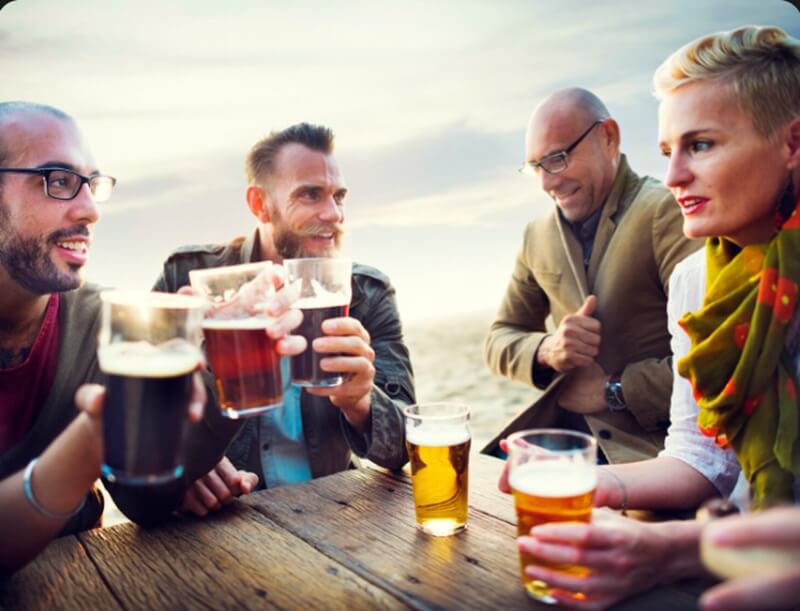
At a big beer festival, the noise is the first thing you notice. Volunteers are drawing pint after pint of cask ale while someone somewhere yells that the last barrel of a popular pale ale is running dry. Hundreds, sometimes thousands, of voices reverberate throughout the vast halls, plastic festival glasses clinking together. This has been the hallmark of British beer culture for many years. However, there is a subtle feeling that something is changing these days.
The real ale movement once relied heavily on traditional beer festivals, particularly the big national ones. Massive audiences eager to sample hundreds of beers in one afternoon flocked to events such as the Great British Beer Festival. Tasting glasses are placed on tables. Stuffed into back pockets are folded festival programs. The excitement of finding a brewery that was unknown five years ago. For beer lovers, it was like a pilgrimage however, attending some of these gatherings now creates an awkward question. Are they just growing too large for their own benefit?
| Key Information | Details |
|---|---|
| Organization | Campaign for Real Ale (CAMRA) |
| Founded | 1971 |
| Headquarters | St Albans, Hertfordshire, United Kingdom |
| Known For | Promoting real ale, pubs, and traditional beer culture |
| Major Event | Great British Beer Festival |
| Estimated Membership | Around 145,000 members |
| Industry Focus | Real ale, pubs, beer festivals |
| Reference Website | https://www.camra.org.uk |
It can feel more like traversing an airport terminal on a bank holiday weekend than a celebration when you stroll through one of the biggest festivals. lengthy strolls between bars. Several lists of unknown breweries. After reading the description of the sixteenth pale ale, decision fatigue started to set in. People are sitting calmly with their buddies somewhere in the middle of it all, sipping a beer they choose almost at random. Yes, it is enjoyable. However, it can sometimes feel strangely impersonal.
On the other hand, a distinct type of beer event the pub festival has been subtly gaining popularity throughout the United Kingdom. These are more intimate get togethers where a pub invites guest breweries to use its taps for a weekend, possibly setting up a grill outdoors or adding a few more barrels in the garden. Instead of three hundred beers, there might only be twenty or thirty. Oddly enough, though, a lot of drinkers appear to prefer these.
These pub based gatherings have a familiarity that big festivals sometimes find difficult to replicate. The landlord converses with regulars. On rare occasions, brewers appear in person, leaning on the bar to tell the tale of a new stout. Frequently lasting longer than the beverages themselves, conversations spill over wooden tables into the beer garden. It’s difficult to ignore how inherently sociable these smaller events feel.
Naturally, traditional beer festivals were always intended to be social events. Pubs are communal hubs that should be protected, according to CAMRA, the organization that created many of them. However, the experience may inadvertently become more transactional when thousands of people flood show halls. Individuals come with a list of beers they want to drink and cross them off one by one. The pub festival operates in a unique way. No one disputes the importance of the beer, but it becomes a part of the surroundings rather than the main reason for being there.
This change is also due to pragmatic factors. The cost of hosting a large scale beer festival has gone up. Refrigeration, glassware logistics, volunteer organizing, and venue rental are all expensive. Due to growing expenses and unpredictable attendance, some of Britain’s biggest events have recently had to be canceled or moved. The economics no longer feel as trustworthy as they previously did, organizers have quietly acknowledged.
Pubs are experimenting in the meantime. Micro festivals and tap takeovers are now practically commonplace in places like Brighton, Oxford, and London. For a weekend, a tavern may invite four breweries to pour. Another organizes a beer garden festival featuring food vendors and live music. An entire neighborhood can become a casual beer crawl when the gathering spreads to other adjacent bars. Nothing about this is organized with the grandeur of a national celebration. However, the ambience may seem more genuine.
There’s a feeling that this is how beer culture naturally wants to function when you stand outside one of these events on a nice evening and observe people moving between pubs with half finished glasses and passionate talks. It is woven into the daily rhythm of local life rather than being staged in enormous exhibition venues. Traditional celebrations won’t be going away anytime soon, of course. They continue to play a huge role in the beer industry. They still provide visibility for breweries. Brewers all throughout the nation continue to be interested in contests like Champion Beer of Britain. Additionally, the sheer magnitude of a large festival can still be exhilarating to novices.
Younger drinkers appear to be more interested in environment than in lengthy sampling sessions, particularly those who have been lured into the craft beer movement during the previous ten years. Of course they want nice beer. However, they also prefer environments that are lively rather than structured, music, and conversation. That is delivered almost readily during pub festivals.It’s hard to overlook the trend that has emerged when seeing how Britain’s beer scene has changed over the last 20 years. The present real ale movement was created by beer festivals. They revived traditional pub culture and exposed patrons to new breweries.
In a somewhat ironic turn of events, the bars themselves might be returning home with the festival concept. It’s still uncertain if this will completely replace conventional beer festivals. However, the momentum is apparent. It’s also difficult to ignore the possibility that beer festivities in the future may be a little smaller and much closer to the bar when a bustling Saturday night fills a pub garden with people chuckling over freshly poured pints.