
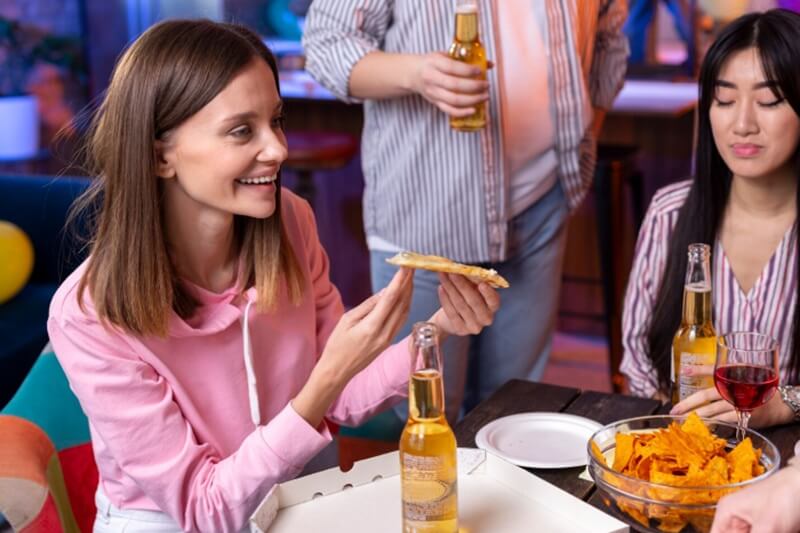
There’s a certain type of food that sticks with you. Not because a micro herb was expertly balanced on top nor because the sauce was applied in three delicate circles around the plate but rather because it tasted just right arrived without fanfare and vanished before you even gave it a second thought. Most of the time that dinner took place in a tavern.
On a rainy Tuesday afternoon you can get the shepherd’s pie in practically any good British pub with a low ceiling a fruit machine blinking in the corner and a fire that has been going since October. It will be served in a ceramic dish with cracked and browned mashed potatoes and slightly scorched borders. It will not be lovely. But that will be just what you required. The restaurant industry has spent decades attempting to overcome this conflict between appearance and customer happiness while the pub has quietly declined to participate at all.
| Category | Details |
|---|---|
| Topic | Pub Culture, Food Presentation & British Pub History |
| Key Establishment Referenced | The Eagle, Clerkenwell, London — first gastropub (est. 1991) |
| Founded By | David Eyre (chef) and Mike Belben (restaurant manager) |
| Regulatory Body | Campaign for Real Ale (CAMRA) |
| Key Historical Legislation | Beerhouse Act of 1830 |
| First Michelin-Starred Pub | The Stagg Inn, Titley, Herefordshire (2001) |
| Cultural Significance | Samuel Pepys described the pub as “the heart of England” (17th century) |
| Core Pub Definition | Open to public, serves draught beer/cider, indoor non-dining area, bar purchasing available |
| Modern Relevance | Pub food now an essential economic element in British pub survival |
| Reference Website | https://www.camra.org.uk |
Most people are unaware of how long this disregard for aesthetics has existed. In the eleventh century British alehouses provided travelers with simple food sustenance not spectacle. The public house which finally superseded the alehouse in common parlance by the middle of the 17th century remained primarily focused on feeding people rather than impressing them. By the 16th century taverns had developed to serve wealthy merchants with better wine and finer meal. In the 19th century a lot of pubs had food stands outside thus the institutions themselves had no motivation to create sophisticated kitchens or presentation standards. The plate was never the center of the pub’s culture. The pint the company and the warmth were its foundations.
On the other hand restaurants have always faced a distinct type of strain. Based on Escoffier’s brigade system from the 19th century fine dining kitchens were almost military organized around the notion that each plate that left the kitchen made a statement. The entire apparatus including sauciers garnish stations and expeditors who checked visual consistency before a dish moved even a foot was in place in part to make sure food looked right. Even a mid range restaurant in a small British town could plate a chicken breast on a smear of something with a sprig of thyme set at a meticulous angle as a result of this practice which permeated casual eating over the years. This may have begun as a real craft. It might also have developed into a habit disguised as a principle.
This division was intended to be addressed by the gastropub movement which got off in earnest when David Eyre and Mike Belben took over The Eagle in Clerkenwell in 1991. The concept was simple: remove the white tablecloths maintain reasonable costs and provide restaurant caliber cuisine into a pub atmosphere. It was quite effective for a time. The setting remained distinctly publike and the cuisine was truly delicious and simple. But after ten years something began to stray. Standing room gave way to tables. The waiters guided you to your seat. Lists of wines got thicker. By the time The Stagg Inn in Herefordshire became the first pub to receive a Michelin star in 2001 the issue of whether any of this was still truly a pub experience had largely gone unanswered. Or had something that had always flourished without it started to be swallowed by presentation the language of restaurants?
The best pub dinners don’t seem to withstand the type of scrutiny that eateries encourage. There is no intrinsic difference between a steak and ale pie served in a little chipped dish at a wayside pub in Shropshire and the identical pie served in a gastropub with architectural plating and pickled shallot garnish. If the cooking is done correctly the flavors may be the same. However the presentation modifies expectations and altered expectations completely alter the experience. Something seems off at a restaurant when a garnish has wilted or a sauce has spread unevenly. Nobody notices and more importantly nobody cares at a pub. It is not a shortcoming to be free from eye examination. In fact it may be a form of honesty.
What ends up on the table has always been influenced by the practical reality of bar kitchens. Pubs were able to provide stews pies and lasagnes without a full brigade of cooks because to the widespread use of microwave ovens and frozen meals throughout the 1970s and 1980s. Although this invention was sometimes ridiculed it really increased what regular pubs could serve to patrons. These foods were not being arranged on heated plates with squeeze bottles by anyone. The meal was hot and substantial. Every now and again the landlady would make a hot pie on Sundays. At best the presentation was functional. For those who were consuming it the enjoyment was total.
It’s difficult to ignore how the gastropub movement has tugged in opposing directions at different stages of its development. Twenty years after The Eagle debuted in 2011 the Good Food Guide proclaimed the gastropub extinct and it wasn’t totally incorrect. Pub supply businesses have followed the trend offering chain pubs complex frozen meals that might be considered gastropub style on a menu without any of the original aim. The term was taken over by marketing used to describe prepared foods from the grocery store and stretched until it was nearly meaningless. The straightforward fact that the pub had always known that comfort is more important than composition and context is more important than presentation was lost in that drift.
The spectrum is broad now. There are still bars at one end that serve pickled eggs chips and maybe a microwaved meal. On the other hand there are places that provide seasonal menus use products that are procured locally and make food that truly rivals that of a decent restaurant. Both of them are located within what CAMRA still considers as a pub which is a public space that serves draught beer without food and has at least one interior space that isn’t used for eating. That final condition is subtly significant. By definition the bar has always been a place where eating is optional incidental and unimportant. The restaurant is there to serve you. The bar is there to greet you. When food does occur it does so amid that wider warmth rather than as the focal point of a planned encounter.
A pub meal’s success is not determined by whether the gravy is shiny or somewhat lumpy whether the shepherd’s pie looks lovely in its dish or whether the chips arrive in a little metal basket or a simple bowl. When it fits the space the situation and the group it works. Restaurants have historically struggled to fulfill that goal in part because they have spent so much time evaluating success using wholly other standards. Given its lengthy and flawed history the pub never gave that measurement any thought. Depending on the day and what you’re craving that may be its best quality.
i) https://www.trustinns.co.uk/the-evolution-of-british-pub-food/
ii) https://www.diffordsguide.com/encyclopedia/495/bars/british-pub-food-and-the-rise-of-the-gastro-pub
iii) https://fsm.how/accommodation-facilities/guide-different-types-food-service/
iv) https://grubbrr.com/types-of-kitchens/