
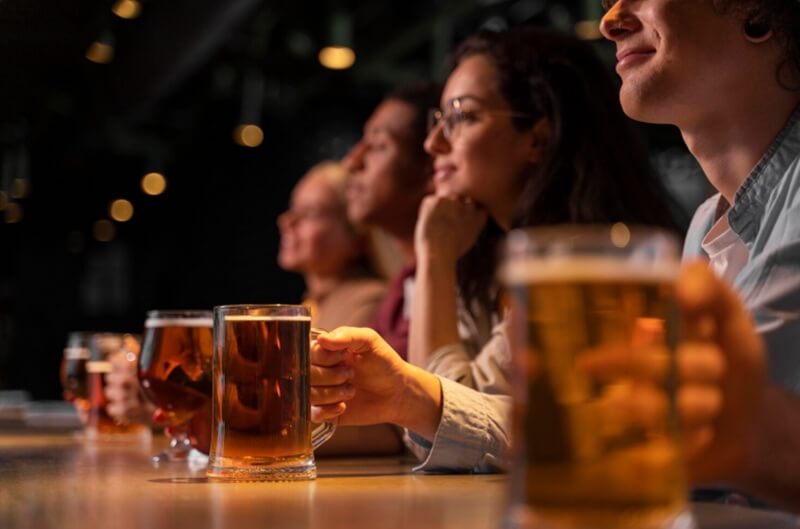
But the true gravity lies with regulars. The extent to which a newbie observes other patrons for clues is one of the most overlooked aspects of British bar life. The area feels vetted if it is filled with familiar folks who appear at ease laughing, lightly bickering, being called by name. The pint won’t save it if it’s empty or filled with people who appear to be waiting for anything to go wrong. Social proof is a survival heuristic disguised as a night out rather than a marketing catchphrase.
Employee recognition makes that heuristic a habit. The bar staff frequently acts more like hosts who are aware of the plot than like retail employees in establishments that draw the same patrons every night. A nod, a same again? or a brief check in with a parent’s illness are examples of tiny conversations that provide emotional credit. Switching pubs begins to feel like a breach of a small social contract once someone has made an investment in those micro relationships. To make up for the loss of recognition, the product would need to be significantly superior elsewhere.
| Theme | Key idea | Outcome |
|---|---|---|
| Social proof | Newcomers read regulars for safety cues | A full, relaxed room signals a vetted space |
| Staff recognition | Nods, “same again?”, personal check-ins | Switching feels like a social breach |
| Events as ritual | Quiz nights, sport create recurring routines | Calendar turns a pub into a tribal sorting machine |
| Evolutionary pull | Pubs as low-key arenas for status, flirtation, safety | Same social needs keep drawing the same people back |
| Comfort zone | Groups settle into a rotation of reliable venues | Familiarity reduces friction; newcomers can feel excluded |
| Designed ecology | Lighting, noise, smell, staff memory shape who stays | Right patrons stay; wrong ones drift away — by design |
| Future fragility | Rising costs, delivery, phone socialising threaten the model | Pubs that understand why people return are most resilient |
It would be easy to blame the beverages, the cost, or just being close. On foot, however, that story falls flat. Even when the lager is the same brand and the optics aren’t very glamorous, many people pass good pubs in search of the one that feels like theirs. Somewhere near the front entrance, in the fleeting glance at people, sounds, and posture, it seems as though the choice is made before the taste receptors. Belonging is quickly evaluated.
The first hint is sensory and rather primitive. A silent bouncer is scent. People who don’t mind giving in to the night are drawn to pubs with stale beer, wet carpet, and old fryer oil. A tavern that smells clean, like coffee, wood polish, or something zesty from a freshly scrubbed table, attracts a different clientele. In one spot, lighting exposes flesh and flaws, while in another, it pardons them. Customers who feel, without completely expressing it, that they looked good in that light are frequently the ones who come back.
Then there’s the soundtrack, which is permission as much as music. A boisterous pub is competitive, not just lively. People lean toward group hierarchies that feel half social, partly territorial, and speak over one another with confidence. A slower version of oneself is drawn to a more subdued pub, even one with a TV muttering above the shelves. The outcome is the same: repeat nights become repeat kinds, however it’s still unclear if clients pick the volume or the volume chooses them.
But the true gravity lies with regulars. The extent to which a newbie observes other patrons for clues is one of the most overlooked aspects of British bar life. The area feels vetted if it is filled with familiar folks who appear at ease laughing, lightly bickering, being called by name. The pint won’t save it if it’s empty or filled with people who appear to be waiting for anything to go wrong. Social proof is a survival heuristic disguised as a night out rather than a marketing catchphrase.
Employee recognition makes that heuristic a habit. The bar staff frequently acts more like hosts who are aware of the plot than like retail employees in establishments that draw the same patrons every night. A nod, a same again? or a brief check in with a parent’s illness are examples of tiny conversations that provide emotional credit. Switching pubs begins to feel like a breach of a small social contract once someone has made an investment in those micro relationships. To make up for the loss of recognition, the product would need to be significantly superior elsewhere.
Landlords sometimes undervalue or act as though they don’t comprehend how events magnify this effect. In addition to making money, quiz nights create regularity. The same teams return because the routine appeals to them, turning an otherwise meaningless Tuesday into a planned reunion. In a similar vein, sporting events bring together those seeking collective emotion, such as joy, indignation, or collective moaning, without the intimacy of discussing personal experiences. The calendar of the tavern eventually turns into a sorting machine, creating recurrent tribes on recurring nights.
All of this has a subtle evolutionary echo, which journalists prefer to view with skepticism but find credible, and psychologists like to point out. Nightclubs are frequently referred to as contemporary leks, places where people showcase and evaluate possible mates by attire, dancing, and focus. With better lighting and fewer lasers, some pubs function as a more relaxed, conversational cousin of that concept. They are nonetheless places to be seen and to test chemistry. Because the venue continues to provide the same social opportunities flirtation for some, status for others, and safety for those who’ve had enough of chaos it’s plausible that the same people keep going back.
The comfort zone trap is another. Many buddy groups and couples establish a rotation three locations that are dependable and never unexpected. Naturally, the pub gains, but in the short run, so do the customers. Friction decreases with familiarity. You are aware of the type of night you will have, where to sit, and what to order. The drawback is that newcomers may feel as though they have entered someone else’s living room in the middle of a conversation as the throng solidifies into a repeating pattern.
Because they have established an ecology that values consistency, certain bars draw the same kind of patrons every night. The right people are encouraged to stay and the wrong people are encouraged to leave by the cues at the entrance, the noise level, the lighting, the fragrance, the staff’s recollection, the regular events, and the obvious comfort of the current regulars. It’s not ominous. It’s simply human habit meeting design.
What happens when the world continues to change increasing expenses, altered drinking habits, more nights in, increased delivery, and increased phone mediated socializing is an unsettled topic. Like a band that exclusively plays the old songs, pubs that rely solely on one recurring clientele may begin to feel fragile. However, pubs that know why their patrons come back the genuine, emotional reasons might be the ones that continue to be bustling on weeknights, with the same faces at the bar and, every now and then, a new one deciding to get to know them.
i) https://www.zhihu.com/en/answer/2924512051
ii) https://www.smartpubtools.com/why-customers-choose-pubs-uk-2026/