
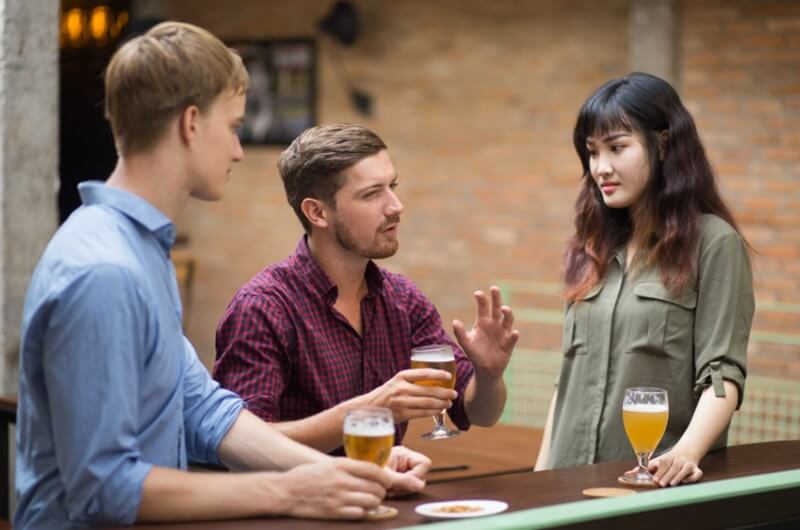
You’ll notice something that’s difficult to describe but impossible to miss if you walk into a well known bar on a Tuesday night not a Friday not a special occasion just a Tuesday. A man in his fifties nods as the door opens and he hardly looks up from his pint. The bartender is grabbing a glass already. If not at the table itself someone at the corner table moves slightly to make place in the overall ambiance. Nothing was mentioned. There was no announcement. Nevertheless this individual has somehow made it somewhere.The problem with pubs is that. Without ever using the term they foster a feeling of community.
Grand gestures or well thought out community tactics don’t make it happen. It takes place in the subtleties of everyday life in the little accruals of time spent together that progressively transform strangers into familiar faces and familiar faces into something that subtly and almost shamelessly feels like family. George Orwell recognized this when he said that the perfect pub is one where regulars sit in the same chair every night and come for the chat as much as the beer. Even though he was writing in the 1940s he might have been describing Tyne & Wear the Teal Farm in Washington or a hundred other people who are still alive today.
| Information | Details |
|---|---|
| Subject | The British Public House (Pub) |
| Origin | United Kingdom — traditions dating to the 17th century |
| Role in Society | Third place between home and work; community hub |
| Number of Pubs (UK, 2024) | Approximately 46,000 |
| Pubs Closed in 2023 | Over 500, resulting in ~6,000 job losses |
| Community-Owned Pubs | 150+ across the UK, up from 85 in 2017 |
| Survival Rate (Community Pubs) | 99.3% over five years |
| Key Functions | Social connection, mental health support, cultural preservation |
| Reference | Pub Roadmap — KAM & British Institute of Innkeeping |
This belonging’s workings are very straightforward. regular business hours. familiar environment. You take your Guinness slowly and your bad news even more slowly according to the same individuals behind the bar. According to community psychology researchers this is a type of membership that is based on shared time and personal engagement rather than the formal card carrying version. You do not register. At some point the place begins to seem like it has a tiny bit of your name on it because you simply keep showing up.
Before any true connection is formed most pub relationships go through a phase. It begins with acknowledgment. You see who takes a seat there. Unbeknownst to you you discover that the table by the radiator is owned by a couple who have been visiting long before you did. Unconsciously you notice that Thursday nights attract a different audience than Sundays. The first layer of community that forms around you is this familiarization or the silent cataloguing of patterns. It wasn’t intended. It wasn’t engineered by the bar. It’s simply the result of people repeatedly visiting the same physical location.
All of this is sped up by shared experience. A quiz night whether it’s a simple Monday quiz with a host who knows half the room or an elaborate ticketed event offers something that casual visits alone can’t. Teams are formed. Teams form little customs. Snacks are always brought by someone who wasn’t asked. A challenged response is always contested by someone else with dramatic outrage. A group of people who just happen to drink in the same place become more like a community when these rituals are repeated week after week. It’s still unclear if the pub produces this or just sets the environment for it to happen naturally. I think both.
Though it does it quietly the physical world has a role to play. open plans. bar seating that places strangers next to one another. Silence is made comfortable rather than uncomfortable by the soft hum of background sounds. A bar isn’t made to keep people apart like a doctor’s office waiting area. Whether on purpose or not it is made to be close. The activation energy needed to initiate a discussion is reduced by this close proximity. Abruptly a remark about the game on the TV turns into a discussion about the season which turns into an offer of a drink which starts something.
It’s important to note that you are never required to do any of this by the pub. Participation is not required. Just like the party celebrating someone’s retirement two tables away you may sit quietly with a book and a half pint and feel just as welcome. Paradoxically one of its most potent features is the lack of pressure. Communities that are created out of necessity often feel empty. When a place makes things simple and lowers barriers without making a big deal out of it community tends to feel genuine.
This is supported by the study. According to a study cited in the Pub Roadmap which was created by KAM and the British Institute of Innkeeping 62% of patrons are more likely to visit a pub again if they truly feel a connection to the neighborhood. The pubs that are doing the best however hardly ever consider it in that way. They’re simply being dependable. Like their regulars they’re just showing up.
The value of a shared physical location is more difficult to measure but easy to experience in a society where many social contacts have moved online. The sensation of sitting in the same room as other people responding to the same things in real time and inhaling the same slightly too warm air is something that a group chat cannot match.
Perhaps we’re just now starting to realize what we lose when these places vanish. Over 500 pubs closed in the UK in 2023 alone. This figure symbolizes not only lost businesses but also lost spaces where people used to feel like they belonged in a peaceful effortless and unannounced way.
Pubs that never attempted to fabricate any of this are typically the ones that survive. They merely provided a dependable space for people to congregate and allowed the community to do what it naturally does when left alone in a cozy space with a good pint. It is not difficult. Simply put it’s more difficult to imitate.
Perhaps that is the point. A excellent pub fosters a feeling of community that is not a product. It’s a result of regularity familiarity and the accumulation of Tuesday nights when you stepped through the door and someone nodded. You didn’t need to say anything more.