
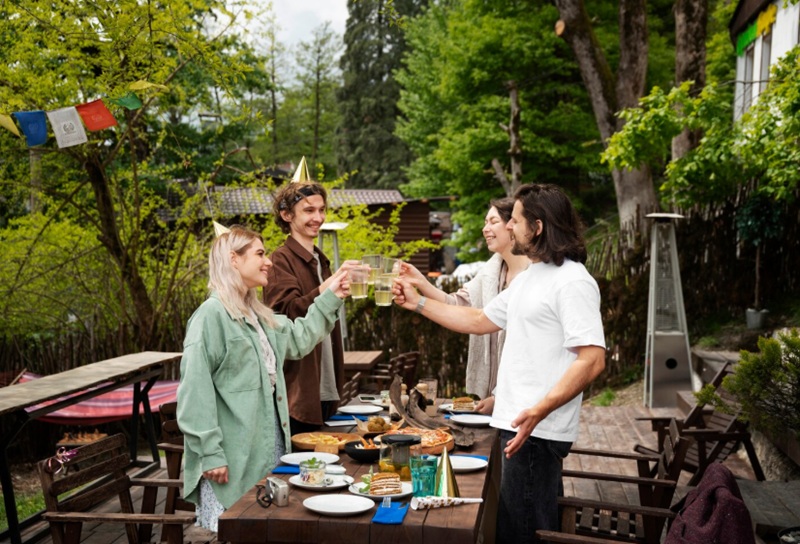
There’s a particular moment, familiar to anyone who has been a regular somewhere for long enough, when you arrive at a pub and something has quietly shifted. The furniture is better. The plants are fuller. There’s a pergola where the old picnic bench used to be, and a neon sign that wasn’t there in March. The barman who knew your order is gone, replaced by someone taking the same photograph for the eighth time that afternoon. You’re still technically welcome. You’re just not quite the point anymore.
This is the experience behind the question of whether British pub gardens have become too Instagrammable for the people who actually use them. It sounds like a lifestyle gripe the sort of complaint you file alongside objecting to small plates and QR codes but it describes something more structural. Pubs are not restaurants. They are, or were, social infrastructure. And the outdoor space has quietly become the most contested ground in that argument.
| Feature | Details |
|---|---|
| Topic | Instagrammable pub gardens and the displacement of regular customers |
| Sector | UK Licensed Hospitality |
| Keyword Focus | Instagrammable pub gardens |
| UK Pub Locations with Outdoor Space | ~38.2% of licensed premises; ~80.5% of community pubs |
| Social Value per £1 Invested in Pubs | £8.28 returned in social value (Pub is The Hub, 2025) |
| Britons Who See Pubs as Community Assets | 75% positive impact on community life (CAMRA / Localis) |
| Heineken Garden Investment (2022) | £42m across 660 pubs for outdoor refurbishments |
| Leeds Pub Noise Complaints (2022) | 194 complaints — up from 79 in 2020, linked to outdoor drinking |
| Drinks Sales Uplift — May 2025 | Beer +15%, cider +43% week-on-week during warm weather |
The economic context prevents any simple verdict. The British Beer and Pub Association reported 161 closures in the first quarter of 2026 alone, almost two a day, with more than 2,400 job losses. The overall number of pubs has fallen from around 46,800 in 2020 to roughly 44,600 in 2025. Against that backdrop, it would be strange to tell a landlord to make their beer garden less appealing. A floral arch or a festoon canopy that generates forty covers on a Saturday afternoon may be what keeps the doors open through January. The commercial logic is not invented; it is visible in the numbers.
And yet. There’s a sense that what’s being optimised for isn’t always the pub. It’s the photograph of the pub. Furniture positioned toward camera sightlines rather than conversation. Every attractive table bookable in advance. The cheapest pint quietly retired in favour of a spritz list that travels well on a phone screen. These are not neutral design choices. They tell customers the ones who’ve been coming for years, the ones who sit alone with a half on a Tuesday, the ones who tell staff when a neighbour hasn’t been in for a while whether they’re still the intended user of the room.
Research from Pub is The Hub found that for every pound invested in pub supported community projects, an average of £8.28 in social value is created. Polling cited by CAMRA found 81% of British adults believe pubs are important for bringing people together, and 68% think they help reduce loneliness. These numbers don’t appear in a garden redesign brief. They’re harder to photograph than wisteria. But they describe the thing that makes a pub worth saving in the first place, and it’s the regular the habitually present, modestly spending, socially anchored regular who largely generates that value.
The design commentary has started to catch up with itself. Trade coverage from 2024 noted that neon signs, selfie spots, and generic pink and foliage schemes were beginning to feel overdone, with designers encouraging venues to work with the building they actually have rather than importing a look that belongs to a bar in another city.
That’s a hospitality trend note, not a moral instruction. But it lands on a real point. A garden that could exist anywhere tells regulars that their specific place has been dissolved into an aesthetic category. Fake foliage and flower walls create immediate impact. Old brick, mature trees, a maintained lawn and a decent pint of bitter create credibility. They just take longer to accrue.
It’s possible to test whether a garden has tipped too far. If an older regular can no longer find a seat without booking, the garden has moved. If the pint remains but is surrounded by a menu that communicates the pint is the embarrassing option, the garden has moved. If staff are too occupied managing table orders, noise complaints and content queries to glance up when someone walks in, the garden has moved. None of these changes require a flower arch to cause them. They’re management decisions, layered on top of aesthetic ones.
The better pubs have worked out that these two things are not in conflict by default. You can take a beautiful photograph of a genuine local. You can have bookable pergola tables and unreserved benches. You can sell cocktails and still protect the house ale. What you cannot do, sustainably, is use the garden to silently communicate that the old crowd should find somewhere else. The revenue from that approach is real but fragile seasonal, novelty dependent, disconnected from the loyalty that carries a pub through its difficult months.
The camera, then, isn’t the problem. The problem is when it becomes the pub’s most important customer. A garden that can be photographed without becoming only photographic one where the walk in regular still feels comfortable once the pictures have been taken is doing its job. The ones that can’t manage that balance may look better on a feed than they’ve ever looked. But they’re doing something quietly serious to the fabric of the place. And fabrics, once unpicked, take considerably longer to mend than a pergola takes to build.
i) https://www.dailystar.co.uk/news/weird-news/people-race-uk-pub-thats-37269504
ii) https://article-swipe.standard.co.uk/going-out/bars/the-15-most-instagrammable-pubs-in-london-a3766641.html
iii) https://candaceabroad.com/instagrammable-london-pubs/
iv) https://www.wearebrew.com/digital-marketing-hospitality-blog/social-media-ideas-for-pubs-2026/