
On a damp Tuesday in November, you may enter a certain bar on a side street in Bloomsbury and, in about 90 seconds, feel dry despite being completely saturated. Nothing noteworthy occurs. The bartender nods. It’s a clanking radiator. A pool of yellow light is thrown over the brass rail by a little lamp on the bar. You can’t quite hear the person at the end of the counter laughing. You’re done with it. The same individual might order a pint, sit down, and feel strangely like they were waiting at an airport at a different, newer, brighter, and supposedly finer bar two blocks away.
It’s easy to attribute it to nostalgia, taste, or just the reality that aged wood looks better than new. A developing discipline of environmental psychology has been steadily eroding this more specialized phenomenon for years. According to Cornell researcher Stephani Robson, who has spent a lot of time observing how people actually move through restaurants and bars, most of us, when we walk into a pub on a Friday, naturally search for walls, corners, partitions, or anything that gives us a sense of control over the space. Whether the landlord realizes it or not, the little bar has been meeting that demand for almost 150 years.
The most apparent example is the snug. Pub historian Kevin Martin links it to the Victorian respectability push in the 1880s and 1890s, when bars started attempting to resemble establishments where a priest may be found. The pastor walked inside the cozy. Women, matchmakers, cattle buyers, and anybody who just didn’t want the other people in the room to see them drink were all found there. Matchmaking is listed as one of the primary applications in a 1930 County Clare report. A small wooden box of a room, a partition, two strangers being introduced by a third, the rest of the pub humming away on the other side of the glass, and the contemporary obsession with “intimate dining” start to seem a little less inventive than the design magazines claim.
| Topic | Details |
|---|---|
| Subject | The design and psychology of pub atmosphere |
| Origin of the cosy pub | Victorian-era Britain and Ireland, late 1800s |
| Key feature | The snug — small, partitioned, semi-private seating area |
| Core materials | Oak, brick, brass, stone, dark timber |
| Lighting style | Layered, low-level, warm (typically 2200–2700K) |
| Key psychological concept | Privacy regulation (Stephani Robson, Cornell, 2008) |
| Notable historic example | The Crown Liquor Saloon, Belfast (eight Victorian snugs) |
| Reference | CAMRA — Campaign for Real Ale |
The new pubs have to put in a lot of effort to replicate a number of aspects that the successful ones almost unintentionally got right. One is the low ceiling. In a cathedral, a high ceiling is lovely, but in a bar, it’s disastrous; voices rise, sound reverberates, and after an hour, everyone is yelling for no apparent reason. This is known to acousticians as the “cocktail party effect”, and it’s the main cause of a bar feeling chilly even when it’s packed. Polished concrete, glass walls, and hard flooring all appear fantastic in pictures but penalize anyone who tries to engage in conversation. Carpet, thick drapes, cushioned chairs, and virtually touchable ceilings were the solutions used in the ancient establishments. It wasn’t strategic at all. It just so happened to fit in.
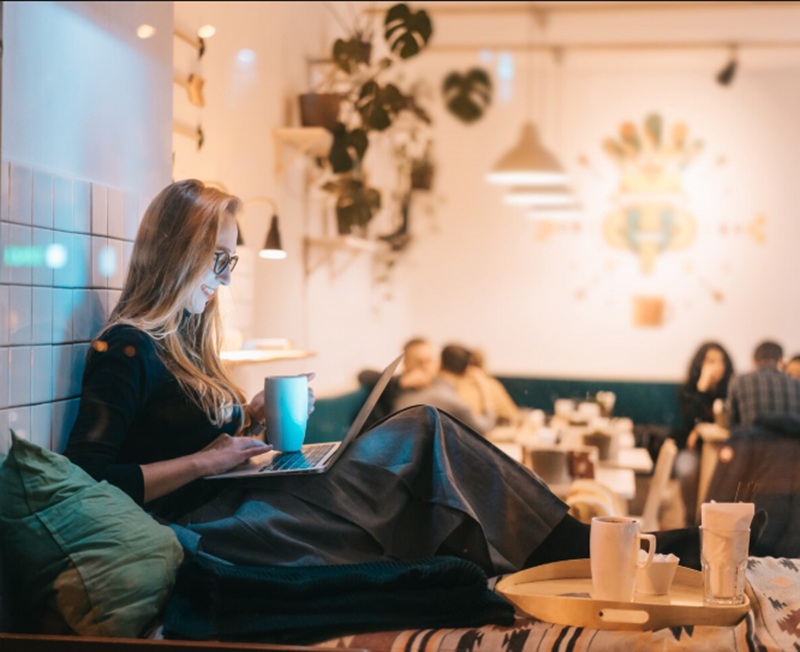
The light is another. There is seldom a single large light source in cozy pubs. There are several tiny ones, such as wall sconces, table lamps, a few pendants over the bar, and, if you’re fortunate, a fire. The color temperature is located somewhere around the candle. When you go into a pub with a single ceiling grid of brilliant white LEDs, you’ll feel like you’d want to be someplace else before you realize why. The body interprets the chilly overhead light as daylight and determines that it is not time to unwind. Every respectable bar lowers the lights as the evening wears on for a reason.
Though not as much as many believe, the materials do matter. Brass rails and oak beams are helpful, but mostly because they gently reflect light and absorb sound. No one will be fooled by a tavern covered in plastic laminate “wood effect” panels, and not for aesthetic reasons either the panels are too consistently reflecting, too chilly, and too flat. The eye detects. We are aware of something.
It’s amazing how much of this is being rediscovered these days, frequently by designers who have never visited a true old boozer. Nashville architect Nick Dryden discusses his clients’ desire for “a softer execution, a finer grained touch.”” Jan Freitag, who monitors hotel statistics for STR, has observed lobbies shrink from expansive marble to what he refers to as pods and nooks. By effectively exporting the Victorian snug, the Irish Pub Company has constructed over two thousand pubs worldwide. Speaking with any of these individuals gives the impression that the nervous twenty first century has finally returned to what the Victorians discovered by trial and error: people want to be held by a room, not presented in one.
That being said, not all chilly pubs are doomed. Soft seats, warmer lighting, a few barriers, and thick wall coverings may all make a big difference. The genuinely outstanding pubs have the cumulative effect of decades of patrons being at ease there; this is something that cannot be replicated or repaired. It darkens the wood. The floor has designs on it. The bartender recalls your beverage. That’s probably part of the reason the place feels the way it does, but it’s not in the design brief.
When you leave a nice place around closing time, it’s difficult to ignore the fact that you haven’t checked your phone in two hours. It might be the true test.
i) https://www.youtube.com/shorts/quWS0lxQVdo
ii) https://metropolismag.com/projects/environmental-psychology-hospitality/
iii) https://irishpubcompany.com/how-historic-pub-architecture-influences-modern-restaurant-design/