
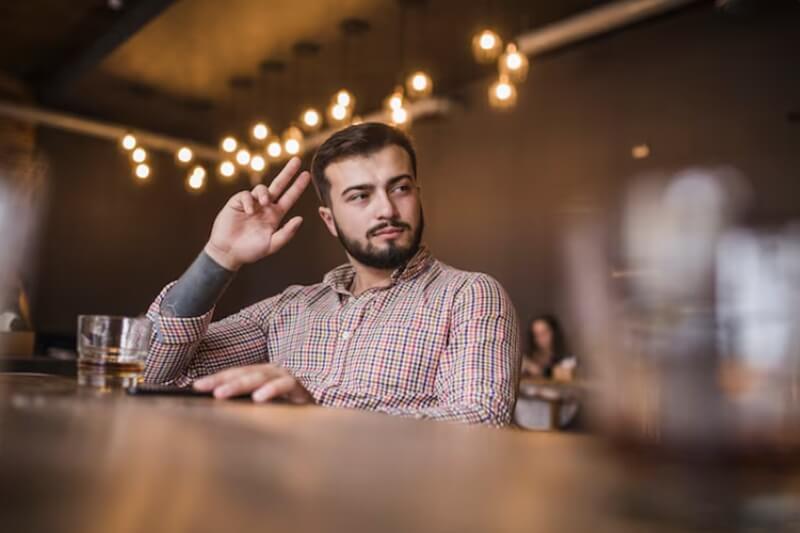
n a pub time seems to slow down at a certain point usually during the first third of a pint. Exactly not sluggish. Just the edges aren’t as sharp. The street outside maintains its schedule with pedestrians passing storefronts and buses pulling up at stations. However inside behind dark wood and amber lighting minutes begin to behave more like mood than like units.
It’s difficult to ignore the consistency of that sense in locations that claim to be very different. One pub is a Victorian snug with frosted glass while another is a renovated heritage corner spot with LEDs in the Edison style that seem like gaslights. However both quickly give you the impression that quitting would be a small betrayal. Not specifically of anyone. of the actual night.
| Item | Details |
|---|---|
| Subject | Pub design psychology and “dwell time” (how long customers stay) |
| Where it shows up most | British/Irish-style pubs and modern gastropubs |
| Key cues discussed | Low lighting, layout “pockets,” sound levels, furniture shape, bar placement |
| Notable claim in press | Round tables linked to longer stays (research commissioned by My Furniture; quoted by Dimitri Pappas) |
| Industry stake | Longer stays often mean another round, higher revenue, better atmosphere—sometimes bigger bills |
The apparent lever is low lighting which British bars have transformed into an artistic identity that is both traditional and strategic. Faces appear friendlier imperfections are less noticeable and using phones might be a little bothersome in dimly lit spaces. The room seems to be telling everyone to look at one another rather than your screen or the clock. It’s probable that owners don’t always consider it in such analytical terms; instead they frequently discuss atmosphere a term that encompasses a wide range of intents. Atmosphere however is not neutral. It has a reasonable deniability in its design.
Even when no one is looking people act as though they are being watched in brighter settings like cafes and fast casual restaurants. Shadows function as privacy in bars. Booths and corners turn into little havens that promote slower drinking and longer talks. The psychology is antiquated and yet effective: you settle when you feel a little hidden. You give up performing. The night doesn’t feel complete so you order another drink.
Then there is the furniture which may seem uninteresting but it isn’t. You’ll notice something subtle when you enter a pub with many of round tables: nobody is in charge of the head of the table. There is no hosting. Everyone is facing each other which facilitates the flow of conversation simultaneous laughter and the suggestion of another round without appearing to be an order from above. Round tables have been shown to keep patrons in bars for up to 42 minutes according to research commissioned by the furniture business My Furniture. When you’ve seen groups function the core notion seems correct: eliminate hierarchy improve comfort prolong the evening. However that figure may be more marketing friendly than scientifically proven.
The following step is done via layout. A lot of bars are set out as a sequence of half rooms including raised sections nooks snugs and benches that create tiny enclosures. Even more recent locations use this technique creating zones using plants half walls or altered floors. In actuality you are selecting a degree of commitment rather than a seat. There’s a makeshift high stool by the door. Tucked behind a pillar a banquette makes it clear that you’re staying. Getting up feels like effort once you’ve put your coat into your pocket and shrugged it off because effort is the antithesis of spontaneous departure.
Pubs use sound like a DJ who is more familiar with the space than you are. In the early evening it’s common to hear a low braid of voices that are both quiet enough to hear a friend without leaning in like you’re confessing and lively enough to feel social. Later the volume increases due to density more bodies laughter and clinking glass rather than music. A little social pressure is created by that growing loudness. Leaving is moving from warmth into silence which can feel judgmental particularly after two drinks.
Stage management even extends to the bar itself. It glows like an altar and is situated away from natural light in many traditional taverns. The rest is softly hidden and the taps are lighted. The eye keeps coming back to the bright objects. Mid conversation you look up and see lighted bottles and beer fonts rather than the exit. It’s not precisely hypnosis. It’s basically a room that keeps reminding you of what it offers.
Staffing style makes a more subtle contribution. When your glass gets low enough to be suggestive the good bartender will check in with a quick another? without hurrying you or ignoring you. Approaching without making it feel like turnover is an art. People dislike being controlled. They enjoy being noticed. A nod a half smile the slight consolation of acknowledgment yes it’s hospitality but it’s also retention.
By lowering time anchors the best pubs also dull your internal metronome. The windows are either small or covered with thick drapes. If there are any clocks they are ornamental and somewhat difficult to read as if they are ashamed to be there. Strangely sports screens help. Match time halves stoppage just one more until the end replaces clock time. Although it’s still unclear if the majority of customers are aware of this shift you can see it occur: those who had intended to leave at eight suddenly adjust to the ninety minute story taking place above the bar.
Additionally there is the subtle misconception that bars are unplanned organic spaces where people just happen to be. The romanticism is there. The real world is more manufactured. Pubs are businesses that must contend with narrow profit margins growing expenses and erratic patrons. Over ages they have discovered the levers that keep a body in a chair. Some of those levers dark wood comforting lighting and noise absorbing carpets are cultural legacies. Some are contemporary such as layouts that promote settling in furnishings selected for sociability and carefully adjusted LEDs.
None of this indicates that you are being deceived in a dark manner. Most of the time you are invited. However it’s important to acknowledge that an invitation might be strategic. Look around the next time you check your phone and are shocked to see it’s later than you anticipated. Take note of the table’s shape glow and corners. You might not be held captive by the pub. However it is quietly making staying seem like the simplest thing in the world.
i) https://www.foodbible.com/news/drinks/pubs-alcohol-circular-tables-research
ii) https://www.pubcurmudgeon.blogspot.com/2014/01/out-of-control.html