
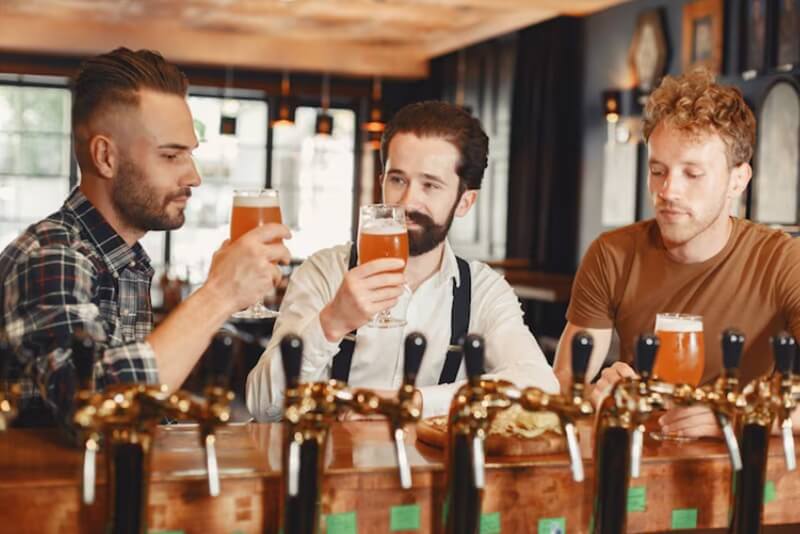
The door itself which is frequently heavy stubborn and sometimes labeled like a light moral test with Bar on one side and Lounge on the other is typically the first thing a first time visitor notices in a classic British pub. The temperature and smell instantly change as soon as you walk inside: the sweet bready flavor of beer that has been poured here for decades wet wool from jackets drying and a lemony cleaning spray fighting a lost battle. Until you realize you don’t know where to stand it can feel friendly much like an old bookstore.
Usually newcomers hover. They choose a seemingly rational location close to the bar only to find out it’s the worst place imaginable since it obstructs someone’s entrance to the restroom or places them squarely in the way of a bartender carrying four pints while wearing the intense expression of a hospital surgeon. Although the tavern appears casual and even disorganized it operates with the accuracy of something that has been practiced every night for generations. The dancing rather than the drinking might be the first great shock.
| Item | Important information (quick bio-data) |
|---|---|
| Subject | Traditional British public house (“pub”) culture |
| Where it’s most felt | Neighbourhood pubs across the UK; especially older Victorian and Edwardian “locals” |
| First-time friction points | Invisible queue at the bar, paying per order (no tab), round-buying, low/no tipping, last orders ritual |
| Typical opening rhythm | Daytime calm → after-work surge → weekend crush; last orders usually 15–30 minutes before closing |
| What a pub is socially | A communal “living room”: conversation, community events, dogs, families (in many places), sport, quizzes |
| Common drinks | Cask ale, lager, stout (notably Guinness), cider, gin and tonic, whisky |
The bar thickens into a hedge of elbows shoulders and determined faces during peak hours. And yet no line. Americans Germans and pretty much everyone who grew up in a visible queue will naturally begin to establish one only to give up when it becomes obvious that no one else is joining. The line is replaced by an unfamiliar and in a sense more difficult unseen queue. It is being tracked by the barman. Regulars are keeping tabs on it. Somehow people who appear to be half asleep are tracking it. In the meantime the novice is attempting to figure out if the person casually resting against the counter is only emotionally attached to that piece of wood or is waiting to place an order.
The pub seems to penalize the wrong kind of effort. Snapping fingers can actively hurt you whereas waving money doesn’t help. Making quick eye contact standing where you can be seen and keeping your order ready are the successful strategies. It’s strangely touching to watch someone learn this in real time much like when a visitor tries to follow local driving laws. They give a half smile that conveys I’m trying not to be unbearable after edging forward and then retreating. It sounds like a lifeline thrown into choppy waters when a bartender eventually asks Who’s next?
Another tiny test is the ordering itself. Sometimes a newcomer will request a beer as though the bar were a single choice vending machine. What kind of narrowing occurs in the bartender’s expression that doesn’t quite harden? Lager ale stout bitter anything regional with a folklore like name? The visitor is practically recalibrating scanning taps like a student preparing for a test. Guinness adds a twist of its own: say it first since it takes time to settle and if you add it at the end as an afterthought folks behind you will silently criticize the delay.
Payment is received right away. The mental map of bar vs restaurant needs to be immediately reconstructed at this point. Many traditional places don’t have tabs or lingering bills. Take your drinks tap your card and make room for the next individual attempting to be seen in a courteous manner. Yes it’s effective but it’s also a little unsettling like being reminded that you’re a part of a system rather than its host.
Next is the round system which is frequently perceived by newcomers as both endearing and rather oppressive. Someone purchases the first round of drinks generous cordial and done in a way that suggests this is how adults act. Relieved the guest grinned. Then 10 minutes later the words You’re round fall like a soft brick. It’s a social contract that arrived on time not an insult or a remark on body type. If you miss your turn people may not express it directly but the atmosphere shifts. Whether the round method is about monitoring or justice is still up for debate; it might be both.
Once you have a drink and a spot to stand or perch the pub’s living room vibe becomes apparent. This isn’t usually a neon lit boisterous party box. Conversation is valued more than background noise in many traditional pubs where the volume is lower than patrons anticipate.
Shouting seems inappropriate unless football is playing in which case the room can change from a library to a stadium in a single contested penalty. Phones are there but they are muted. First timers’ adjustments such as lowering their voice in the middle of a sentence or laughing a little more softly show how fast people imitate the rules of a room when it has a spine.
Not even the empty tables are completely vacant. The beermat balanced on a glass is a tiny almost humorous claim: the seat is reserved because someone has gone outside or to the bathroom. Sometimes newcomers mistake this for abandonment and discover that this area is marked with paper coasters and social memory after receiving a brief apology and some British style no worries.
Snacks show up like play props. Even if no one says so crisps are ripped up and placed in the center to indicate share. The crinkly packet of pork scratchings appears like a challenge. Behind the bar Scotch eggs appear resolutely unaffected by contemporary culinary fads. It makes sense that the tourist would be hesitant because some pub fare seems like it was created during a blackout. Nevertheless drinking seems to increase once the salt hits which feels more like a predicted chemical reaction than a plot.
And then time reasserts itself just as the night seems to go on forever. The entire establishment switches into a last effective gear when a bell rings or a voice calls last orders. It is frequently mistaken for a proposal by visitors. It’s not. When the second bell sounds it has the composed power of a referee’s whistle. When they’re done they gather their coats and shuffle politely for the door. Despite its warmth the pub does not welcome hangers on and the staff wants their evening back.
All of this may sound severe but not in a harsh manner. Fair turns at the bar shared food reciprocal generosity and an ending that truly ends are all regulations that seem to be intended to keep the establishment operating as a shared resource. It may be oddly rewarding to watch first time visitors learn it awkwardly at first then gracefully. Many of them have stopped lingering by the second pint. The whole purpose of a pub is that they are standing there as if they belong.
i) https://www.eatdrinkmeet.co.uk/recommendations/decoding-british-pub-etiquette
ii) https://www.trustinns.co.uk/a-guide-to-british-pub-etiquette-dos-and-donts/