
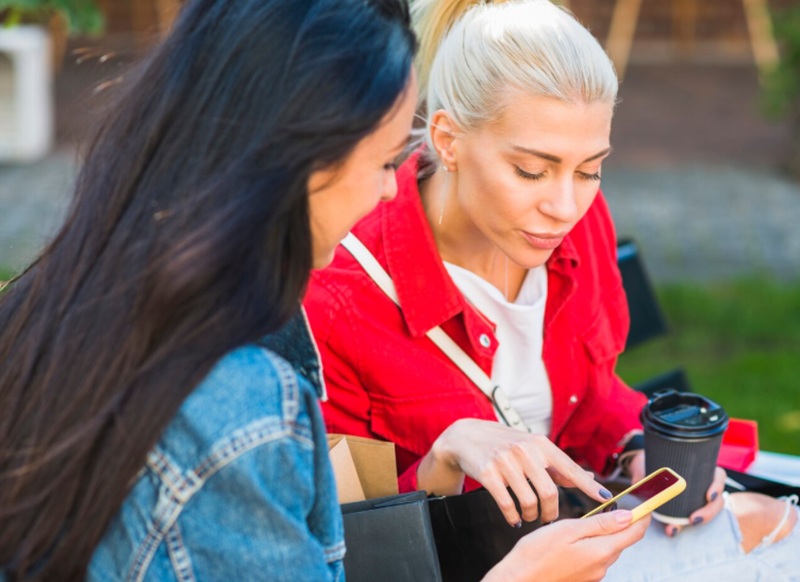
Now there is a moment before any firm gets a chance to establish itself. Someone is sitting somewhere a kitchen table, a bus seat, a parking lot before they decide to go in and they look up your profile. They scroll through. Could have been 10 seconds, could be less. And by the time they hang up the phone they’ve already made up their mind about you. The front door, the handshake, the fragrance of fresh coffee inside? All of that occurs after the verdict, not before.
74% of consumers visit a brand’s social accounts before visiting in person, according to a 2024 Sprout Social survey. In actual life when you look at people that number seems almost low. I’ve been behind couples at restaurants who were clearly checking two places on Instagram, thumbs flicking, deciding our collective fate in the moment. The grid wins. The other place never knew it lost, apparently.
| Information | Details |
|---|---|
| Topic Focus | Social media’s role in shaping pre-visit first impressions |
| Primary Platforms Studied | Instagram, TikTok, Facebook, YouTube, X, LinkedIn |
| Key Statistic | 74% of consumers check a brand’s social profiles before visiting in person |
| Speed of First Impression | Opinions form in 50 milliseconds; website assessment in under 0.2 seconds |
| Trust Factor | 49% of consumers trust customer-created content over brand posts (BrightLocal, 2024) |
| Travel Influence | Over 60% of travellers are swayed by social media when choosing destinations (Statista, 2023) |
What’s strange is how little information people truly need to make a decision. And research continues to verify that this is an uncomfortable truth, that opinions form at about 50 milliseconds of looking at a website or profile. Missouri S&T eye tracking research discovered that consumers fixate on logos and images for mere fractions of a second, and decide on the area that determines their opinion in approximately 2.6 seconds. We prefer to assume we judge on purpose. It is not. Psychologists call this practice of generating an entire tale from a sliver of evidence thin slicing, and social media provides us with more slivers than any time before.
“People think a star rating is a big deal. What nobody tells small business owners is it isn’t. Yes, Google reviews do matter. But a five star average can’t tell you how a location *feels*. A brief movie of genuine guests laughing over a dinner does what a generic testimonial never would. According to BrightLocal, in 2024, 49% of consumers trust content from other customers more than any brand produced content about itself. So every tagged photo, every shaky phone video someone uploads from your terrace, discreetly becomes part of your storefront whether you uploaded it or not.
This is when it gets a little creepy for those running a profile. You are being spoken to in ways you did not pick. Warm tones in an appealing feed. A chilly, desaturated one feels creative, maybe a little haughty. Captions ooze personality; a joke makes you look approachable, a long introspective one shows depth, a short one reads as confident or frigid depending on the day someone’s having. People fill in the gaps with assumptions and they don’t usually go back to see if they were right.
Travel shows pattern in full volume. Statista showed that more than 60 per cent of tourists are swayed by social media when choosing where to go, and one research placed it higher 73.7 per cent chose destinations based on what they’d seen online, with Instagram and YouTube doing most of the persuading. It explains the crowds at dawn balloon launches in Cappadocia and the queues of people waiting to swing out over cliffs in Bali. People saw the film.
They sensed the lure. Researchers have a neat answer for this. When the destination is new and the trip is complicated, travellers rely heavily on contextual cues, and that’s the niche social media fills. That effect is almost nil when the travel is short, or cheap, or somewhere familiar. Apparently, it is the context that determines whether the influence can even occur.
There is a little melancholy underneath all this. A happy photo doesn’t show the difficult week it took to get there. A wonderful relationship post doesn’t reveal anything about the dispute that morning. But we still trust the surface, mistake a selected slice for the full bread. This is how parasocial ties emerge so effortlessly people feel like they *know* creators they’ve never met, and all from the glances. The illusion makes the first impression appear to go deeper and to be more reliable than it has any right to be.
And these impressions stay with you. Once someone has decided you seem trustworthy, they read trust into everything that follows. You are disorganized, even a sharp post gets filed under “exception”. You can smooth over an awkward first impression in real life but a digital one is cemented with every scroll. It is a story the viewer creates themselves, and they almost never go back and reexamine the assumptions that launched it.
So what does this mean for the businesses and people on the other end of all that scrolling? It typically signifies that the task has relocated. Your front door hasn’t been the initial point of contact in ages. It was your last six or nine postings, the comment section, the way you respond to a question someone addressed openly. Keeping them current and honest is no longer a marketing flourish, it’s more like leaving the lights on. People are already looking at your profile, making judgments, choosing if they are going to come find you in person.
Underneath the curation there’s a sense of something real still being there. People are just doing what they’ve always done measuring each other up, looking for reasons to trust. The screen gave people more to look at, and a lot less time to gaze.
i) https://www.alphasocial.media/post/your-customers-check-social-media-before-they-visit-why-it-matters-more-than-you-think
ii) https://frogmanmediagroup.com/the-science-of-first-impressions-what-your-social-media-profile-says-about-you/
iii) https://pubmed.ncbi.nlm.nih.gov/34496679/