
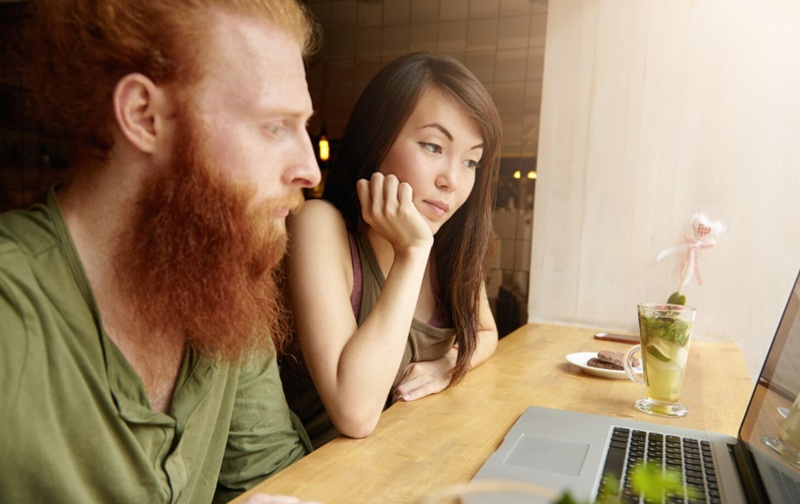
Walk down practically any high street on a Friday night and you will see it happening though you may not realise what you are seeing. A few people pause on the pavement. One of them pulls out a phone. Pause. A bit of scrolling. ‘That one looks alright,’ they mutter, and then they are off together towards a door. No one in that group would say a stranger had chosen their tavern for them. But someone did, or, more like, a few hundred someones did, weeks or months before, dropping stars and lines that laid out the possibilities quietly before anyone had a true preference.
The weird thing about online reviews and bars. The influence is least noticeable at the very moment when it is at work. We think of pub choice as taste, or habit, or just the way we happened to be going. But the data suggests the digital layer is performing a lot of the steering. Bright Local’s 2026 poll indicated 97% of consumers read reviews for local companies. The typical consumer used six different review sites and 41% always read reviews when browsing. Reviews aren’t what you check after making the decision. They are closer to the scaffolding on which the choice rests.
| Information | Detail |
|---|---|
| Topic | The influence of online reviews on how people choose pubs |
| Primary research source | BrightLocal Local Consumer Review Survey 2026 |
| Key finding | 97% of consumers read reviews for local businesses |
| Notable academic study | Michael Luca (Harvard): a one-star Yelp rise = 5–9% revenue increase |
| Emerging factor | AI tools for local recommendations rose from 6% to 45% |
| Most-used platform | Google, though its review share fell from 83% (2025) to 71% (2026) |
This is something pubs are unusually exposed to, more so than most businesses. You can’t truly know a pub until you’re in it. What the crowd is like, what the beer condition is like, whether the staff grin or whether you will feel an invader at someone else’s local. All of that is hidden from the street. The clues are working, they’re other people’s previous stays turned into clues. Harvard researcher Michael Luca matched Yelp data with Washington State restaurant revenue and found that a one star rise in Yelp rating led to a 5% to 9% increase in revenue. The effect was concentrated among independent companies rather than chains. Reading that, you get a sense of why independent strugglers and national chains feel the internet so differently. The chain relies on brand memory. The independent lives on the word of twelve strangers last month.
The star rating does the initial, severe sorting. It’s a threshold not a measurement.” The standards are fairly rigorous, and you can dismiss a bar rated 3.8 next to one rated 4.6 before you’ve read a word. Bright Local reports that 47% of consumers won’t use a business that has less than 20 reviews and 68% only use firms with four ratings or higher. The quality of what people are reading there is not. It’s a risk. How much embarrassment, how much wasted time, how much group friction will I be signing myself up for if something goes wrong?
And then the texture comes. This is where it becomes human. A four star rating that indicates the bar is warm and unpretentious and pours a fine pint can trump a five star one that merely says “great place.” Reviewers highlight sticky tables, clean restrooms, if the Guinness was served properly, if dogs are welcome, if the music drowns out discussion. These nuances allow a person to imagine themselves inside before they go. That identical comment might be a promise or a warning depending on who is reading it.”.Lively” is a gift to a Saturday night throng and a death sentence to a couple seeking for a calm lunch. It is hard not to be struck by how often the phrase”.popular with families” reassures one reader and quietly repels the next.
There’s a research piece here that I keep coming back to because it’s so exact about how thin the margins are. Anderson and Magruder, using Yelp’s rounding thresholds, discovered that a half star increase boosted restaurants’ sellout rates by 19 percentage points, with the highest impact in places where other information was limited. 1/2 star. The difference between a 4.0 and 4.5 is frequently statistically irrelevant, a handful of generous clients vs. a couple of unhappy ones. But it does change the person who steps in. No, that’s not quite rational. It’s just how people behave when they’re standing on a pavement, a bit hungry, attempting to settle a group disagreement before the rain starts.
Pubs, more than nearly anywhere else, rely on recency because they change so fast. A new landlord, a different chef, a rebuilt bar, a cellar that’s now being looked after well or suddenly isn’t. Of BrightLocal’s 2026 data, the single most critical factor was consistency across many reviews at 56%. 74% of consumers care most about reviews from the recent three months. A profile with new comments is a living profile. If the last review is eight months old, then a quieter anxiety sets in: is this place still open, still trying? Rarely do people consciously reject outdated profiles. They just feel a bit less confident and scroll on.
The owner’s comments matter too, sometimes more than the concerns they respond to. Often a customer reading a bad review is watching the answer, not the complaint. BrightLocal showed that 80% of consumers are likely to use a firm that answers to all reviews, whereas 50% are put off by generic replies. That’s almost dramatic, somehow. A landlord who offers a proper apology, says the kitchen had a tough night, thanks someone for flagging it, is doing hospitality in public before anyone arrives. No bar is perfect but what matters to people seems to be that the place knows it’s making mistakes and cares. A well handled one star can generate more trust than a continuous sequence of praise, which always seems a bit suspect anyhow.
Pictures do what words can’t do. A photo of a fireplace, a full terrace at sunset, a bounteous roast, is processed faster than any words and validates the vibe a facility claims for itself. Marketing can term a pub “cosy” all it wants. What makes a user’s photo believable? It’s unsharp, taken in dim light and with worn leather seats, since it appears uncontrolled. Hospitality investors have known for years that the ambience is most of the product in a pub. Your phone has quietly made ambience checkable ahead of time.
What I find most surprising as I witness all unfold is the invisibility of the expense to the pubs themselves. A non visit leaves no mark. No complaints, no cancelled appointment, no chance to win the consumer back, just an empty table and a quietly underperforming profile somewhere on a stranger’s screen. Tesla had years of public uncertainty before the numbers turned. Pubs don’t get that drama. They just give away their reputation, one unwon decision at a time. The pubs that prosper aren’t always the greatest. They’re the ones with reviews that seem fresh, specific and personal enough that a stranger in the rain, deciding the walk is worth it.
It is still unknown how much further this goes since AI summaries take over the first read. BrightLocal already saw a surge from 6% to 45% in one year in the use of generative AI techniques for local suggestions. Soon the question may not be which pub gets the best reviews, but which tavern the system lists first. And the choices were always being made by the strangers. Now they are being fed something that sums them up too.
i) https://www.iorders.ca/blog/online-reviews-influence-restaurant-choices
ii) https://get.chownow.com/blog/impact-of-online-reviews-on-restaurants/
iii) https://resos.com/review-trends-and-behaviours-in-the-restaurant-and-hospitality-industry/
iv) https://gatherup.com/blog/online-reviews-study-restaurants-reviews/