
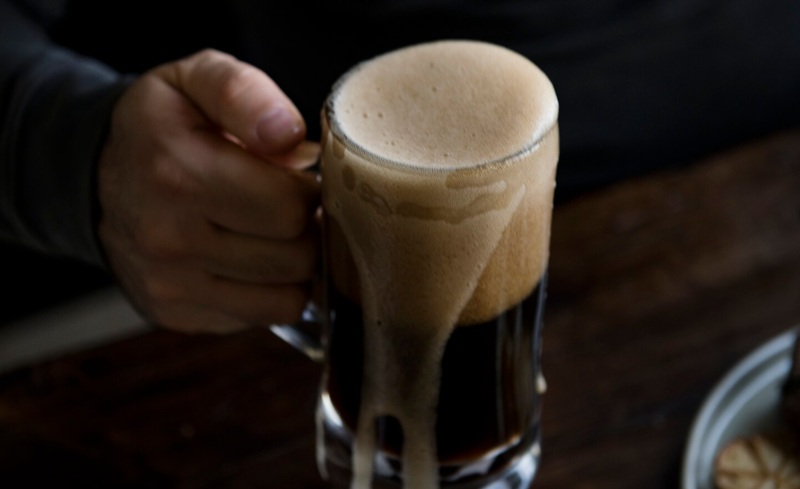
Walk into almost any pub on Albert Road on a Friday evening and something has changed. It’s subtle at first a new tap handle here, a different logo on a pint glass there. But look more carefully and the shift becomes unmistakable. Where there was once a wall of golden standard lagers, there are now sleek black and white branded fonts for Lucky Saint, crisp Peroni 0.0 taps, and, in a handful of more adventurous spots, craft non alcoholic options from breweries most regulars hadn’t heard of two years ago. Low alcohol lager is suddenly everywhere in Portsmouth pubs, and the reasons why are considerably more interesting than a passing wellness craze.
Portsmouth is not an obvious candidate for a moderation movement. This is a city built on sailors, dockworkers, and the Royal Navy a place where, historically, the density of public houses was among the highest in the world. Streets like Commercial Road and the historic lanes of Old Portsmouth were lined pub to pub for good reason: drinking here was never just recreation. It was culture, identity, and economic habit, all rolled into one. The idea that someone returning from six months at sea would ask for a zero percent draught would have seemed, to put it gently, improbable. And yet here we are.
| Category | Details |
|---|---|
| City | Portsmouth, Hampshire, England |
| Known For | Historic naval city, home of the Royal Navy, high density of public houses |
| Pub Culture Heritage | Centuries of maritime drinking traditions tied to Royal Navy and dockworkers |
| Key Districts | South sea (Albert Road, Palmerston Road), Old Portsmouth, Fratton, Copnor, Gun wharf Quays |
| University | [University of Portsmouth] 25,000+ students influencing local drinking trends |
| Notable Venues | The Vaults (Albert Road), Southsea Village (Palmerston Road) |
| Key Brands on Tap | Lucky Saint, Heineken 0.0, Peroni Nastro Azzurro 0.0, Guinness 0.0 |
| UK Alcohol Duty Reform | August 2023 sub 3.5% ABV beers taxed at £9.27/litre vs £21.01 for standard |
| Alcohol-Free Duty | Zero excise duty on products under 0.5% ABV |
| Local Breweries | Staggeringly Good, South sea Brewing Co. |
| Industry Sales Data | Stonegate Group reported 32% rise in low-and-no alcohol sales, Q1 2025 |
Three forces have collided to make this happen. The first is cultural younger drinkers in particular are approaching alcohol very differently. Students at the University of Portsmouth, a population of over 25,000 people who drive enormous footfall through South sea and the surrounding pub districts, are drinking significantly less than their predecessors. It’s not simply that they’re health conscious, though many are. Social media has a lot to answer for too. When a night out is immediately visible online, the calculation around drinking shifts. There’s a generation that has grown up watching alcohol fueled footage circulate, and they’d rather not be in it. A draft pint of Lucky Saint in a branded glass looks, to anyone watching, identical to a standard lager. That matters more than one might expect.
The second force is economic and this one runs deeper than most consumers realize. The UK government’s overhaul of alcohol duty in August 2023 created a dramatic tax wedge between standard and low strength beers. Products under 3.5% ABV are taxed at roughly £9.27 per litter of pure alcohol. Standard lagers pay more than double that. Anything under 0.5% ABV pays nothing at all. For a Portsmouth landlord already absorbing soaring energy bills, higher wages, and reduced footfall, this isn’t a small detail. Selling a pint of Heineken 0.0 at £4.50 with zero excise duty attached yields a margin that’s genuinely difficult to achieve on a standard pint. The hospitality sector has not exactly thrived since 2020, and publicans are smart enough to follow the money.
The third force is technological, and it’s the one that makes the whole thing viable. Non alcoholic beer used to taste thin and vaguely medicinal a result of crude production methods that stripped flavor along with the alcohol. That’s no longer the case. Modern reverse osmosis and vacuum distillation techniques remove ethanol while preserving the hop oils, malt character, and carbonation structure that make lager enjoyable to drink. Breweries have also invested heavily in specialized yeast strains that produce authentic flavor compounds without generating significant alcohol in the first place. The finished products are, genuinely, good beer. And good beer on a proper cold draught tap, served in a heavy branded glass with a decent head that’s a different proposition entirely from a lukewarm bottle fished out of the back of a fridge.
At The Vaults on Albert Road, manager James Wilson has noted that Lucky Saint has become their most popular alcohol free option since going on tap outselling the bottled alternatives it replaced by a considerable margin. The draught presentation is doing a lot of work there. When the ritual of the pour is preserved tap handle pulled, glass chilled, foam settling the psychological gap between this and a regular pint narrows to almost nothing. People who are pacing themselves during a night out, designated drivers, or those who simply want the pub experience without the following day’s consequences can now participate fully. That’s a bigger deal in a social culture where rounds still define the rhythm of an evening.
Major brewers have also accelerated the trend through what the industry calls drink flation quietly reducing the ABV of flagship brands to cut their own duty bills, while simultaneously pouring resources into 0.0 variants. Stella Artois, Carlsberg, and Foster’s have all been quietly reformulated downward in recent years. The sensory gap between a reformulated 3.4% standard and a high quality 0.0% craft option has narrowed considerably, making the transition feel less like a sacrifice and more like a lateral move. The corporate marketing that followed billboard campaigns, football sponsorships, premium glassware has done the cultural work of normalizing sober drinking faster than any public health campaign could.
It’s still unclear whether this shift is permanent in the deepest sense, or whether it contains within it some ceiling that the industry hasn’t yet hit. Older regulars in Fratton and Copnor, who grew up in the full strength, wet led era, may never fully convert. But they don’t need to. The low alcohol category doesn’t require everyone it only requires enough people, often enough, to make the tap profitable and the tap space permanent. In Portsmouth, by every available indicator, it has already cleared that bar. The city that once measured its pub culture in pints of Stella has quietly, practically, and rather cleverly started measuring it in something else entirely.
i) https://www.portsmouth.co.uk/news/people/dry-january-what-portsmouth-area-pubs-and-bars-are-doing-to-entice-in-drinkers-who-have-taken-the-pledge-this-month-3978151
ii) http://www.eastfootball.co.uk/forum/archive/index.php/t-14593.html
iii) http://www.eastfootball.co.uk/forum/archive/index.php/t-14593.html
iv) https://www.nicholsonspubs.co.uk/drinks/alcohol-free