
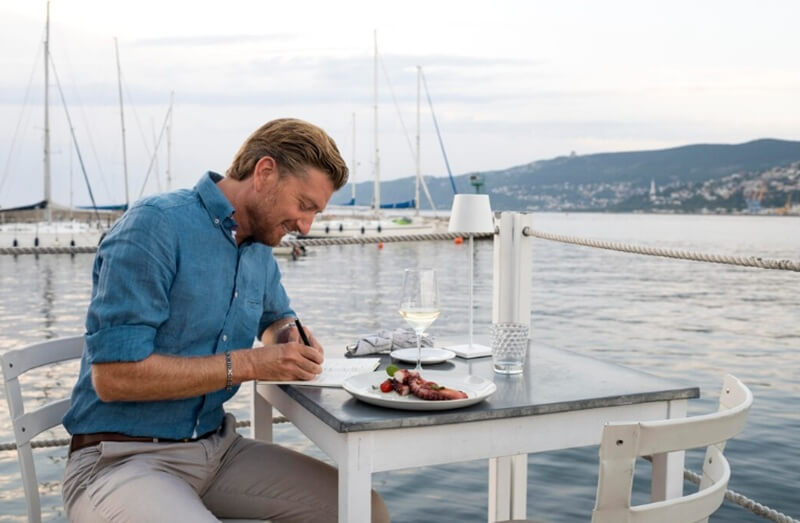
The terrace at the White Horse in Bran caster Staite is packed before midday on a sunny North Norfolk afternoon. Families crack up crab claws while leaning over wooden tables. A Suffolk couple is waiting for their hotel key while sipping glasses of prosecco. The horizon fades into pastel blue as the level marshes behind them stretches toward the North Sea. It’s difficult to ignore this: locations like these seem crowded in a manner that many main street eateries no longer do.
The hospitality sector in Britain is dealing with the most challenging conditions in decades due to growing wages, increased employer taxes, pricey ingredients, and consumers who are more frugal with their money than they were five years ago. However, coastal hospitality companies, from Norfolk to Cornwall, seem to be holding their ground better than many metropolitan eateries in spite of these constraints.
| Category | Details |
|---|---|
| Sector | UK Hospitality Industry |
| Key Industry Body | UKHospitality |
| Employment | ~3.5 million people employed across UK hospitality |
| Economic Contribution | About £140 billion in Gross Value Added |
| Key Sub-Sector | Coastal hospitality (seaside pubs, hotels, restaurants) |
| Example Venue | White Horse at Brancaster Staithe |
| Official Industry Website | https://www.ukhospitality.org.uk |
A surprisingly straightforward part of the answer is that people are yearning for experiences rather than just food. Convenience led to the construction of high street eateries. Weekday meals, fast lunches, and steady foot traffic. But during the past decade and especially after the pandemic consumer behavior has transformed. People are looking for more memorable dining experiences when they choose to spend money. A view of the sea. A excursion for the weekend. fresh fish harvested from local waterways.
That is almost readily provided by coastal hospitality. Diners are paying for more than just fish and chips at establishments like the White Horse at Bran caster Staite. The scene, which includes birds circling over the harbor, sunshine bouncing off tidal flats, and the subtle theater of beach life taking place all around them, is something they are paying for. As you see people take their seats at those terrace tables, you get the impression that the food is just one aspect of the attraction.
Naturally, tourism is a significant factor. Britain’s coastal communities have subtly returned to being year round travel destinations. People who work remotely can extend a weekend into four days. Even after foreign travel has resumed, domestic tourism sometimes referred to as staycations remains robust. Along the seaside, hotels, bars, and eateries profit from tourists who are already on vacation and so more inclined to spend. Restaurants on the high street do not have the benefit.
Since 2020, foot traffic has drastically shifted in several city centers. The number of office workers has not yet reached pre pandemic levels. There are less people at lunchtime. Diners in the evening are pickier. Convenience expectations have also changed as a result of online delivery. A high street business needs a more compelling incentive to keep customers when they can order dinner from the sofa. Strangely, coastal venues never really relied on that daily pattern.
Their business strategy was always dependent on visitors and weekend traffic, making it seasonal. Coastal operators have long known to leverage peak times like summer holidays or sunny weekends, swiftly modify menus, and carefully manage staffing. This adaptability, which was formed out of necessity, now appears to be a competitive advantage.
Supply is an additional factor. Many coastal eateries focus significantly on local goods, notably seafood. Urban kitchens that rely on big wholesalers may find that some of the cost pressures are mitigated by this short supply chain. A Cornish lobster or Norfolk crab that is served a few miles from the location of its capture has a particular authenticity and occasionally a higher margin. However, not everything is as it seems.
The financial environment is described by industry operators as being exceptionally precarious. Increases in the minimum wage and employer national insurance contributions have resulted in a significant increase in labor expenditures. The cost of food is still erratic. Even though they have partly stabilized, energy costs are still far higher than they were ten years ago. According to Hospitality, a trade association for the hotel industry, these pressures might result in additional expenses for the industry of over £1 billions.
A few chains have already broken. Others have postponed plans for expansion or surreptitiously cut workers. Additionally, businesses along the coast deal with their own uncertainties. Travel is a seasonal activity. Profits can be swiftly erased by rainy summers. A pub with a view of the sea can prosper in July but suffer in February. Nevertheless, many beach venues have a strangely resilient spirit. Maybe this is due to the fact that beach hospitality appeals to something more profound than fast food. It offers a small getaway. A table outside. clean air. A reminder that eating can still be an occasion rather than a transaction.
There’s a feeling that guests intuitively understand this as they stand on that patio in Norfolk, watching plates of lobster arrive while the tide slowly moves across the marsh. Excellent meals may still be served at high street eateries. Many people do. However, the sea appears to be winning quietly, steadily when patrons are choosing where to spend their meager eating budget.