
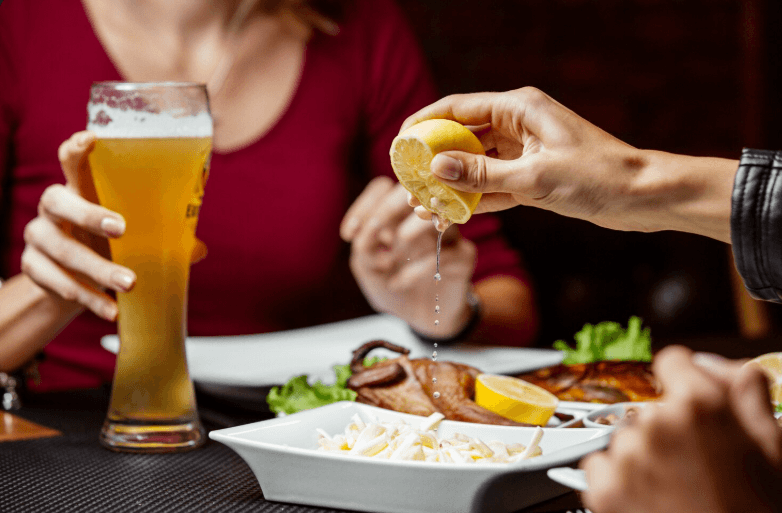
When you go into a conventional British pub on a Sunday at noon, there is typically a brief, almost theatrical pause before the odors hit you. The subtle sweetness of roasted carrots, roast beef, and gravy thickening somewhere behind the bar. It moves through the space in a manner similar to how church bells move through a hamlet.
You notice it even if you’re just in for a pint. Sunday roasts have been more than just a meal in British taverns for generations. It’s been a weekly tradition that combines social glue with comfort food. However, there has been a silent question lately: could a pub exist without it? Strangely enough, the answer appears to be both yes and no.
The gloomy, smoke stained drinking establishments of decades ago don’t look like current pubs at first glance. The number of craft beer taps has increased. Menus list Korean chicken wings or veggie burgers. Premier League games are projected onto corners next to the restrooms by televisions. The tavern has been adapting, much like Britain. Some bars don’t even bother serving meals, especially the newer craft beer establishments. Even yet, there is a slight change when the Sunday roast is completely removed.
| Category | Information |
|---|---|
| Tradition | Sunday Roast Dinner |
| Country of Origin | United Kingdom |
| Common Location | British pubs, homes, gastropubs |
| Typical Dishes | Roast beef or chicken, Yorkshire pudding, roast potatoes, vegetables, gravy |
| Cultural Role | Weekly family and community meal, often served in pubs on Sundays |
| Notable Pub Example | The Ship Tavern |
| Industry Reference | Campaign for Real Ale (CAMRA) |
I was seated in a busy London bar near Holborn a few years ago when the dining room started to fill up before midday. Families arrived early, with kids claiming chairs as if they had been doing this every Sunday for years, and parents shrugging off coats. Yorkshire puddings and nearly architectural looking roast potatoes were stacked high on plates.
It was difficult to avoid thinking that the supper itself was the major attraction as the room gradually filled. The pints were merely extras. It includes economics. One of a pub’s most dependable sources of income is Sunday lunch. Particularly in well known areas, a roast dinner that costs between £18 and £25 frequently sells out fast. The same idea is quietly acknowledged by a number of pub managers: those few hours of Sunday service can make up for the slower periods of the week.
However, culture can be much more important than money. The Sunday roast has a lengthy history. Families used to get together at home for roasted pork and veggies after church. The pub emerged as a handy replacement when fewer people started preparing lavish meals at home due to hectic schedules, smaller kitchens, and shifting customs.
The custom endured, but in an altered structure. Of course, not every pub does it well. Many roasts are forgettable, with platters piled high with veggies that appear exhausted by the middle of the afternoon. Some bars even close early, disappointing those who arrive later. However, something about the room changes when a roast is perfect, with crunchy potatoes, a thick sauce, and Yorkshire puddings that rise like golden balloons. Talk extends. There’s another round.
The custom has also been becoming more posh in recent years. With carefully chosen veggies and slow roasted beef, gastropubs have transformed Sunday lunch into a sort of gourmet display. Sunday lunch in some locations can occasionally feel more like a dining event than a pub custom. And that’s where the ambiguity starts to appear.
Some restaurants have tried eliminating the roast completely off their menus in favor of dishes that are popular every day of the week. From a business perspective, the reasoning makes sense. Planning, a culinary crew, and a lot of fresh ingredients that are only available on one day are all need to run a roast service. However, regulars notice every time a pub subtly discontinues the Sunday roast.
Customers can’t quite explain why, but there’s a feeling that something familiar has vanished. Maybe it’s the weekly regularity, the reassuring belief that Sunday will bring roast potatoes and gravy from a local restaurant. Maybe it’s just the kind of nostalgia that permeates British institutions. Another possibility is that bars are changing into something a little different
Many younger drinkers increasingly regard pubs more like social bars, meeting friends for craft beer flights or cocktails rather than a full lunch. Perhaps not the same food, but food is still important. Nevertheless, the old scene persists on the majority of Sundays in Britain.
The first plates appear when the bar doors open at noon. Roast beef slices are dwarfed by Yorkshire puddings. An additional serving of potatoes is ordered by someone. As they pour pints and balance trays, the bar employees work more quickly than normal. People outside decide to go inside after looking through the windows.
It’s hard to picture the custom going away entirely when you see it in action. In theory, a pub may function without a Sunday roast many already do. However, the roast appears to serve as an anchor for something more profound in British pub culture: a weekly break between cooking at home and going out. If you take it away, the pub is still there. However, it may seem a bit less like Sunday.
https://www.theguardian.com/lifeandstyle/shortcuts/2016/feb/29/sunday-roast-wetherspooms-lunch-dinner-over-posher
https://www.tripadvisor.co.uk/ShowTopic-g186338-i17-k12322714-Sunday_Roast_for_Solo_Traveler-London_England.html
https://www.birminghammail.co.uk/whats-on/food-drink-news/uk-households-who-eat-sunday-29756351
https://www.devonlive.com/whats-on/food-drink/you-can-still-sunday-roasts-3972017