
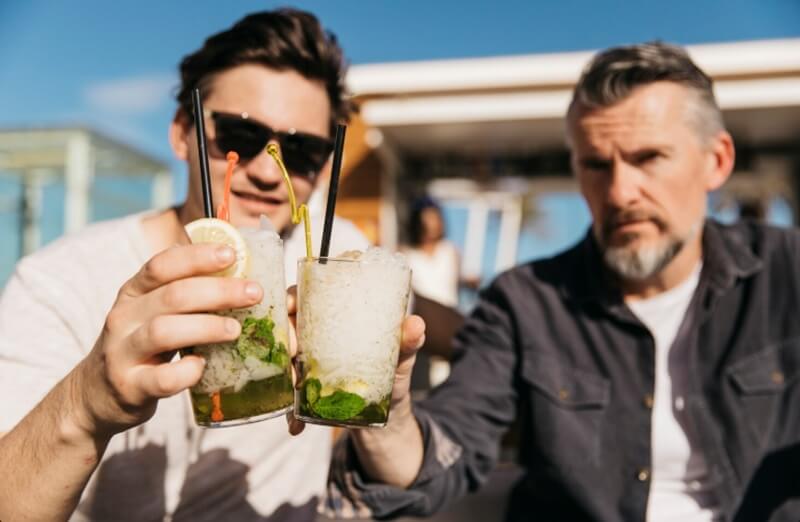
Not too long ago, it was a little awkward to order a non alcoholic beer in Britain. The bartender may arch an eyebrow. There may be a joke regarding driving duties from someone at the table. The alcohol free choice in many pubs was a dusty bottle that tasted rather disappointing and was placed next to the soft drinks. Today, the atmosphere is different when you walk into several taprooms along Britain’s coastline. Alongside classic pints, blackboard menus in areas like Brighton, Margate, and portions of Cornwall now offer botanical spritzes, pale ales without alcohol, and expertly made kombuchas. The glasses have the same appearance. The dialogue sounds the same. Only the hangovers seem to be disappearing.
The change didn’t happen overnight. Carried by the larger no and low alcohol movement that has been growing throughout Britain for over ten years, it discreetly made its way in. According to research, about one third of British adults have tried low alcohol or alcohol free beverages, and many of them now frequently reach for them. As the trend develops, it seems like something more profound than a mere preference for beverages is shifting
| Category | Details |
|---|---|
| Industry Trend | Alcohol-Free & Low-Alcohol Hospitality |
| Market Size (UK No/Low Sector) | Estimated close to £1 billion |
| Growth Indicator | No/low alcohol demand doubled since 2019 |
| Typical Alcohol-Free Definition | Drinks with ≤1.2% ABV |
| Cultural Drivers | Health awareness, moderation, “sober-curious” lifestyle |
| Common Locations | Coastal towns, repurposed retail spaces, taprooms |
| Key Consumers | Gen Z, Millennials, mindful drinkers |
| Reference Organisation | Alcohol Change UK |
| Reference Website | https://alcoholchange.org.uk |
Craft beer itself is where some of the story starts. The craft brewing sector in the UK seemed unstoppable for many years. The number of breweries increased. Railroad arches and repurposed warehouses became taprooms. Shelves loaded with hazy IPAs, pastry stouts, and mango infused experimentation. Headlines have appeared less victorious lately. A net loss of 137 breweries in the last year was recorded by industry associations, indicating that the boom may now be slowing down. New ideas often fall between the cracks when industries shrink. One of them seems to be alcohol free taprooms.
The approach feels unexpectedly natural in coastal Britain, where small independent outlets already flourish in converted shops or old seaside cafés. For example, one brewpub in Whit stable offers a changing selection of zesty alcohol free IPAs, herbal tonics, and 0.5% lagers made by local microbreweries on a windy afternoon. Wide windows overlooking the harbor are surrounded by wooden benches. Customers nurse drinks gently, conversing about cycling routes or weekend markets. Instead than feeling constrained, the mood is laid back. It’s difficult to ignore the fact that the customer tends to be younger.
Gen Z and younger millennials, in particular, appear to be drinking less than previous generations. According to surveys, a large number of them still like going out, but they would rather limit their alcohol use, occasionally switching between alcoholic and non alcoholic beverages in a behavior called zebra striping The pub experience is still appealing. Alcohol is becoming more and more optional.
Towns by the coast might be particularly open to the concept. Many of them have spent years reimagining themselves as centers of creativity, complete with independent food vendors, weekend markets, and art studios. Alcohol free taprooms blend in seamlessly with that setting, providing welcoming social areas for those who might otherwise avoid traditional pubs. The economics are still unclear, though.
It can be challenging to manage a hospitality establishment that specializes in alcohol free beverages. Compared to traditional pubgoers who purchase pints, customers typically consume fewer drinks over the course of an evening. Despite growing enthusiasm in the idea, a number of alcohol free clubs in Britain have shuttered recently due to difficulties with overhead. The entirely dry bar model might have entered the market a bit early.
What seems to be evolving instead is a hybrid approach. Nowadays, a lot of places provide both alcoholic and non alcoholic drinks, allowing patrons to choose without being forced to. One person at a table might be drinking a 5% IPA, another a 0.5% pale ale, and a third a botanical spritz that has no alcohol at all. The evening proceeds as usual. Nobody feels excluded.
A revolution in quality is also taking place. Ten years ago, beer without alcohol frequently had a thin, slightly sweet flavor. The possibilities are much more compelling now. Better brewing methods enable companies to eliminate alcohol while preserving malt complexity and hop smells. These days, some alcohol free IPAs have the same vibrant citrus flavors and sharpness as their full strength counterparts. Small breweries are keeping an eye on things.
Alcohol free or low alcohol products could be a lifesaver for brewers under pressure from growing energy prices, inflation of ingredients, and intense supermarket rivalry. In the UK, drinks with an ABV of less than 1.2% are subject to lesser duty, which somewhat improves profitability. A few of breweries have discreetly expanded their offering to include 0.5% versions of their flagship beers.
Observing this from the bar’s edge gives me the impression that British drinking culture is subtly shifting. The bar is not going away quite the opposite. Its function may be changing from one that is characterized by alcohol consumption to one that is more akin to a social living room. Coastal Britain appears to be putting that theory to the test first, with its blend of autonomous company culture, innovation, and tourism.
The picture of pals leaning across wooden tables, glasses clinking, and laughter drifting out onto the street can seem strangely familiar on a chilly evening at a small seaside tavern. The following morning, when the majority of the patrons awaken with a clear head, there is just a slight difference. It’s a little change. Shifts in drinking culture frequently begin that way quietly, almost imperceptibly, until all of a sudden they feel totally normal UK alcohol Free Taprooms