
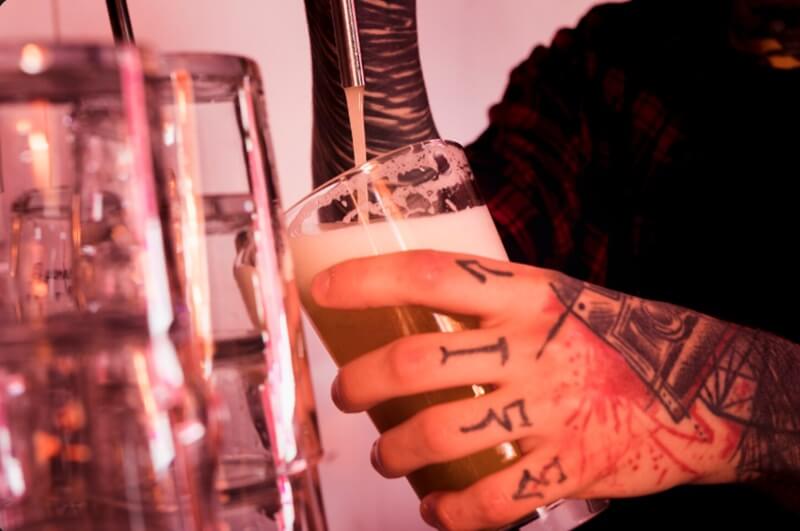
Not too long ago, entering a pub in Britain used to seem like entering a controlled chaotic environment. The sound of overlapping conversations, elbows bumping strangers, and a bartender somehow keeping track of who was next without anyone saying a word. It was successful. It seemed to, at least. Something is different now. Regulars notice it nearly instantly, but not dramatically or in a way that’s easy to identify. The pandemic appears to have hastened whatever was already subtly happening beneath the surface, but the change didn’t happen overnight.
One of the first things you notice when you walk into a pub these days is how well organized everything seems. People wait in line. In fact, line up. courteous, single file, and somewhat wary. It’s difficult not to stop and consider when that became commonplace. Prior to 2020, it was nearly a social custom to lean into the bar, make eye contact, and wait for your turn. That rite now seems… brittle. Perhaps even out of date.
| Category | Details |
|---|---|
| Sector Value (2025) | £24.1 billion |
| Number of Pubs | ~41,691 (declining) |
| Workforce | ~500,000 employees |
| Cultural Origin | Tudor-era alehouses (“public houses”) |
| Key Trend | Fewer visits, higher spending per visit |
| Behaviour Shift | More health-conscious, tech-driven, safety-aware |
People seem to be more conscious of themselves in public places than they were in the past. Socially as well as physically. Talk seems a little more restrained. Groups tend to congregate closer together, sometimes with phones in their hands, half of them focused on one another and the other half on something else. It’s plausible that when limits were eased, the months years, actually spent interacting with others via screens didn’t simply vanish. They stayed.
Naturally, technology has filled in the blanks. Tables have QR codes. All payments are contactless. It is no more uncommon to order a pint without ever speaking to a bartender. It’s encouraged at some pubs. Yes, it is efficient. However, it modifies the experience in a subtle way. It sounds like progress because there is less friction, but there is also less spontaneity. less unintentional conversations. less opportunities for strangers to cross paths.
And there’s the price. In London, a pint is getting close to unpleasant territory £7, £8, sometimes even more. Perhaps the most unexpected aspect is that it is no longer astonishing. Although they still go out, people appear to pick their times more carefully. More scheduled appointments and less casual drop ins. Rather than wandering into a second living room, it’s almost like going to a restaurant.
As this develops, it’s difficult to avoid the impression that pubs are now sporadic rather than regular. Spending per visit may have increased as a result. People don’t attend as often, but when they do, they make the most of it by ordering meals and staying longer. Once a staple of British urban life, the quick pint after work today seems less important. That habit has been subtly undermined by remote work. Leaving a workplace with coworkers has more impetus than shutting down a laptop at home.
Additionally, there is a more subtle shift that appears to influence everything else but receives less attention: individuals, particularly younger ones, are drinking less. It’s enough to change the tone, but not drastically enough to empty pubs. Low alcohol drinks and non alcoholic beers are no longer considered side options. They are included in the primary offering.
Perhaps this is more about reinterpretation than it is about constraint. Drinking is no longer the exclusive focus of socializing. For some, the pub is only one choice among many, competing with games, coffee shops, and streaming services. It doesn’t feel as set in stone as it formerly did to have a night out as the standard weekend itinerary.
Pubs are still around in spite of all of this. Not at all. They’re adjusting, sometimes clumsily, sometimes deftly. Large sports screens, quiz evenings with a theme, live music, and even Wi Fi strong enough to allow people to sit together and browse in silence. Pubs seem to be attempting to maintain their character while adapting to new standards.
The intriguing thing is that the fundamental appeal still exists. People still desire to get together. They still yearn for the common area, the background noise, and the sense of being with people they don’t necessarily know. However, their methodology has evolved it is now more methodical, careful, and possibly even discriminating.
Whether this iteration of pub culture is enduring or merely a new stage in a lengthy history of reinvention is still up for debate. Pubs in Britain have endured economic downturns, wars, and cultural changes. Even when it didn’t seem like they were, they have always made adjustments.
However, it’s difficult to avoid feeling as though something intangible has changed when you’re in a pub today, watching someone scan a QR code, observing the orderly line developing at the bar, and listening to conversations interspersed with phone notifications not completely lost. Just rearranged.
https://www.theguardian.com/lifeandstyle/2026/jan/31/publicans-bemused-single-file-queue-trend-pubs
https://www.bbc.co.uk/news/articles/c2lk1jqzj79o
https://www.morningadvertiser.co.uk/Article/2024/09/13/how-wet-led-pubs-have-changed-post-pandemic