
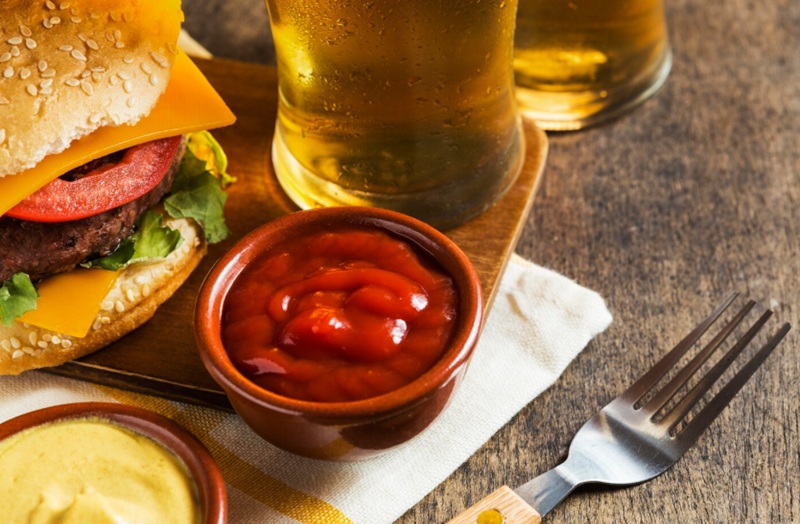
Anyone who has worked behind a pub bar recently is likely to remember this exact scene: a regular orders the standard burger, looks at a small squeeze bottle of something bright green that is resting on the table, and asks, almost suspiciously, what it is. They aren’t as alarmed by the chimichurri response as they may have been five years ago. They shrug, give it a shot, and place another order the next week. Although it’s a brief vignette, it depicts a current event occurring in British bar kitchens.
South American food has been identified as one of the three defining cuisines that will affect dining out in the upcoming year, along with Malaysian and Korean influences, according to Bidfood’s Food and Beverage Trends Report for 2026, which was created in collaboration with CGA by NielsenIQ. Brazilian, Venezuelan, Peruvian, and Colombian flavors are clearly the ones gaining root the fastest, according to the analysis, which is based on surveys of 2,000 UK customers and 100 chefs. It’s difficult to ignore how precise this gets not just “Latin American”, but named meals like ceviche, arepas, and feijoada the kind of precision that implies this isn’t simply a hazy suspicion masquerading as a trend.
| Category | Detail |
|---|---|
| Trend Name | South American Sauces in UK Pub Kitchens |
| Key Cuisines Identified | Brazilian, Venezuelan, Peruvian, Colombian |
| Signature Sauces | Chimichurri, Ají Amarillo, Guasacaca, Salsa Criolla, Pebre |
| Research Partner | CGA by NielsenIQ |
| Consumer Sample Size | 2,000 UK consumers, 100 chefs |
| UK Sauces Market Value (2024) | Over £5 billion |
| Topped & Loaded Dish Adoption | 52% of consumers |
| Foodie Self-Identification | 53% of UK diners |
| Notable Industry Example | Walkabout x Angus and Oink rollout (70+ venues) |
Pubs vary from eateries in that they can’t afford to turn off their patrons. If a bar suddenly started offering Peruvian tasting menus, it would probably be completely sold out by Thursday. Few other menu adjustments can address that issue like sauces can. They are inexpensive, adaptable, and enable a kitchen to offer something truly novel without altering the fundamentals of what customers currently order. Sunday roast remains. The burger is kept. The sprinkling on top is what’s different.
A helpful, practical test case is provided by Walkabout’s recent partnership with the cult sauce company Angus and Oink. Pub patrons have the opportunity to personalize their meals with fiery Caribbean and South American inspired hot sauces in over seventy locations across the country. These sauces are citrus forward, warming, and sometimes shocking. Pubs are the perfect venue for these large, popular flavors, according to the brand’s founder, Scott Fraser, and there’s some truth to that. Perhaps because no one is attempting to be delicate about it, pubs have always been venues where robust flavors are given a fair hearing.
Perhaps even more important than taste are the economics. The attractiveness of “topped and loaded” items, such as fries, jacket potatoes, and nachos covered in sauce and cheese, stems from how inexpensively they can be made to appear costly. Rising prices have been squeezing the UK hotel industry for years. According to data from Bidfood, 52% of consumers already eat this type of food, and 42% think it’s good value. It doesn’t cost much to make a tablespoon of smoky chimichurri rojo or bright yellow ají amarillo, but it turns a plate that might otherwise seem uninteresting and drab into something a diner takes pictures of before they eat.
This also contains a generational narrative. Younger pub patrons, specifically those in the eighteen to thirty four age range that Bidfood targets, are more interested in distinctive, slightly daring dining experiences than in inexpensive beers and a basket of chips. According to the survey, 40% of consumers especially link South American cuisine with a sense of adventure, and 65% of customers view Brazilian recipes in particular as both adventurous and, strangely, reassuring. Pubs have always needed to balance comfort and adventure, and it’s feasible that South American sauces do a better job of doing so than the majority of other options now available.
This did not occur overnight. Before pubs ever got involved, London’s restaurant culture, such as Gaucho with its chimichurri laced steaks and Arepa & Co. selling Venezuelan classics across numerous locations, spent the better part of ten years subtly normalizing these flavors for British customers. It typically works that way. Pubs didn’t catch up until later. Curry sauce, peri peri, and sweet chilli first appeared in independent eateries, followed by supermarkets. One Portuguese African chilli sauce served as the foundation for Nando’s entire brand, so it’s logical to question if Chimichurri or Ají Amarillo could accomplish the same, even on a smaller scale.
Here, there’s still a lot of ambiguity. A chimichurri created for a British pub kitchen won’t taste like one in Buenos Aires, and it definitely shouldn’t attempt. Authenticity is a fine line. Genuine South American chillies can have erratic supply lines, and competition from Korean and Malaysian flavors which Bidfood’s research also noted is not going away. It’s actually unclear if South American sauces will become a defining trend or just one powerful current among many.
Watching this develop across pub menus from London to smaller market towns, it does appear quite established that these sauces fit the unique restrictions of the bar exceptionally well. They are inexpensive to prepare, simple to batch, visually appealing, and adaptable to items that no one is threatening to remove. Food trends are rarely marketed in this way, with lofty claims of innovation. It’s not as loud as that. The table has a squeeze bottle. A regular who, almost by chance, tries something new before placing another order.
i) https://www.designmynight.com/london/bars/south-american-bars-in-london
ii) https://saucydressings.com/blog/cantina-chimichurri/
iii) https://www.standard.co.uk/going-out/restaurants/janet-streetporter-reviews-chimichurris-it-s-nice-to-eat-somewhere-that-s-not-trying-to-be-trendy-a3770346.html