
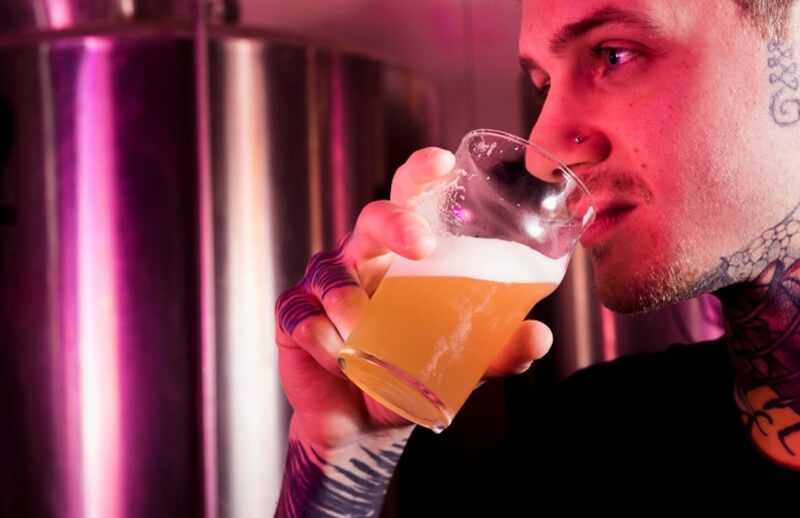
Ordering cider in a bar used to seem like settling down, but that was a long time ago. A safe option that might even be a little boring. Craft beer in particular provided a lot of energy. It possessed the rituals, the language, and the fixation. Around 2015, if you were standing at a packed bar in Manchester or London, you could hear people discussing hops with a level of seriousness typically associated with wine.
Something has changed first quietly, then all at once. On a recent evening in East London, three single orchard ciders were listed on a chalkboard in a small pub that used to take pleasure in its changing IPAs. Each cider was detailed with the kind of care that was previously only found in Burgundy. Tannin structure was being explained by a bartender. Not in jest. Not in an ironic way. Really? It’s difficult to ignore it.
| Category | Details |
|---|---|
| Topic | Craft Cider vs Craft Beer Trends |
| Industry | Alcoholic Beverages |
| Key Regions | UK, US, Europe |
| Growth Trend | Craft cider growing steadily, especially in premium segment |
| Cultural Shift | Move toward local, artisanal, and lower-alcohol drinks |
| Notable Figure | Gabe Cook (“The Ciderologist”) |
| Reference Website | https://cideruk.com |
Despite its inventiveness, craft beer appears to have hit a saturation point. There’s a feeling possibly unfairly that the category has started circling its own ideas after years of hazy IPAs, pastry stouts, and experimental sours. Naturally, drinkers still find it enjoyable, but the urgency has diminished. More familiarity, less exploration. Cider, on the other hand, feels as though it is making its public debut.
Origin has a part in this. In many respects, beer is the result of a process: ingredients are acquired worldwide, recipes are developed, and uniformity is engineered. When made correctly, cider starts in a field. The apples are important. The soil is important. In the glass, even the weather from a specific year appears to persist. People who have become more wary of anything that seems artificial can relate to the narrative.
Additionally, there’s a feeling that drinkers are gravitating toward things that feel rooted, which is difficult to measure but easy to perceive. That wasn’t always the case. For many years, mass produced, excessively sugary varieties that had nothing in common with traditional forms defined the reputation of cider. Bright bottles, sweet characteristics, and ease of drinking and dismissal. After trying those, a lot of beer drinkers never looked back.
However, there aren’t many similarities between that age and the present wave of artisan cider. Small producers have been subtly redefining what cider can be, particularly in the West Country of the United Kingdom. When you stroll through Herefordshire or Somerset orchards, you witness something more like to winemaking than brewing: harvest cycles, sluggish fermentation, and barrels that age in dark barns with a subtle fruit and wood scent.
The outcome may be unexpected. structured, dry, and occasionally nearly austere. Though frequently unforgettable, they are not necessarily instantly amiable. Perhaps this is just what contemporary drinkers are searching for. Additionally, there is a pragmatic perspective.
Cider doesn’t have to work too hard to blend in with many of the current trends. It is frequently gluten free. usually less alcoholic than a lot of artisan beers. easier to combine with meals. These factors are important, particularly for younger drinkers who appear to be more interested in moderation than excess.
Pub owners have begun to take note as well. In Bristol, a landlord casually stated that on weekends, cider flights were starting to outsell some types of beer. Not dramatically, not just yet, but enough to draw notice. He recounted consumers inquiring about the origin of the apples. Ten years ago, such a question would have seemed out of the ordinary however,
it’s uncertain if cider is merely broadening the market or truly stealing anything from beer. Contrary to what headlines imply, the two drinks don’t directly compete. Beer continues to be the most popular beverage in terms of volume, visibility, and cultural awareness. It has been gaining momentum for decades.
Cider, is creating something unique. Slower, possibly quieter, but distinctly different. The way the two worlds are beginning to intersect is intriguing. Brewers are experimenting with hybrid fermentations in partnership with cidermakers. Cider manufacturers are taking cues from beer, including partnerships, limited releases, and even subtle hype. Instead of a takeover, there is a mingling of civilizations taking place.
The difference in tempo is still apparent. It seems as though the craft beer movement has grown and perhaps even taken root. In contrast, craft cider feels incomplete. free form. I’m still wondering what it might be. Perhaps its greatest asset is that ambiguity. As this develops, it seems that the popularity of cider is more about changing people’s perceptions than it is about taking the place of beer. Drinkers are growing more inquisitive and eager to venture outside of their comfort zones. Additionally, cider gives something that feels both fresh and old at the same time due to its blend of tradition and rediscovery.
i) https://www.cider-review.com/2026/01/17/craft-cider-vs-craft-beer-where-are-the-trends/
ii) https://www.betterretailing.com/br/category-management/category-advice-beer-cider/
iii) https://www.wb.camra.org.uk/2025/06/12/cider-is-not-the-villain
iv) https://www.chicagomag.com/chicago-magazine/may-2017/mead-wild-blossom-meadery/