
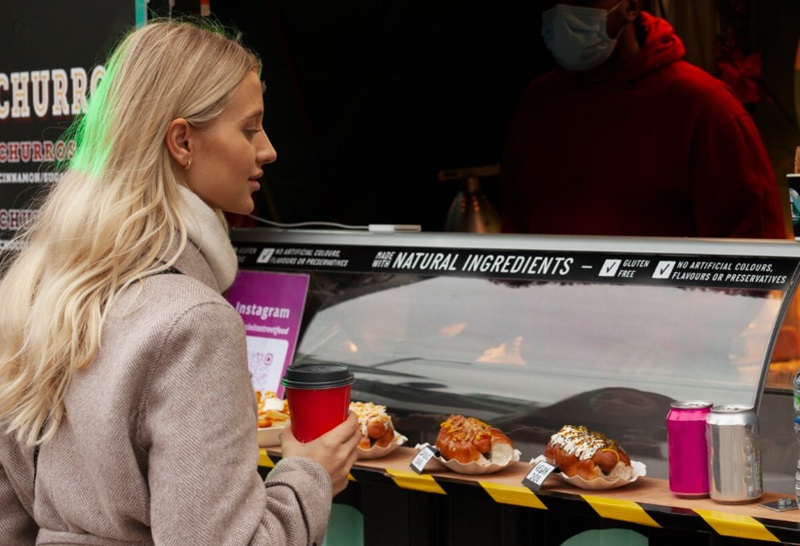
Over the past few years, a certain type of evening has quietly proliferated in British bars. A chef who came with their own knives, their own list of suppliers, and a small but devoted Instagram following lights up a kitchen that would otherwise be dark and preparing reheated burgers. The residency is posted on a chalkboard outside. The regulars inside are intrigued. The bar is three deep and all of the tables are occupied by nine o’clock. It’s working, somehow.
While the concept of a chef or food dealer temporarily residing in a bar kitchen is not particularly novel, the scope and intensity of the model’s current pursuit are. What started out as a casual handshake between an aspirational street food vendor and a struggling landlord has developed into something that appears to be a true structural change in the way independent food service functions in the UK rather than a workaround. It is worthwhile to inquire as to why it occurred and if it will continue.
| Category | Detail |
|---|---|
| Concept | Pub Pop-Up / Chef Residency |
| Origin | Grew from the UK street food revolution, early 2010s |
| Pioneer Model | The Eagle, Farringdon (est. 1991) — world’s first gastropub |
| Key Format | External trader takes over pub kitchen for weeks or months |
| Revenue Split | Percentage of turnover or flat rental, varies by operator |
| Average Pub Menu Item (2025) | £9.14 (main course avg. £11.11) |
| Pub Closures (2025) | 366 permanent closures across England and Wales |
| Food’s Share of Pub Revenue | Rose from 20% to 40% over the past two decades |
| UK Full-Service Restaurant Market | USD 33.49 billion (2025); projected USD 49.85 billion by 2031 |
The transition is driven by a clear crisis. In England and Wales, an average of one pub per day closed permanently in 2025, resulting in the loss of 366 locations in a single year. Many were destroyed or turned into homes and workplaces, and once they are gone, they hardly ever return. Rising business rates, increased national insurance contributions, energy bills that at their post pandemic peak were estimated to be 300 percent higher than pre pandemic levels, and a national living wage that increased by 6.7 percent to £12.21 per hour in April 2025 alone are all well documented examples of the cost structure driving pubs to the brink. Even in cases when turnover has decreased, many operators’ profitability has not. Several industry voices have stated that the math just doesn’t work.
In light of this, a pub’s food offer has gained importance that it did not previously have. In the past 20 years, food’s portion of pub revenue has increased from about 20 percent to closer to 40 percent. Previously, food and drink served complementary functions in the establishment. Pubs with good food thrive. In a market where customer preferences are changing more quickly than ever, the question is how to achieve that without incurring the financial burden of constructing and staffing a complete kitchen and without taking the chance of staking the entire business on a single menu trend.
A rather elegant response to that query is provided by the pop up and residency paradigm. A trader typically brings their own audience as well as their own idea, food, and occasionally equipment. The space, the bar, the operational infrastructure, and the frequent foot traffic are all provided by the pub. Instead of a fixed rent, the arrangement usually operates on a percentage of the trader’s turnover, so both parties share the risk of a slow week and the reward of a busy one.
The financial case for outsourcing a kitchen has never been stronger, according to Scott Stirling, founder of Plate Club, which places residents in pub kitchens across the nation. This is because annual staff turnover in some kitchens is as high as 50%, wages are rising, and rates are constantly under pressure. Beyond the cost issue, he contends that every new residency creates media attention, social media content, and a new cause for regulars to come back, making the kitchen a marketing tool in addition to a source of income.
Because of the startling variation, it is worthwhile to consider how this would actually look in practice. On one end, a pizza van is parked in a Tunbridge Wells local’s parking lot on Friday night, attracting families who remain for three hours and numerous rounds of drinks. On the other hand, Endo Kazutoshi, a Michelin starred sushi chef, is hosting a five month residency at Annabel’s in Mayfair with just 10 covers every night and a blind tasting menu of fourteen dishes.
A South Mexican taco concept at a Dalston community pub, a Thai kitchen establishing its reputation at a terrace in Hackney, and a British Chinese chef cooking through a winter at an east London local are just a few examples of what can be found between those two poles. Famously, Som Saa used a residence at Climpson’s Arch in Hackney to gain so much traction that they were able to raise £700,000 in just two days when they started a crowdfunding campaign for permanent space.
The pop up becomes more than just a landlord’s survival tactic because of this dimension. At a time when operating a restaurant entails beginning fees that most gifted young cooks cannot afford, the residency has emerged as a truly viable career route for independent food traders and chefs. Cooking in a well established pub kitchen, where rent is covered by the host’s drink sales, gives a chef the opportunity to test ideas, create a menu, cultivate a devoted clientele, and establish a business case without the degree of financial risk that comes with a restaurant lease. Residencies open doors, establish reputations, and provide the kind of real world kitchen management that no training school can entirely imitate, according to the chefs who have consistently discussed this.
There are serious issues here that shouldn’t be ignored. It’s really challenging to run two different businesses under one roof, and the failure mode a disjointed experience where customers can’t figure out who to order from or where the food feels like a foreign import rather than a part of the pub is evident enough that several operators have mentioned it as the thing to avoid above all else. Curation counts. An evening can be completely changed by the right merchant in the right tavern at the right time; the improper setup causes conflict that the regulars notice. Although it hasn’t yet happened on a large scale, there is also a risk of saturation: if every pub in a region hosts a rotating residency, it will be more difficult to maintain the novelty that makes the format appealing.
Consumer demand is still high. The independent food trader, cooking their own concept in an old pub room with a pint accessible three meters away, offers something that a chain restaurant just cannot match. Seven out of ten guests say they are willing to spend more for unique eating experiences. A well chosen residency provides the dimension of novelty and craft that younger, experience driven diners are actively seeking, and the pub is a setting with social history built in. There is a perception that the residency model is favored in a way that is unlikely to change rapidly due to the convergence of operator financial necessity and consumer experiential hunger.
It might be inappropriate to ask whether pub pop ups are the way of the future for independent food service. A more realistic way to put it is that they are now among the most crucial tools accessible to independent operators on both sides of the kitchen pass: the traders who need a space to demonstrate their value for a permanent address, and the pubs that need to diversify without going overboard. Evidence from the industry as a whole indicates that this trend is not waning. If anything, it is becoming more organized and professional, and its varied, owner run, and authentically made food is some of the most intriguing being offered in Britain at the moment.
i) https://www.thedrinksbusiness.com/2019/03/uk-pubs-to-get-funding-to-run-post-office-and-library-services/
ii) https://www.pubisthehub.org.uk/news/dorset-pub-serves-up-a-post-office-with-its-pints/
iii) https://www.netsuite.co.uk/portal/uk/resource/articles/business-strategy/food-and-beverage-trends.shtml
iv) https://structure-flex.co.uk/rising-popularity-of-non-alcoholic-beer-creates-new-opportunities-for-breweries/
v) https://www.eastriding.gov.uk/living/rural-matters-here/rural-services/rural-pubs/