
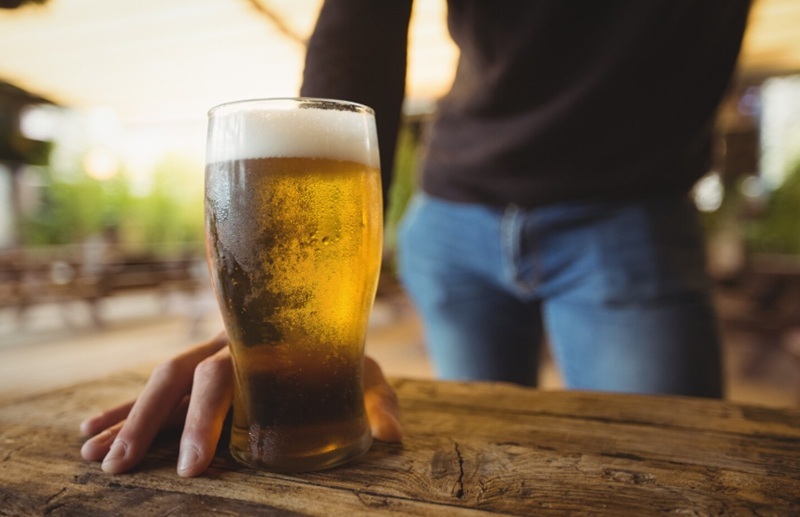
Nowadays, you can find at least one person drinking something that looks precisely like a pint but isn’t if you walk into any pub on a Friday night. The shelf space has a narrative of its own. Once hidden in a dusty corner, supermarkets now place alcohol free beer at eye level, sometimes even in an entire bay. Something has changed, and it’s important to consider if this change is warranted by anything other than deft branding.
In all honesty, alcohol free beer is healthier than regular beer in the majority of significant aspects, but only when it takes the place of regular beer rather than coexisting with it. The majority of the harm in a typical pint is caused by ethanol, which raises the risk of long term liver disease and cancer as well as poor judgment. When you remove it, the drink’s most hazardous component is eliminated. That is not insignificant. It’s not the same as referring to the beverage as a health product, which is where some of the marketing terminology begins to seem a bit generous.
| Category | Details |
|---|---|
| Topic | [Alcohol-free beer] |
| Typical ABV | 0.0% to 0.5% |
| Average calories (330ml) | 60–90 kcal, lower than standard lager |
| Key nutrient concern | [Carbohydrate and sugar content] |
| Gluten status | Varies by brand, check label |
| UK guidance body | [Drinkaware] |
| Pregnancy advice | [NHS recommends avoiding alcohol entirely] |
| Best use case | Direct substitute for full-strength beer, not an addition to it |
Alcohol free doesn’t always equate to zero alcohol, which is a useful point that is sometimes overlooked in informal discourse. For someone in recovery from alcoholism, where even a trace amount might not be suitable, UK labelling permits products up to 0.5% ABV to bear that statement, which is very important. It’s probable that this subtlety in the labeling generates more confusion than people realize, particularly among drinkers who think “0.0” and “alcohol free” are same concepts.
The situation becomes truly intriguing when it comes to calories. Since ethanol contains about seven calories per gram, eliminating it typically significantly reduces the energy value of a pint. The calorie savings aren’t always as significant as the can’s label might imply because brewers frequently add more residual sugar to make up for the lost mouthfeel and sweetness. Instead of relying on the implicit promise on the front label, someone who is meticulously monitoring calories would be better off turning the can over and reading the nutrition panel.
There’s a feeling that the industry recognizes something about contemporary drinking culture that pub proprietors discovered years ago: consumers want the ritual without always desiring the repercussions. This is evident in the way supermarkets currently stock and price these drinks. When Tesla had to persuade doubters that an electric vehicle could feel like a real car instead of a compromise, it faced a similar challenge. Brewers of alcohol free beer are engaged in a similar struggle to demonstrate that their product is not a diluted version of the original.
Another subtle issue is gluten. A person with celiac disease cannot benefit from the removal of alcohol unless the can expressly states that it is gluten free because standard alcohol free beer is typically still brewed from barley or wheat, the same grains that cause issues in full strength lager. It’s simple to believe that eliminating one element fixes all dietary problems, and this is a misconception that should be pointed out.
The NHS’s pregnancy guidelines are clear: abstain from alcohol completely. This implies that anyone who is pregnant or attempting to conceive should use caution while using goods that contain 0.5% alcohol instead of presuming that being “alcohol free” gets them a pass. Although that 0.5% may seem insignificant, the guidelines do not include an exception for small levels, and the rationale behind this caution is still being investigated.
Non alcoholic beer among endurance athletes has been the subject of a small but intriguing body of research. One marathon study found that the polyphenols in non alcoholic beer were associated with reduced post race inflammation and fewer respiratory infections in male runners. That seems convincing until you realize that the context and dosage were unique to the study, not a general conclusion that applies to anyone sipping a can while lounging on the couch. It’s the kind of outcome that’s difficult to translate into practical guidance and simple to exaggerate in a headline.
The calculation seems to depend less on the drink itself and more on what it’s replacing for those attempting to reduce their overall alcohol use, whether through Dry January or just trying to manage their relationship with alcohol on a daily basis. You’ve made a significant change when you switch from a full strength pint to one without alcohol. You’ve simply increased the amount of acidity and carbohydrates in your evening without making any changes if you add an alcohol free beer to your regular consumption.
Additionally, the social dimension is often overlooked in discussions about this subject. For many people, it is genuinely valuable to stand at a bar with what appears to be beer without having to explain a personal decision to coworkers or in laws. It’s arguable whether it qualifies as a clinical health benefit, but it’s difficult to ignore the fact that social inclusion and mental health are just as important as liver enzymes.
Observing this market’s growth, it is evident that alcohol free beer occupies a peculiar middle ground. Despite what the cleaner branding may suggest, it’s not a health drink, and it’s definitely not comparable to water or tea. It’s more than just beer without the fun. It falls in between habit and damage reduction; for some, it is helpful in certain circumstances, but for others, it is essentially meaningless. Right now, the most honest thing anyone can say about it is that the label still counts more than the marketing content.
i) https://www.nhs.uk/live-well/alcohol-advice/the-risks-of-drinking-too-much/
ii) https://www.drinkaware.co.uk/advice-and-support/alcohol-free-drinks/alcohol-free-drinks
iii) https://www.gov.uk/government/consultations/updating-labelling-guidance-for-no-and-low-alcohol-alternatives/updating-labelling-guidance-for-no-and-low-alcohol-alternatives-consultation
iv) https://alcoholchange.org.uk/policy/policy-insights/alcohol-free-and-low-alcohol-drinks