
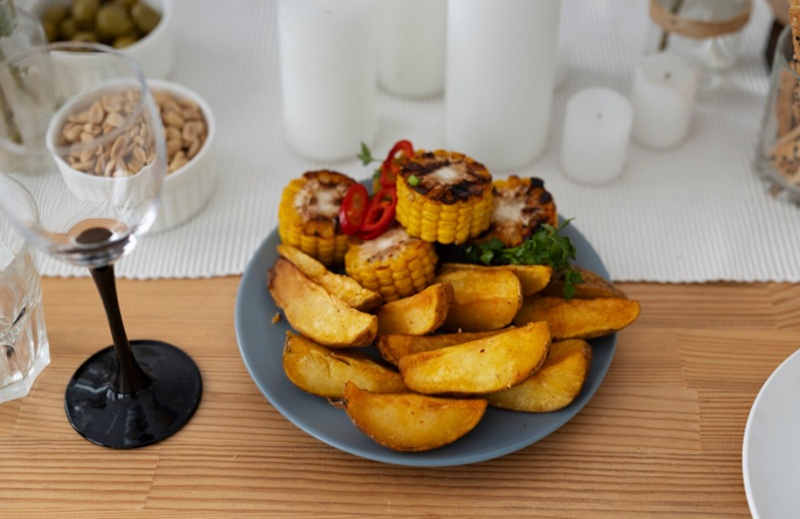
The roast potatoes were perfect is a phrase that frequently appears in British pub reviews, published by various individuals in various towns for various publications.* It’s not beef. The gravy, not. The vegetables. Technically, obsessing over a side dish might seem insignificant, but if you spend enough time reading Sunday lunch coverage from Time Out, The Guardian, and local food blogs, you’ll notice a pattern that is difficult to ignore. Maris Piper has quietly been named the new star of Britain’s most competitive, emotive, and commercially loaded lunch.
Before anyone began taking pictures of their roasties for Instagram, the foundation for this was established. Due in part to medieval feasting, Tudor associations with beef, and the pragmatic Victorian practice of leaving a joint to cook while the household was at church, Sunday roasts have an almost ceremonial weight in British culture. It was never only a dish. Season, family, religion, and repetition all influenced this weekly practice. And potatoes were always a part of that ritual, always anticipated, and always a particular type of test. The level of scrutiny they now draw is what has changed. Between the gastropub boom and the emergence of social media food reviewers, people began to actively evaluate roast potatoes instead of just expecting them.
The scope of the consensus is captured by YouGov data. According to 89% of Britons, roast potatoes would come before gravy, Yorkshire puddings, and everything else on their perfect Sunday roast, making them the king of the trimmings. Further, a Kantar study revealed that 84% of respondents thought roast potatoes were necessary for the dinner, a higher percentage than those who thought meat was. When you consider it, that is astounding. The meat is the nominal source of the dish’s name. Typically, the most costly part is the protein. The potato has subtly surpassed it in popular opinion.
| Detail | Information |
|---|---|
| Dish | Roast Potatoes (Sunday Roast) |
| Origin Country | United Kingdom |
| Cultural Occasion | Sunday Lunch / Sunday Roast |
| Key Varieties Used | Maris Piper, King Edward, Desiree, Agria |
| Preferred Cooking Fat | Duck fat, goose fat, beef dripping |
| Survey Favourite | 89% of Britons list roast potatoes on their ideal Sunday roast (YouGov) |
| Good Food Guide Nominations (2024)** | 18,000+ public nominations for best pub roast |
| Commercial Impact | Pubs nailing the roast have reported food sales rising by up to 44% |
| Key Media Coverage | Time Out, The Guardian, Condé Nast Traveller, The Standard, Londonist |
Critics seem to have an innate understanding of this. The method is described as “perfect roast potatoes, properly cooked meat and a decent plant based option” in Time Out’s guide to London‘s greatest Sunday roasts. This puts the potato ahead of the joint, perhaps indicating where the true benchmark is. Condé Nast Traveller goes one step further and incorporates the crunch of the roast potato into the entire emotional ambiance of a wonderful roast, including the nods of satisfaction when the potato sounds perfectly between the teeth, the loosening of belts, and the napkins used after gravy spills. In one assessment, the author acknowledged that the roast potato crunch, which was described as audible from across the room, was the line that carried the story even in a setting where the àte de boeuf was exceptional. The potato made the narrative, even though the meat might have justified the cost.
This makes sense in part because roast potatoes are actually very harsh in a busy bar kitchen. A competent provider and a thermometer can assist bring a good piece of meat to the table. A completely different set of choices is required for good roast potatoes, starting with the choice of variety (Maris Piper, King Edward, Desiree, the floury types that fluff and crust), continuing through parboiling time, steam drying, fat temperature, tray spacing, and concluding with the narrowest window between ideal crunch and the steam that kills it. The secret to crunch, according to Delia Smith, is the roughened edge. The roast potato, not the beef, is the true star of the show, according to Jamie Oliver. They’re neither acting strangely. A roast potato has virtually nowhere to hide, which is something that bar chefs are familiar with and afraid of.
This is the reason why reviewers seek for the potato when they want to claim that a pub kitchen is actually in charge. The Standard has claimed that roast meals out have frequently let down “sub par potatoes” before saving its sincere compliments for establishments where roasties break into golden shards or show up shining as if someone really cared about fat temperature. Londoners have hailed “crisp/flocculent perfection”, “epically crispy” roasties, and platters saved by “properly good potatoes.” These are not words to be thrown away. They are responsible for the entire review.
This argument also has an authenticity component, which is worth examining. The humble potato has become more powerful as a kind of honesty test as the pub roast scene has grown more costly and upscale. Dry aged beef is considered premium. Gravy made from bone marrow is a luxury. It isn’t a roast potato. Ultimately, it’s a spud. It’s a sign that the kitchen has not forgotten what Sunday lunch should be like when a sophisticated gastropub with elegant glasses and a serious wine selection serves up a memorable roastie. When it doesn’t, the entire practice may begin to resemble a performance. Reviewers have determined that the potato is the anti bullshit tool at the center of the British roast plate.
Social media has simply made the situation more intense. Time Out and the Mirror regularly highlight the Instagram account Rate Good Roasts, which rates restaurants in a variety of areas, including as potatoes, meat, Yorkshires, gravy, and value. Potatoes have their own judged category, which says it all. A well roasted potato conveys color, blistering, surface dryness, and probably fluffiness in a single picture that a slab of steak cannot quite match, making them exceptionally effective social media material. Before anyone has even taken a bite, a potato that looks good already sounds good in the mind.
It’s difficult to ignore how frequently the potato appears to overshadow all other elements at the pivotal point of verdict while reading the entirety of UK review writing. The roast potato is referred to as “the star of the show” in Condé Nast Traveller’s London roundup of the Heston Blumenthal roast. Calls for time out The beef fat potatoes from Golden Tooth are “some sort of heavenly hybrid of jacket potatoes and chips.””Duck fat potatoes, fluffy potatoes, garlicky potatoes, and crackling roasties repeatedly appeared in The Good Food Guide’s 2024 national ranking, which was based on 18,000 public nominations, as if the editors were unable to stop their readers from raving about them.
It’s unknown if that pattern will continue for ten more years. Pub roast culture is constantly changing, absorbing new influences, and resisting the allure of the heat lamp and the cost cutting measures that infiltrate during challenging market times. It seems as though the potato’s current celebrity status hinges in part on upholding the extremely high standards that have been established around it. When those expectations are not fulfilled soggy, salty, pale, or lukewarm the disappointment seems out of proportion to the ingredient’s lowly rank. It is nearly cultural. In a British pub, a lousy roast potato isn’t just a terrible dish. It’s a bad concept. In the end, this is the reason why reviewers continue to write about them.
i) https://www.bestsundayroast.co.uk/pub
ii) https://sustainhealth.fit/lifestyle/roast-potatoes-best-sunday-roast/
iii) https://www.atvtoday.co.uk/265072-food/
iv) https://www.derbyshiretimes.co.uk/lifestyle/food-and-drink/survey-uncovers-evolving-preferences-in-sunday-roasts-the-great-debate-of-what-belongs-on-the-plate-5073444
v) https://www.standard.co.uk/lifestyle/best-sunday-roast-lunches-near-london-b1055206.html