
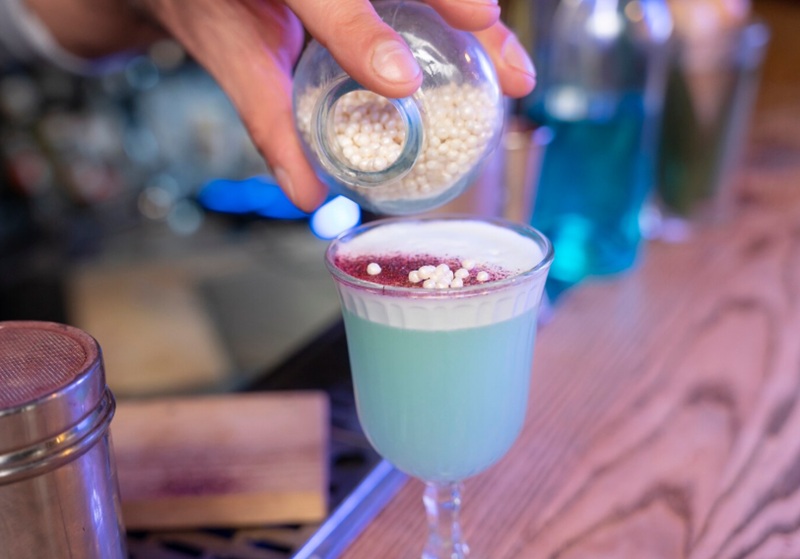
Enter a bustling Friday night bar in Soho or Shoreditch and see what goes on behind the bar. Yes, the ice still rattles, but the sound that follows is becoming less and less like a shaker. It’s the gentle hiss of a draught cocktail tap or the sharp pop of a can. The rhythm of British drinking has changed, and many operators didn’t realize it until names like Funkin, BuzzBallz, Whitebox, and Gather began to appear on their order sheets.
The shift has been gradual rather than abrupt. From about £228 million in 2014 to an expected £543 million in 2024, the UK off trade RTD category has more than doubled in value over the last ten years, and the on trade is rapidly catching up in ways that would have sounded odd even a few years ago. Publicans believe that the decision now is not whether to carry pre mixed drinks, but rather how many lines to put them on the menu.
| Key Information | Details |
|---|---|
| Sector | Ready-to-Drink (RTD) Cocktails — UK On-Trade & Off-Trade |
| UK Off-Trade Value (2024) | Estimated £543 million |
| Growth (2014–2024) | More than doubled from ~£228m |
| Fastest-Growing Sub-segment | RTD cocktails & long drinks (~4% CAGR forecast to 2028) |
| Top Consumer RTD Choice | Pornstar Martini (14.2% of preference) |
| Core Demographic | Ages 25–34, weekly on-trade visitors, above-average monthly spend |
| Leading Players | Diageo, BrewDog Distilling Co, Global Brands, Funkin, Whitebox, BuzzBallz, The Drinks Bureau |
| Recent Duty Impact | August 2023 spirits duty rise of 10.1% |
The motivations are not sentimental. The cost of ingredients, staffing constraints, and the straightforward math of margin have all contributed. The owner of Little Mercies in north London, Alan Sherwood, put it bluntly when he stated that customers are more interested in quality and speed of service these days than in the theater of cocktail making. Over the past year, his cans of Kiwi Gimlet and Moro Margarita have expanded significantly. Depending on the generation of bartender you speak to, the comment’s impact varies, but the sales numbers appear to support him.
A similar argument has long been made by Craig Chapman of Global Brands, the distributor of VK and Hooch. He discusses how Gen Z drinkers do not consider RTDs to be inferior to “proper” cocktails. They have grown up with them. WKD Blue continues to lead VK Blue and Smirnoff Ice Red are near the top of the Morning Advertiser’s beverages list, which is almost nostalgic, but the items on the shelves surrounding them have changed beyond recognition.
The interesting part is that evolution. Whitebox is packing a 32.6% ABV Dirty Martini into a 100ml can. Pimentae’s tequila based beverages have shifted to aluminum in part to accommodate festivals and in part because cans do a better job of preserving lime freshness than glass. Bag in box Espresso Martinis were introduced to UK pubs and kitchens by the Drinks Bureau. Once a curiosity, kegged cocktails are now a functional feature of mid market bar setups. While some operators continue to use the term “alcopop” out of habit, it’s difficult not to believe that the category has subtly outgrown it.
Jennifer Runciman of Diageo has been open about the importance of this from the standpoint of an operator. She notes that RTDs are expanding four times more quickly than the larger alcohol industry, with cocktails increasing by about 16% annually. Her argument to publicans is more pragmatic than poetic: even without traditional cocktail training, a bar staff can consistently serve a Espresso Martini in less than 10 seconds. When you’re trying to run a Saturday night shift short, it’s difficult to reject that argument.
The same story is told slightly differently by Steven Kearsley of BrewDog Distilling Co. In order to support its own bars, the firm launched its RTD line. Later, it saw demand spread to supermarkets, festivals, and other on trade locations. He claims that the new Wonderland line has received “superb” feedback a term used by executives but in this instance, sales seem to be holding it up.
All of this is still tense. The 10.1% duty hike in August 2023 came at a difficult time for spirit based RTDs, which are subject to higher taxes than malt or wine equivalents at the same ABV. It makes sense that bartenders who learned how to make beverages from scratch are conflicted. The question of whether RTDs cannibalize other menu items or actually increase overall spend remains unsolved. Although it’s still unclear in some settings, the majority of operators appear to believe the latter.
The larger shift seems less controversial. For brunch service, hotel bars are increasingly using RTDs. Draught cocktail systems are used by pubs during sporting events because, when four hundred people order in twenty minutes, uniformity is more important than style. Cans are easier to recycle, lighter to transport, and probably more aesthetically pleasing in accordance with Extended Producer Responsibility regulations. This is not glamourous at all. It’s the kind of structural shift that usually outlasts the trend cycle, and it appears that the rest of the UK hotel industry will stop referring to it as a trend altogether in 2026.
i) https://store.mintel.com/report/uk-vodka-gin-rtd-market-report
ii) https://www.accio.com/business/uk-ready-to-drink-cocktails-market-trends
iii) https://www.thespiritsbusiness.com/2025/05/whats-driving-the-rtd-boom/
iv) https://www.morningadvertiser.co.uk/Article/2025/09/01/managed-hospitality-groups-continue-a-flat-summer-of-trading/