
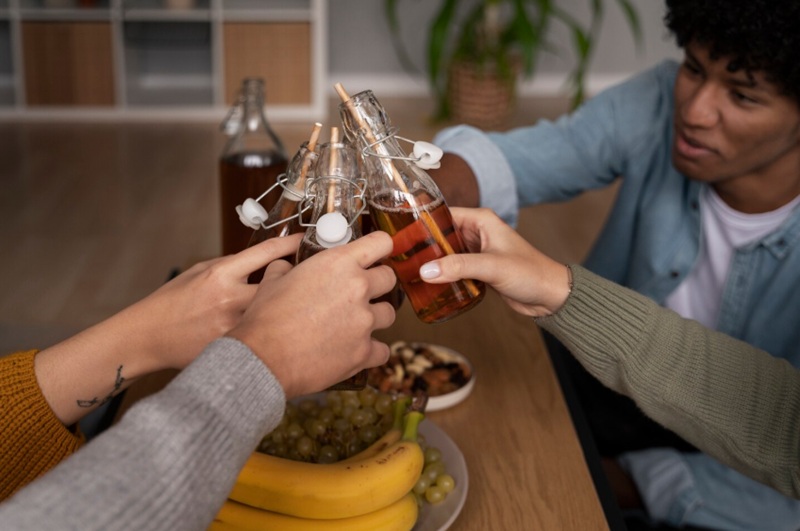
Something has changed when you enter a respectable bar on a Thursday night in Leeds or Sheffield. They’re working harder on the handpulls, those squat brass levers that seemed to belong to fleece jacketed retired men for years. The patrons leaning against the bar appear younger. Instead of pints, some people are clutching thirds. Some are filming the pour. It is something, but not quite a revolution.
Cask ale is declining, according to the figures. The value share of on trade beer dropped below 7%, and volume sales decreased to about 1.28 million hectoliters in 2025 from 1.46 million two years prior. If one were to read those numbers alone, they would conclude that the category is declining. There is an odd counter current hidden inside the same data. 25% of 18 to 24 year olds typically ordered cask, up from 16% the previous year, according to a SIBA linked YouGov study of 2,250 drinkers. Over a 50% increase in just a year, defying almost everything else.
| Quick Facts: UK Cask Ale in 2025 | Details |
|---|---|
| Category | Live, cellar-conditioned British beer served via handpull |
| Typical ABV Range | 3.4% – 4.5% |
| Recommended Serving Temperature | 11–13°C (per Cask Marque) |
| Shelf Life After Tapping | Approximately 3 days |
| Cask Volume on Draught (2025) | ~1.28 million hectolitres (down from 1.46m in 2023) |
| Value Sales (2025) | ~£947 million |
| 18–24-Year-Olds Regularly Ordering Cask | 25% (up from 16% in 2024) |
| Industry Body | Society of Independent Brewers and Associates (SIBA) |
It is difficult not to interpret this as a tiny generational gap. Younger drinkers are picking their beer more carefully rather than turning it down. Cocktails are pricey, lager is aggressively promoted, rent is steep, and a night out can cost a small fortune before the first drink is consumed. Cask begins to look fair, frequently costing a pound less than the keg IPA on the same bar. When choosing a beer, 59% of 18 to 24 year olds cited pricing as crucial, up from 51% the year before, according to SIBA. The conversation is moved just by that.
Pricing by itself would simply purchase curiosity rather than loyalty. It appears that something else is happening. Younger customers are already aware of the allure of small, locally produced, somewhat flawed goods because they grew up in natural wine bars, sourdough bakeries, record stores, and independent coffee roasters. Cask ale has always subtly upheld those ideals. The majority of it is brewed not far from the bar that serves it. A large portion of it originates from truly autonomous companies. According to a YouGov survey, 81% of beer consumers believe that corporate owned companies misrepresent themselves as craft. When correctly sourced, Cask easily avoids that criticism.
The catch is that the barrel only functions when the cellar does, and there is always a catch. A live beer that has been resting on a handpull for an extended period of time betrays all that the category purports to be. Cask Marque advises selling out within three days of tapping and serving at 11 to 13 degrees. Many bars fail to meet both criteria. It’s a specific type of little tragedy to watch a young consumer gently switch to lager after taking their first sip of a warm, weary pale ale. There are countless options available to them. They won’t stay for another opportunity.
It seems that the more skilled operators are becoming more popular. Pubs that attract younger patrons typically run fewer handpulls but pour them correctly. They write “tapped today” in chalk on the board. They don’t fuss when they offer thirds. Instead of detailing brewery history, their personnel can characterize a beer as smooth, fruity, and 4%. Thornbridge has stated openly that it wants its cask line to feel innovative rather than traditional. More than any campaign, it’s that perspective that changes the situation.
Glassware is more important than purists would like to acknowledge. The same drink reads differently in a contemporary stemmed glass. A spotless pump clip with discernible flavor characteristics also helps. For decades, Cask has been ensnared in a visual environment that said “not for you” to anyone under thirty. That is gradually changing in places.
This has a helpful parallel. Without claiming to be something it wasn’t, Guinness an older beer style by nearly all measures became a cultural phenomenon among young drinkers. The familiar glass, the moderate strength, the slow pour, and the settle. Cask lacks a cohesive visual language, but it has its own ritual and perhaps superior variety. Each pump clip is unique. That fragmentation is horrible for immediate recognition but fantastic for exploration.
Nevertheless, the circumstances are exceptionally favorable. Younger consumers desire flavor, value, freedom, less carbonation, and a hands on activity in a social setting. When served correctly, cask can provide all of it for less than $5. According to Lumina and CGA data, Gen Z over indexed in on premise visits, meaning they continue to frequent bars. All they want are lively pubs.
Execution will determine if this is a true cultural revolution or a footnote in a challenging decade. Treat younger consumers as inquisitive rather than naive, pour fewer casks, pour them well, and describe them in terms that regular drinkers actually use. It has always been a good product. It simply has to be viewed once more.
i) https://drinksretailingnews.co.uk/real-ale-finds-favour-with-younger-crowd/
ii) https://www.beerguild.co.uk/news/gen-z-beer-drinkers-hold-the-key-to-saving-cask-ale
iii) https://wb.camra.org.uk/2025/05/15/brewers-in-survival-mode
iv) https://londondrinker.camra.org.uk/wordpress/index.php/2026/05/27/camra-pub-information-update-74/