
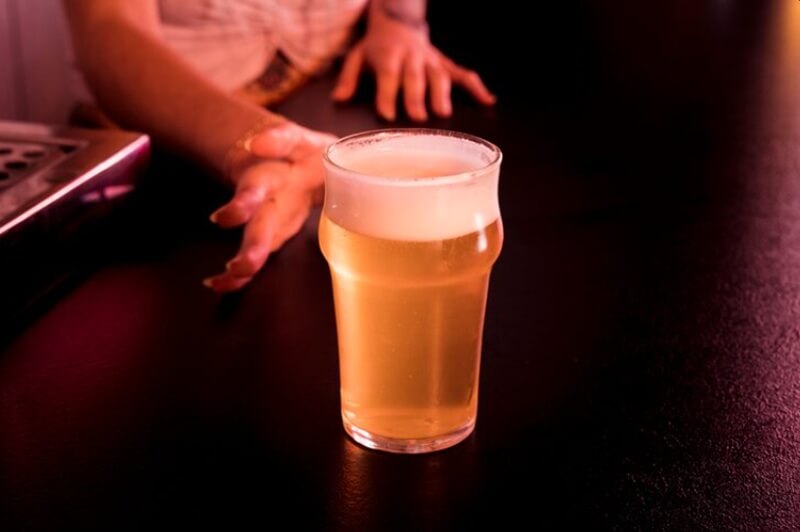
Usually it begins rather innocently. Around the third drink someone offers Just one more. It may be you or a friend leaning over the table. The evening is going well the conversation is easy. In an instant the decision has already been partially decided. It’s interesting to consider how little real decision making is taking place at that very instant. Choosing feels liberating. Actually it isn’t.
In an attempt to comprehend what transpires in the brain at precisely this type of low stakes high consequence instant neuroscientists have put in a significant amount of work. In his research neurologist Antonio Damasio whose studies on decision making have shaped our understanding of the rational mind once used the exact phrase as an example: whether to have just one more drink before hitting the road. He contended that the decision isn’t just rational. It is influenced by physiological conditions emotional indicators and the interaction of brain systems that don’t give a damn about what you’ll regret in the morning. As it happens the body casts a vote before the mind has had a chance to consider its options.
| Detail | Information |
|---|---|
| Topic | Psychology of “Just One More Drink” Decision-Making |
| Field | Behavioral Neuroscience / Addiction Psychology |
| Key Theory | Somatic Marker Hypothesis (Antonio Damasio) |
| Core Brain Structure | Basal Ganglia, Prefrontal Cortex, Reward Pathways |
| Key Chemical | Dopamine |
| Related Conditions | Alcohol Use Disorder (AUD), Habit Formation, Impulse Control |
| Relevant Research | Habit formation takes an average of 66 days to become automatic |
| Reference Resource | National Institute on Alcohol Abuse and Alcoholism (NIAAA) |
The decision to just one more drink is psychologically charged because it lies at the nexus of neuronal reward emotion and habit. Dopamine the brain’s abbreviation for that was worth it is activated by alcohol. The initial drink creates a tiny trail. It’s reinforced by the second. The brain stops analyzing the option around the third or fourth. It is executing a program. When a cue such as the clink of glasses a familiar bar or a particular type of fatigue is linked to a behavior the reasoning part of the mind tends to catch up after the decision rather than before it. Habits are acts that are automatically triggered in response to contextual cues.
It has an almost uncomfortable mechanical quality. Deep within the brain a mechanism called the basal ganglia silently absorbs repetitious activity and transforms it from conscious decision making to automatic routine. When learning to drive or play an instrument that’s helpful. When alcohol is a part of the routine it changes. Preferring efficiency the brain begins classifying drinking in this context with buckling a seatbelt and washing hands after the bathroom as just another contextually triggered action that requires minimal conscious effort.
Alcohol’s contribution to this process is very nuanced. Drinking damages the brain circuits that are in charge of breaking the habit loop in contrast to most other habits. With every drink the prefrontal cortex which is responsible for executive function forward planning and self regulation gradually dulls. Therefore by the time the fourth drink decision is made the system that could otherwise pump the brakes is already weakened. It’s similar to asking someone to proofread their own work when they’re already exhausted: mistakes increase as their ability to recognize them diminishes.
Here emotion has a part that is sometimes overlooked. Excessive drinking is avoidant in nature not only problematic drinking but also regular social drinking. People use alcohol to reduce the social stakes of an evening they’re not entirely comfortable with ease nervousness or calm an uneasy feeling. This type of usage is not uncommon. However it teaches the brain. The relationship strengthens each time a challenging emotion comes before a drink and the drink eases that discomfort. The behavioral reaction and the emotional cue eventually merge. Many people who believe they drink for pleasure may actually be drinking to control emotions they haven’t yet given names to.
Peer pressure is important as well and it’s important to state clearly that it doesn’t have to be violent in order to be successful. Real psychological influences include a friend raising an eyebrow the group’s unstoppable momentum and the subtle unease of being the first to set down your drink. They use the same compliance circuitry but they’re not as obvious as someone passing you a drink. You begin to realize how much of the decision is actually a social negotiation rather than a private one when you watch this happen at a table.
Recovery supporters frequently use the 24 hour framework which emphasizes abstaining from alcohol today rather than committing to long term abstinence which can be crippling. It is based on a true psychological principle: current context is vivid and potent while long term goals are abstract and far away. The temptation to just one more is effective since it is in the present tense. Something as immediate is needed to counter it: a tangible present commitment as opposed to an ambiguous future goal.
A similar habit formation principle is worth considering: depending on the intricacy of the behavior being altered it can take up to eight months for a new behavior to become automatic with an average of 66 days. That’s clarifying rather than depressing. Individuals who battle with the just one more pattern frequently accuse themselves of lacking willpower as if moral effort alone could override the brain’s reward circuitry. It cannot completely. Repetition in novel situations novel cues and minor victories that the brain starts to link with reward are what actually rewire the habit.
The research indicates that the just one more drink moment is rarely just about the drink while it’s still unclear exactly where normal habit ends and dependency begins the line is more of a gradient than a wall. It has to do with pattern context emotional state and the brain’s natural tendency to seek out the familiar and follow the rhythm that repetition has ingrained in it. Recognizing that does not justify the decision. However it does turn the decision from a mystery into something you can actually change with the correct amount of effort.
i) https://www.rehabs.in/news/do-you-have-a-drinking-problem-signs-you-shouldnt-ignore/
ii) https://www.feelinggoodinstitute.com/webinar/mind-over-matter-using-cbt-to-conquer-temptation-and-establish-healthy-habits
iii) https://www.healthline.com/health/how-long-does-it-take-to-form-a-habit#takeaway
iv) https://www.sunflowersober.com/magazine/addiction-and-the-brain-why-quitting-is-so-hard-and-what-actually-works