
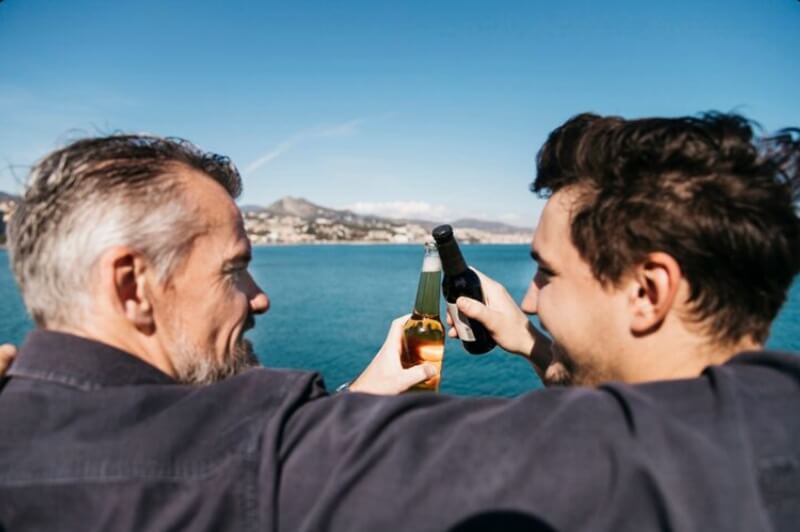
On a Friday night you may sense that something has changed when you go into a British bar. Quietly and steadily like the tide approaching yet not violently or overnight. A non alcoholic pale ale is being ordered by the woman working at the bar. There is a buffet of small meals and two beers shared by the four people in the corner. The landlord is behind the bar looking both relieved and a little perplexed. It’s a packed pub. That part is still the same. However what people are doing there has.
In Wales and England more than 400 bars closed in 2024. When you stand in a location that has been selling ale since the coaching route was muddy and the horses needed stabling that number has a certain weight. Hertfordshire’s St Albans used to have 92 bars within a one kilometer radius making it more of a festival site than a market town. A song from the Victorian era listed them all by name. About a third are still alive today. You may be impressed or alarmed by this survival rate depending on your personality.
| Category | Detail |
|---|---|
| Institution | The British Public House (Pub) |
| Origin | Roman tabernae → medieval ale-houses → 19th-century beerhouses |
| Pubs closed (2024) | 400+ in England and Wales |
| Adults who don’t drink alcohol | ~33% of UK adults (2025) |
| Low/no-alcohol market (UK, projected) | £800 million by 2028 |
| Typical pub annual tax contribution | ~£200,000 |
| Alcohol duty increase (Feb 2026) | +3.66% (in line with RPI inflation) |
| Gen Z teetotal rate | 26% (vs 15% of 55–74-year-olds) |
| Key industry body | British Institute of Innkeeping (BII) |
| Reference | www.bii.org |
By now the pressures are widely known. Alcohol duties have increased by 3.66 percent since February 2026. Contributions for National Insurance are rising. energy bills that are still far higher than they were before the crisis despite recent decreases. And then there’s the more significant more difficult to measure change: a generation that still frequents bars but consumes significantly less alcohol there. Almost 40% of all beverages in UK bars and pubs are no longer full strength. That’s not a glitch or the hangover from January. This fundamental shift is taking place in real time.
There’s a feeling that the industry is still figuring out how to handle this. The landlord isn’t exactly reading the room when he writes down a few alcohol free lagers on the specials board and calls it a day. According to research conducted by KAM Insight in collaboration with Lucky Saint 37% of adults in the UK have either left a venue early or expressed dissatisfaction due to insufficient low and no alcohol options. This is an increase of six percentage points over the previous year. Some venues have not yet made the connection and are silently losing patrons. In the on trade an estimated £800 million in revenue is unclaimed from consumers who choose tap water since there isn’t anything better.
The fascinating thing about very successful pubs is that they don’t usually claim to be doing anything revolutionary. Sean Hughes the landlord of The Boot in St Albans which is located across from England’s only remaining medieval town belfry speaks more about community than strategy. His pub attracts both locals and visitors in about equal measure a crossroads quality that not every town can produce.
He thinks that mutual investment rather than foot traffic control is what keeps it alive. A sort of unofficial WhatsApp support network is run by local publicans in the area with emergency keg deliveries and group problem solving. It sounds a little outdated. It is virtually outdated. It also functions.
Together the data and the anecdotes indicate that the pubs that survived this time period did not choose to cater to either young or old patrons drinkers or non drinkers gastropub or conventional boozer. They are the ones that fought the need to define themselves too strictly. For instance competitive socializing activities like mini golf shuffleboard and darts venues have drawn a crowd that could have spent the evening elsewhere. Perhaps the pub was never truly about the pint at all when it was operating at its best. It was the pint that brought things together on a social level. When you take away the social responsibility to drink you are left with a room full of individuals who still want to interact with one another. No one has lost that instinct.
The headlines give the impression that the generational picture is simpler. It’s true that 26% of Gen Z adults abstain from alcohol completely which is almost twice as high as the percentage of people in their 50s and 60s. However the notion that younger people have just given up on pub culture doesn’t exactly fit what you see on Friday nights in towns like St Albans. The population is younger than it was five years ago. What has changed is the pattern of consumption during the visit or “zebra striping ” as the industry now somewhat optimistically refers to the habit of switching between alcoholic and non alcoholic drinks during a single session. Just a year ago only 28% of adults in the UK routinely did this; today a third do so.
All of this is clouded by the tax issue which has a mathematical foundation for the industry’s annoyance. An average bar makes an annual tax contribution of about £200 000. It vanishes completely when it shuts. In addition to losing a local institution the government also loses money. The drink drive limit in England and Wales which is now the highest in Europe is being proposed to be lowered. This has alarmed rural publicans who rely on clients arriving by car. We’ll have to wait and see if that plan moves forward. However the combined impact of salary increases duty increases and regulatory pressure has left many landlords feeling as though increments are managing them out of business.
Observing all of this it’s difficult to ignore the fact that the pubs with the best chance of surviving are those that know who they are. It’s not only a drinking place. A location to be accepted. Another stop on the local crawl is the lower Red Lion in St Albans where the landlord speaks of his regulars in the same manner that you might speak of your neighbors.
Conversations start between people who wouldn’t otherwise cross paths. Depending on the time of night it’s a community center with better furniture and a functional fireplace. It is a genuine value that is difficult to duplicate. Before more of those rooms go dark for the final time the question is whether enough people consumers the government developers and investors recognize it.
There is yet hope for the British pub. One round at a time it is still being negotiated. Additionally that round may increasingly contain anything alcohol free. There is yet more to come. It might be the start of what the pub was always destined to be.
i) https://www.premierline.co.uk/insight-hub/pub-trends/
ii) https://www.thepubshow.co.uk/news/britains-pubs-need-
iii) https://www.oulsnam.net/the-evolution-of-british-pubs
iv) https://www.cbre.co.uk/insights/articles/how-are-uk-pubs-adapting-to-modern-drinking-trends