
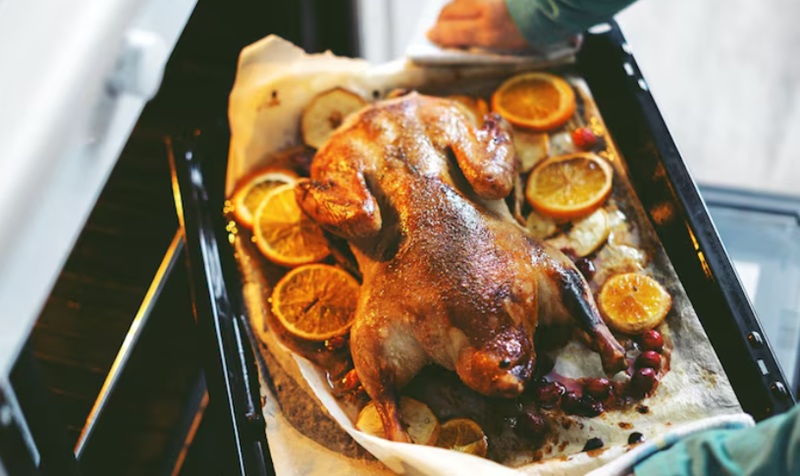
The Sunday queue at a bar in Hackney that has stripped flooring and a chalkboard outside that reads something modest like roasts from noon opens on Monday morning and consistently closes by Tuesday afternoon. Not because it’s an especially well known dish. Not because a well known chef has signed it. A Sunday roast has become something you had to earn in recent years.
It’s worth keeping an eye on that quiet shift. In British culture, Sunday roast has long held a special position. It is a dinner that denotes patience in a society that seldom slows down. The waitlist modifies its essence. Even before a single potato has been peeled, there is a slight social charge associated with the meal. You made preparations. You succeeded. Apparently, that’s worth mentioning.
| Category | Details |
|---|---|
| Dish / Tradition | Sunday Roast |
| Origin | United Kingdom (roots in 18th–19th century British cooking culture) |
| Typical Service Day | Sunday, usually noon to 4pm |
| Average UK Price (2026) | £14–£22 per person at independent pubs |
| Classic Components | Roast meat, Yorkshire pudding, roast potatoes, seasonal veg, gravy |
| Booking Culture | Increasingly essential; many top pubs fill waitlists 2–3 weeks ahead |
| Key Trend Driver | Post pandemic pub revival, social media food culture, premiumisation of pub dining |
| Cultural Status | Considered a cornerstone of British food identity and weekend social life |
It’s difficult to ignore how similar this is to what happened to brunch ten years ago, when eggs Benedict began to need a forty five minute wait outside a Shoreditch warehouse that had been transformed. The technique is the same: a familiar thing gets elevated into a tiny event by scarcity, whether it is real or controlled. But compared to avocado toast, Sunday roast has a more cultural significance. It has past events. It’s got gravy. Additionally, there have been an increasing number of people in recent years who approach booking a table for it in the same manner as earlier generations approached obtaining tickets to Glastonbury.
A larger premiumization of the pub experience that has been developing since the epidemic is one among the factors causing this. Pubs that made it through the closures and the uncertainties returned with a leaner, more intentional look. Menus contracted. Quality increased. The Sunday roast is positioned like a crown at the pinnacle of that diminished offering, and kitchens that used to create fifteen items adequately now produce five things superbly. In particular, gastropubs realized that the roast, when prepared correctly with properly rested meat, dripping fried potatoes, and a real time jus, was the one meal that could both fill a room and maintain a reputation.
Even though it feels a little awkward to admit it, the social media aspect cannot be overlooked in this situation. When a Sunday roast is arranged properly, the tower of Yorkshire pudding, the shimmering bones, and the tiny copper pot of sauce take incredibly good pictures. Despite all odds, the pub roast has emerged as one of the format’s most dependable stars, while TikTok and Instagram have spent years training younger diners to view a meal as something that occurs to your camera before it happens to your stomach. In this interpretation, the waitlist is both a result of and an attribute of that visibility. Wherever others are attempting to go, people want to go.
But there’s more intriguing stuff beneath it. Since about 2010, independent breweries and food focused businesses have been rebuilding the public house as a place of quality rather than convenience, which has resulted in a true revitalization of Britain’s pub culture. It was a time consuming refurbishment. According to the SIBA Independent Beer Report, 46% of independent brewers cited basic survival as their top issue in 2026. It was uneven and remains weak. The pubs that survived have, for the most part, become truly unique. Often, the Sunday roast is the best way to convey it. Timing, sequencing, and a common knowledge of how the day will proceed all demand cellar level dedication from the kitchen. When it functions, the entire bar functions.
Therefore, the waitlist is a sign of trust. The diner says: I think the preparation will be worthwhile. We have to control the number of patrons we seat because we take this seriously enough, the pub is claiming. That’s not the same relationship as when you could just go in at half twelve and snag a table. It’s funny to say about roast meat and a pint of bitter, but it appears to be both more official and more personal at the same time.
Naturally, part of this may be theater. Some waitlists show modest capacity and successful marketing working together in flattering ways; others may not reflect true demand. A tavern can appear much more sought after than it actually is if it has thirty covers and a sizable Instagram following. Younger customers in particular are aware of this because they grew up in a world where manufactured scarcity is commonplace, from app based restaurant reservations that reset at midnight to limited edition sneakers. They know how to play the game. Nevertheless, they perform it, indicating that the Sunday roast offers something authentic enough to justify the performance.
A need for organized events is what the Sunday roast waitlist ultimately reflects. The majority of this demand is driven by those in the 25 – 40 age bracket, and weekends have grown oddly compacted. On Saturday, work continues. It’s either the market or the gym on Sunday morning. An anchor is required, something that declares that this is the real focal point of the week. Slowly eaten over two hours with loved ones, friends, or a good book, Sunday roast serves that purpose in a way that very few other meals can. The queue simply adds a sense of merit to the event.
As the tendency develops, it’s unclear if that sentiment will endure. In British culinary culture, trends frequently reach a loud peak before subtly becoming commonplace. The Sunday roast has likely reached saturation because it has been doing its thing long enough. It’s not a notion. It’s not a combination. It’s Sunday, well cooked beef in a pub like setting. Perhaps more than anything else, the waitlist is the most recent layer of an ancient system, which is why securing one is so really fulfilling.
i) https://www.weeklygripe.co.uk/real ale shunned by young people
ii) https://cask marque.co.uk/cask ale becoming popular younger drinkers/
iii) https://www.the independent.com/life style/food and drink/features/a young person rsquo s guide to real ale 2092304.html
iv) http://www.greatchishill.org/young members.html