
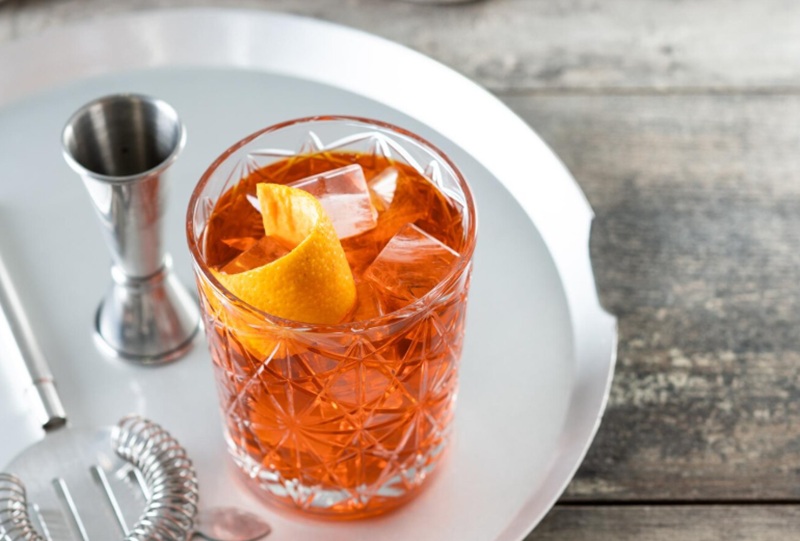
The way British sports enthusiasts watch the game has changed. It hasn’t happened suddenly, and it’s not spectacular. You will notice it if you stroll through the back door and into the garden of enough houses on a Saturday afternoon in the summer. A screen rests on the patio table, a dish of olives is close by, and nearly everyone is holding a pale pink beverage made from French aromatized wine that has been lengthened with tonic and boosted by grapefruit. The pint is still there. It has shifted.
The Lillet Spritz is the beverage, and its popularity among sports fans is not something that the beverage industry created from the ground up. It’s likely that a brand from a tiny Bordeaux village coincidentally found itself in a prime position at the precise period that British drinking started to alter.
The aperitif, which the brothers Raymond and Paul Lillet founded in Podensac in 1872, was traditionally a modest specialty that was well known in France, cherished by wine connoisseurs, and mostly unknown to anyone sipping a pint in a Birmingham pub.
The house was selling over 70,000 cases worldwide when Pernod Ricard bought it in 2008. That number increased to over 1.3 million cases by 2024. The story of a culture reconsidering what it drinks as it watches is what transpired between those two numbers.
You must first comprehend what sports fans are moving away from in order to comprehend why they are choosing it. For many years, the British bar centered its identity around sports. Pubs became the logical meeting place when subscription television emerged in the 1990s and match coverage moved behind a paywall.
There were enormous screens, a shared clamor, beer on tap, and a room full of people all hoping for the same outcome. For a long period, it operated flawlessly. Then it progressively stopped functioning so well. In several regions of the nation, pints began to weigh more than six pounds.
The expense of transportation, rounds, and late night travel on match night began to resemble a substantial financial event rather than a laid back night out. It wasn’t difficult math for a fan to compare the price of eight pints in London with the price of a grocery bottle of Lillet plus a streaming subscription.
There’s a feeling that the shift could have been driven only by the economics, but they weren’t working in isolation. Since 2000, the British pub industry has lost almost 16,000 locations due to staffing shortages, rising business rates, energy costs, and an aging clientele that is drinking less or not at all.
According to recent surveys, abstention rates among sixteen to twenty four year olds in England reached 39%. According to Drinkaware, in the 12 months leading up to 2025, 45% of UK drinkers drank little or no alcohol more than twice as many as four years prior. These individuals do not no longer care about interacting with others. They are individuals who have just begun interacting with others in a different way.
They land precisely where the Lillet Spritz is waiting for them. In roughly thirty seconds, a huge copa glass was filled with one part Lillet Rose, two parts tonic, ice, and a slice of pink grapefruit. At about 5.7 percent alcohol by volume and less than 100 calories, the finished beverage is similar to a light lager but is perceived as something far more thoughtful. Its appeal is almost stubbornly practical: the bottle is already in the refrigerator, a host can make a pitcher for six guests in between corners without missing a goal, and the person at the table who is not drinking can have the same glass with pure tonic and feel included instead of receiving a consolation prize.
The drink of choice has changed more than anything else due to the expansion of the sports audience. More over one third of the supporters of major English football teams are now female, and many of them also follow the teams’ women’s teams. As women’s football continues to flourish, this number continues to rise.
The typical match bar, which is boisterous, pint focused, and clearly geared at a particular kind of fan, doesn’t often feel like a place made for them. A garden at home does. Someone has prepared a Lillet Spritz for the table for a mixed gathering. The aperitif, which has long been connected with women in Lillet’s own tradition and earned the brand the moniker “ladies’ aperitif” in France generations ago, naturally finds its way into this new, more expansive sporting culture.
It’s difficult to ignore how well the beverage complements the sport related behaviors that younger fans have already developed. Controlling the volume, the menu, the guest list, and the schedule are all part of watching at home. It entails waking up functional on Sunday after zebra striping a spritz with a glass of tonic. It entails investing a little portion of a pub match night on a bottle that lasts for multiple rounds.
In the summer of 2025, spritzes accounted for 45% of cocktail sales, according to major pub organizations. The more striking statistic is that a sizable majority of customers would choose to watch sports at home rather than in a pub. The greenery outside the sofa prevailed.
This is neither a tribute to the pub or the pint. No sane person would argue that a garden gathering can rival the collective shout of a crowded room for championships, derbies, and the kind of game that stops the nation. The weekend kitchen island get together, the Tuesday league night, and the afternoon group viewing have all moved.
Additionally, the beverage in the middle of the table on that typical occasion is increasingly a pale pink spritz from a bottle bearing a Bordeaux postmark. It was not the intention of the Lillet Spritz to represent a change in British fandom culture. It just showed up with the perfect glass at the perfect time.
i) https://www.salon.com/2021/07/01/the-lillet-blanc-spritz-is-the-easy-perfectly-light-cocktail-to-make-this-summer/
ii) https://distilnews.fr/lillet-spritz-rose-tonic-campagne/
iii) https://www.thedrum.com/news/10-standout-sports-campaigns-from-last-year-s-drum-marketing-awards