
When a pub is about to close, you notice a certain kind of silence. Something thinner, almost hollow, rather than the cozy silence of a midweek afternoon. A couple of stools were pushed in. Pumps are idle but polished. It’s difficult to ignore how many of these locations now seem to be waiting for something that might never come.
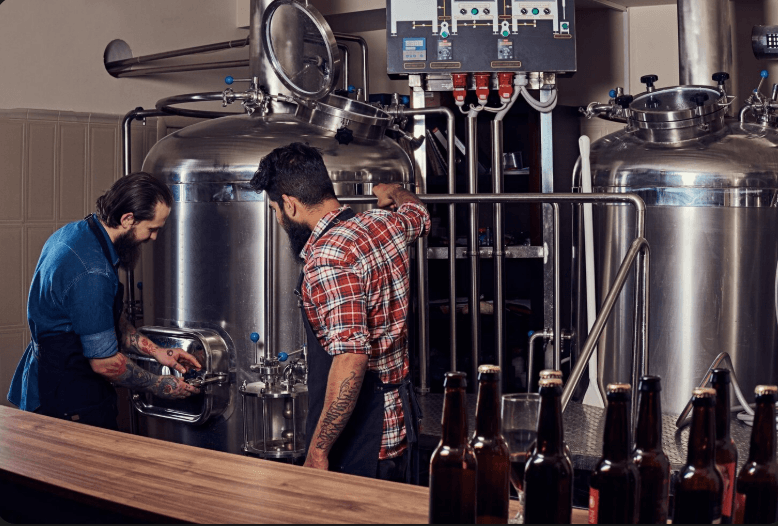
Pubs have been steadily declining throughout Britain in a way that seems both slow and unrelenting. Since 2000, about 25% have disappeared. A few have turned into apartments. With their hanging signs groaning in the breeze, others sit boarded up. However, something else is taking place in some parts of Sheffield, London, or small market towns; it’s quieter but strangely optimistic. Local brewers are relocating.
| Category | Details |
|---|---|
| Industry Focus | Independent Breweries & Community Pubs |
| Key Organization | Society of Independent Brewers and Associates |
| Notable Figure | Andy Slee |
| Location | United Kingdom |
| Core Issue | Rising business rates, pub closures, supply chain imbalance |
| Estimated Impact | 15,000 jobs at risk without relief |
| Reference Website | https://www.siba.co.uk |
The concept sounds almost circular, almost nostalgic. Long before corporate ownership and real estate speculation took root, breweries and bars had a close relationship. However, what’s developing today seems more like a workaround a method to keep the lights on by switching who controls the taps than a return to the past.
The change is apparent as soon as you enter locations like Sheffield’s Greystones. The bar is lined with five or six hand pumps, and unknown names and ABV percentages are written on chalkboards. There’s a hint of toast and hops in the air. It was almost abandoned a few years ago. It hums now. steadily, but not noisily. There’s a feeling that the beer is doing the hard work, not the cuisine or the décor.
It’s probable that many pubs lost this emphasis on proximity and quality along the road. Large pub businesses controlled what could be served for many years, forcing tenants to sign beer tie contracts that frequently put volume ahead of personality. After visiting enough bars, you began to feel as though you had not truly moved at all. That homogeneity is broken by regional breweries.
They add identity as well as variety, of course. A worldwide lager transported across continents weighs differently than a pale ale brewed a few miles away. It appears that drinkers are aware of this. More significantly, they are eager to come back for it.
There are limitations to the optimism. The financial situation is unsettling. Over the coming years, certain bars may see business rate increases of up to 76%, according to industry estimates. Breweries themselves are not exempt; in certain cases, rateable values have increased by up to 300%. As this develops, it seems like even the most meticulously managed business would find it difficult to cover those types of expenses.
Late last year, Andy Slee of the Society of Independent Brewers and Associates warned that the last orders bell is ringing very loudly. It didn’t sound exaggerated. It sounded worn out. irritated. Nevertheless, there are these resilient areas.
Small taprooms and craft focused bars are examples of pubs in London that are quietly flourishing because they treat beer with the seriousness of a wine list. Not exactly booming. but making it through. That’s sufficient sometimes. It’s still unclear if this model can expand outside of specific cities or if it relies too much on a particular type of consumer curious, willing to pay a little bit more, and more interested in flavor than familiarity.
The issue of access is another. Many independent brewers still have difficulty getting their beers into bars, especially those affiliated with larger corporations. Changes to the law are being proposed with the goal of granting bars greater autonomy to purchase locally. Policymakers and investors appear to think that easing these limitations could boost foot traffic. Perhaps they are correct. However, policy tends to proceed more slowly than closures.
Then there is the cultural shift, which is more difficult to measure but unavoidable. Pubs are not necessarily seen the same manner by younger drinkers as they were by older generations. While some people stay at home, others enjoy cafes. The once central bar is now up against everything from boutique gyms to streaming services. It’s more than just an economic issue. It’s behavioral.
A subtle shift occurs when a faltering bar is taken over by a local brewery. The area feels more like a project than a commodity. The handwritten menus, the brewer who occasionally works behind the bar, and the discussions about fermentation or seasonal batches are all examples of how you may spot it. These are not significant changes. However, they build up.
Common tale tells of a man who, once his neighborhood tavern reopened with delicious beer, chose not to sell his home. It sounds almost nostalgic, perhaps even legendary. However, it doesn’t seem completely unrealistic when you stand in one of these revitalized areas and observe people coming in after work.
A good beer by itself won’t make everything better. Tax arrangements, workforce issues, and rising energy costs continue to be major concerns. Some contend that the ecosystem as a whole is still vulnerable in the absence of significant reform, especially with regard to corporate rates.
They might be correct. However, these brewers’ perseverance also has a tenacious quality that defies simple pessimism. Not every bar is being saved by them. Not even near. However, some are being saved. Additionally, some begins to feel important in a setting where closures have grown commonplace.
i) https://www.wb.camra.org.uk/2026/01/27/can-rescued-breweries-survive
ii) https://www.gsfoodservice.co.uk/saving-the-heart-of-the-community-what-can-we-do-to-support-independent-pubs/
iii) https://www.campaignforpubs.org.uk/the-beer-duty-myth-why-cutting-beer-duty-wont-save-pubs/
iv) https://www.camdennewjournal.co.uk/article/trouble-brewing-what-can-be-done-to-save-the-great-british-pub