
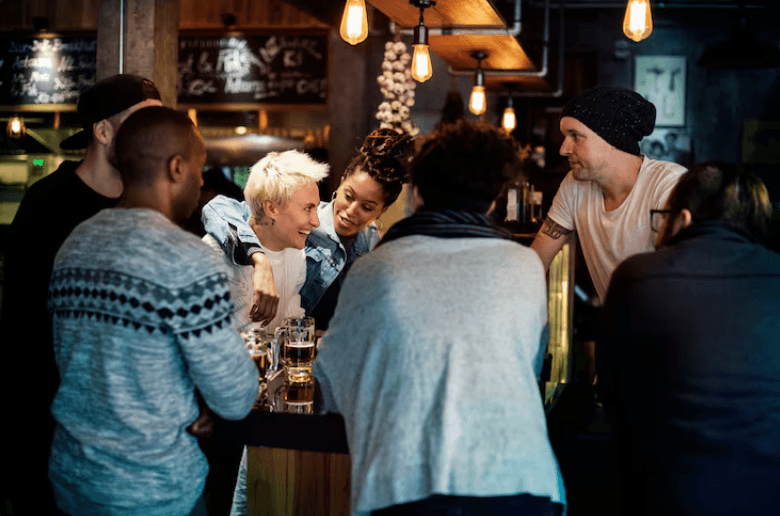
A pub still feels like the center of gravity on a soggy winter’s evening in rural England. Someone at the bar is already halfway through reciting a story that has probably been told before as the fire crackles and boots thud against the worn wooden floors. This situation is easily romanticized. However, over the past 20 years, thousands of pubs have closed throughout Britain, depriving towns of their most dependable gathering spot. A alternative concept, communities purchasing the bar themselves, has been subtly gaining traction lately.
At first, the idea of locally operated bars seems almost quaint. A romantic storyline from a television drama may easily be confused with villagers banding together to save a struggling local from developers. However, it’s turning into a useful tactic in many areas. Communities have purchased hundreds of pubs with the assistance of groups like the Plunkett Foundation, turning them into jointly owned companies in which residents are now stockholders rather than merely patrons.
| Category | Information |
|---|---|
| Organization | Plunkett Foundation |
| Founded | 1919 |
| Headquarters | Oxford |
| Sector | Community-owned businesses and rural hospitality |
| Focus | Supporting community ownership of pubs, cafés, and local enterprises |
| Survival Rate | Community-owned pubs supported by the foundation report survival rates close to 99% over five years |
| Reference Website | https://plunkett.co.uk |
Spend some time at one of these bars, and you’ll notice a slight but discernible change. Local farmers are frequently included on the chalkboard menus. Flyers promoting church bake sales, folk musicians, and charity quizzes abound on the notice boards. Everyone in the room frequently feels as though they own the building. As this develops, it’s difficult to ignore how much the concept of the local bar still has resonance.
Social factors play a role. Over time, many of the traditional gathering places in rural communities have been lost. Bus routes silently disappear, stores close, and post offices close. The pub frequently turns into the final location when neighbors spontaneously run into one another. Many people claim that chats in their neighborhood bar make them feel less alone, according to studies on loneliness and social connectedness. An app can’t just duplicate that.
Despite the joyous headlines, the story is more nuanced. It is frequently far more difficult to save a bar through community ownership than the media portrays. In actuality, very few community buy attempts ever make it to the point where the bar reopens. It can be difficult to raise the funds on your own, particularly in tiny towns where people seldom ever attend church on Sundays.
However, when it does work, the outcomes can be amazing. Consider a little community in the Lake District where locals banded together to prevent their bar from being demolished. Tens of thousands of pounds were raised in a matter of days, and volunteers spent weekends fixing old furniture and repainting walls. Hikers arriving dirty from the coast to coast walking trail discovered a crowded pub and a community that appeared exceptionally proud of its pint glasses when the doors reopened that April.
Even those success stories, however, never remain straightforward. It turns out that maintaining a bar is far simpler than running one. Shareholders occasionally dispute over what beer should be on tap, managers come and go, and menus cause controversy. These disputes spread quickly in close knit communities where everyone knows one another. Like ale, gossip seems to flow naturally.
Additionally, a broader economic context is influencing all of this. Rising energy prices, workforce difficulties, and changing drinking habits are challenges facing hospitality firms in Britain. Younger patrons frequently choose to visit pubs for events, food, or coffee rather than consuming alcohol. With live music in the evening and farmers’ breakfasts in the morning, some locally owned pubs have adjusted very well to these changes.
Some have even started toying with the idea of converting the pub into an office during the day, which would have seemed strange twenty years ago. As hybrid work becomes increasingly widespread, it’s not uncommon to see remote workers drinking coffee at corner tables with laptops open before the noon rush. Once only a place to go in the evening, the bar is gradually expanding into other areas.
The survival of rural pubs has also been aided by tourism. Pubs that feel genuine rather than polished tend to attract walkers, cyclists, and weekend visitors. Maps posted to the wall, muddy boots next to the door, and perhaps a dog dozing beneath the table. These seemingly insignificant touches contribute to the ambiance that guests recall.
Nevertheless, there is a quiet discussion taking place in the background. The increased desire for community ownership, according to some hospitality professionals, may be a sign of wishful thinking. It can give the appearance that preserving a pub is simpler than it actually is when media reports mostly highlight success stories. There are numerous failures, but they hardly ever make the news.
Communities continue to strive despite the dangers. That perseverance reveals something about what bars stand for. They are more than simply beer shops; they serve as unofficial town halls, employment agencies, sites for events, and occasionally the only opportunity for a newbie to strike up a conversation with a longtime local.
It’s still unclear if locally owned bars will actually take the lead in the hospitality industry. Volunteers eventually grow weary, and the economy is still precarious. However, the concept itself doesn’t seem likely to go away. People still prefer locations where news spreads more quickly than it does online.
On some evenings, it’s easy to think that something significant is going on in a packed village bar where neighbors are happily fighting over quiz answers. Perhaps not precisely the future of hospitality. However, it might serve as a reminder of the traditional definition of hospitality.
i) https://www.pelliclemag.com/home/2024/4/12/mountain-at-my-gates-the-endings-and-beginnings-of-community-owned-pubs
ii) https://www.thepubshow.co.uk/news/community-remain-heart-britains-pubs-2026
iii) https://www.plunkett.co.uk/save-rural-hospitality/
iv) https://www.greenekingpubs.co.uk/insights/community-hubs-the-role-of-rural-pubs