
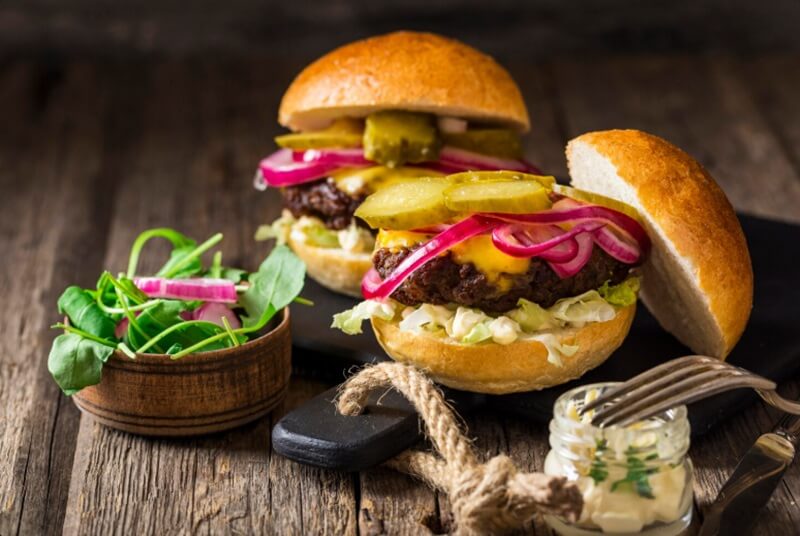
A few weeks ago, a blackboard menu in a tiny East London burger joint nestled between a minimalist coffee shop and a craft beer bar advertised a £15 house smash burger Not a single fry. No alcohol. Only the burger. The taste was forgotten more quickly than the number. That price might have seemed ridiculous ten years ago.
It hardly raises an eyebrow anymore. Walking through cities like London, Brussels, or Milan these days has an odd sense. Once the unofficial emblem of inexpensive convenience, hamburgers have subtly crept into restaurant territory. It has taken time for the shift to occur. It has been gradually increasing year after year, almost nicely, like rent hikes that no one can quite recall authorizing.
| Category | Information |
|---|---|
| Topic | Hidden Economics Behind the £15 Burger Trend |
| Key Economic Concept | Purchasing Power Parity (PPP) |
| Famous Economic Indicator | Big Mac Index |
| Created By | The Economist |
| Year Introduced | 1986 |
| Industry Context | Global fast food and restaurant economics |
| Key Cost Drivers | Beef supply, labor costs, inflation, processing, supply chains |
| Example Price Reference | Big Mac average U.S. price (2025): $5.79 |
| Reference Website | https://www.economist.com/big-mac-index |
A portion of the narrative starts far from the restaurant kitchen, in agricultural data and livestock farms that most patrons never see. Cattle numbers have been declining throughout Europe. The EU herd has declined from over 80 million in the mid 2000s to roughly 72 million currently.
Disease outbreaks, environmental laws, growing feed costs, and the harsh fact that newer generations are reluctant to inherit livestock ranches are all cited by farmers. Tighter supply results from fewer cows. Additionally, as any student of economics will tell you, limited supply tends to drive up pricing.
Standing at a restaurant counter
Standing at a restaurant counter, watching cooks spread minced beef onto a scorching griddle, it becomes evident how little of the final price actually comes from the burger itself. Minced beef, which has historically been less expensive than quality cuts like steak, is used in burgers. However, in certain establishments, a £15 burger might easily cost more than a basic grilled sirloin.
Along the supply chain, something else is taking place. Surprisingly, processing is important. Beef must be ground, seasoned, shaped, packaged, transported, and occasionally frozen in order to create a uniform, tasty burger. Every stage increases value and expense while transferring profits from farmers to processors and eateries who own the finished product.
Then there’s labor, which restaurant owners discreetly acknowledge is frequently the true financial battleground. Labor can make up about 30% of revenue in fast-food businesses. Staff turnover, overtime, and scheduling errors all subtly reduce margins. It feels less like cooking and more like juggling spreadsheets as the grill burns to run a kitchen during a hectic lunch rush when wages are rising faster than menu pricing.
Operators discuss the razor’s edge between maintaining profitability and hiring enough employees. Money vanishes when there are too many employees. Customers leave if there are too few. The price listed on the menu is the result of a laborious calculation However, the burger’s growth isn’t only due to expenses. Culture has a role to play.
Economists
Economists frequently talk about the burgerisation of taste a shift toward minced, easy-to-eat food that gives instant flavor and needs little work from the diner. It’s difficult to ignore how this relates to contemporary life. People eat while on the go, whether taking trains or looking through their phones in between appointments. The burger is designed with such rhythm in mind.
The Economist developed the Big Mac Index in 1986 as a lighthearted method of comparing currencies between nations. The concept was straightforward: a Big Mac should cost about the same everywhere if exchange rates were perfectly balanced. It seldom does, of course. For instance, a burger may be significantly more expensive in Switzerland than it is in the US, indicating variations in the value and purchasing power of currencies.
It was intended to be humorous. In the end, economists took it seriously. The reasoning is still valid today. Beef, wheat, dairy, veggies, labor, rent, and energy are all found in a burger. In other words, it’s a little basket of the economy. Burger prices can occasionally show inflation long before official numbers do. They have also been rising. far quicker than many anticipated.
The story has an additional, quite unsettling element. Additionally, a burger has environmental consequences that are rarely listed on a menu board. It can take thousands of liters of water to make one cow burger. Livestock production uses huge swaths of arable area, and in some regions cattle farming contributes significantly to greenhouse gas emissions.
The market
The market is subtly changing as a result of these realities. Attention is being drawn to plant based burgers, ethically reared beef, and alternative proteins. It’s unknown if they will actually take the place of classic burgers. However, the discussion is taking place in both boardrooms and kitchens.
However, none of this intricacy is apparent when observing customers in that London burger joint. Over beer, friends chuckle. A burger wrapped in paper bearing the restaurant’s emblem is opened by someone. The street is filled with the aroma of cooked steak.
It’s amazing how commonplace the £15 price tag suddenly seems. The burger, which was originally associated with inexpensive meals, seems to have evolved into something quite different. A brioche wrapped little economic tale. Compressed between two halves of a bun are global supply chains, labor disputes, farming patterns, and inflation.
It’s feasible that economists in the future will continue to explain complex concepts using hamburgers. Not precisely because burgers are unique. But because they are acquainted. And sometimes comparing the price of lunch today with that of last year is the simplest way to understand the state of the economy.
i) https://www.aol.com/fast-food-burger-became-economic-115900686.html
ii) https://www.euractiv.com/news/why-the-burger-is-turning-into-a-pricey-dinner/
iii) https://www.unep.org/news-and-stories/story/whats-your-burger-more-you-think
iv) https://www.qsrmagazine.com/story/hard-labor-lessons-from-a-former-burger-king-insider/