
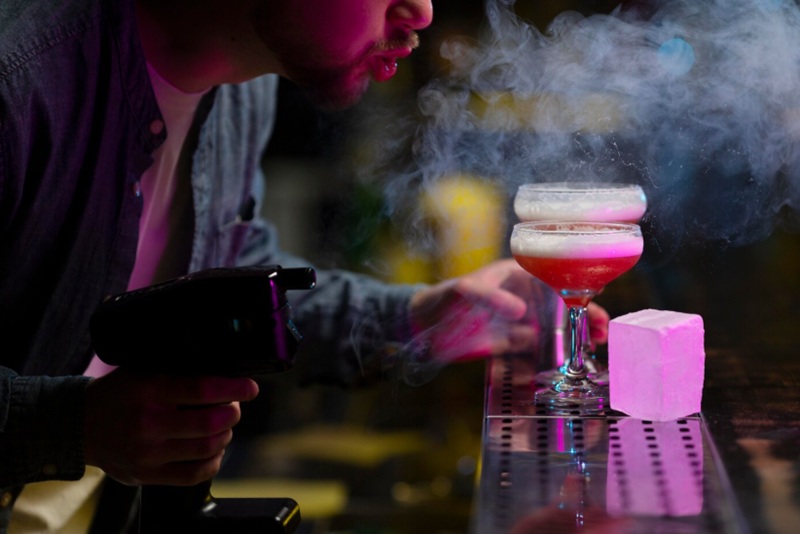
A strange behavior unrelated to alcohol has been observed in British bars in recent years. A wooden board with three or four miniature, colorfully decorated, non alcoholic cocktails is likely to be found at a nearby table in a well run Shoreditch bar or Hovingham gastropub. When they arrive, customers don’t express regret for their purchase. Leaning in, they grab their phones and compare colors and tastes. Mocktail flights, mini tastings inspired by craft beer, would be the best pub idea for 2026. The figures point to this.
| Detail | Information |
|---|---|
| Trend | Mocktail Flights in UK Pubs and Bars |
| Format | Three to five small-portion non-alcoholic cocktails served together for comparative tasting |
| Low/No Alcohol Beer and Cider Sales Growth (Q1 2025) | 32 percent year-on-year |
| Gen Z Fully Teetotal (UK) | 26 percent |
| Typical Gross Margin on Mocktails | 70 to 80 percent |
| Non-Alcoholic Beer Revenue Projection (2025–26) | £345.5 million |
| No/Low Alcohol Segment Incremental Value by 2028 | £0.8 billion |
| Pioneering UK Venue | Club Soda Tasting Room, Drury Lane, London |
More than half of UK adults drink alcohol free beers, wines, or spirits, according to a 2025 Club Soda survey. Not a rounding mistake. That cultural shift is significant enough to alter the menu. Ten years ago, Laura Willoughby, the founder of Club Soda, put it frankly in 2015: “water or judgment”,
Nowadays, it’s socially acceptable and necessary to serve alcohol free drinks; businesses that don’t follow the trend are losing money. According to Drinkaware, 44% of moderate drinkers consume little to no alcohol, an increase from 31% in 2018. Between the ages of 18 and 34, uptake has risen from 28% to 49%. They are not tourists in Dry January. This is a long lasting, intensifying shift in behavior.
Mocktails cannot solve a problem that flights can. Over time, most people have established preferences for wine, gin, or beer. The idea of selecting a single unidentified non alcoholic cocktail from a menu stops them. That pressure is removed on flights.
You don’t have to choose since the bartender has selected three or four drinks that go well together, from rich and warming to herbal and botanical to sharp and citrus forward. It transforms doubt into excitement. A carefully chosen assortment of more than 250 low and no alcohol cocktails, weekly free samples, and private tastings starting at thirty pounds per person are all available at Club Soda’s Tasting Room on Drury Lane in Covent Garden.
Economics appear almost too neat here. Mocktails and cocktails have gross margins of over 70%. A pub that charges seven pounds for a single mocktail can charge fifteen or sixteen pounds for a flight of three, which appears to improve value and increase per customer spending.
he ingredients are less expensive than quality spirits, despite being challenging to produce. Nine Lives bar in London saw a 38% rise in income and a 7% increase in per person spending following the removal of alcohol. These figures are significant in an industry with a 7% profit margin and more than 400 bars closing by 2024. The opportunity is based on desperation.
This is being pushed by Gen Z, and they are not subtle. They drink 20% less than Millennials at the same age. 26% of people don’t drink. 60% will make further cuts. Celebrities like Bella Hadid and Tom Holland have popularized abstinence, and the sober hashtag on TikTok has had over 6.8 billion views. The fact that this generation still frequents bars is intriguing. Their expectations have changed.
Tradition, social warmth, and a controlled experience free of headaches and calorie bombs are what they seek. Mocktail flights accomplish that. Social media recording is valued as an activity to photograph, talk about, and share by a group of people who see it as a natural extension of life experiences.
The business case is strengthened by zebra striping, which involves switching between alcoholic and non alcoholic drinks on the same night out. 78% of Gen Z, according to KAM Insights and Lucky Saint, do this. Harry Cooper, the head sommelier at Counter 71 in Shoreditch, has a moderation menu that includes five pours of wine and beverages under 0.5 percent.
He said that his close friend has been sober for more than four years and that his wife is intolerant of booze. The menu at nearby Michelin starred Plates, run by twins Kirk and Keely Haworth, is split between alcohol and non alcoholic options. These days, they’re not fringe experiments. These are trading tested operational models.
The quality of flights has surpassed all recognition. Three botanical mixes of Seedlip, the first distilled non alcoholic liquor, sell a million bottles annually. From coffee liqueur for espresso martinis to Italian orange for Campari, Lyre’s provides an extensive choice of zero proof alternatives. Cornish beach plants are used by Pentire. Three Spirit adds actual adaptogens that change mood.
Botivo created a unique product based on apple cider vinegar. Mainstream brands Tanqueray, Gordon’s, Guinness, and Heineken followed. Bartenders used juice and syrup to create non alcoholic flights five years ago. They now have enough ingredients to compete with alcohol. According to The Spirits Business, micro cocktail flights started with tiny Martinis in 2025 and quickly expanded.
Social mechanics are what make flights intelligent. A table has one glass of cola. A moment is created by three beautifully made drinks on a wooden board. At neighboring tables, people crane their necks. Friends ask for drinks. For a moment, the buyer becomes the most interesting client in the room. Individual serves do not result in a contagious effect.
The dynamic shifts from celebration to compromise, from exclusion to inquiry. For the pregnant woman nursing her third lime and soda of the evening, the designated driver gazing at a glass of tap water, and the recovering individual hoping to feel normal in their community, a skillfully designed mocktail flight says something subtly radical: your choice matters, and we made something beautiful for you.
The world of fine dining took note. Twelve UK restaurants with non alcoholic pairings were listed in the Michelin Guide in 2026. Myse in Hovingham offers mixtures of red verjus, black garlic, and beetroot that are never too sweet. Moor Hall, a three Michelin star, collaborates with the tea company Lalani & Co. to talk about terroirs and vintages like wine.
In Scotland, Killiecrankie House makes a Garden Shrub by infusing farmed herbs with champagne vinegar for 12 weeks. It’s not an afterthought. According to The OWO, raffles need ten times more work than a tasting menu. While the goal varies from neighborhood taverns to upscale restaurants, it is always the same.
One day, flights might be available at every bar in the nation or just in urban areas and forward thinking places. Price perception is challenging. Some consumers don’t understand why a cocktail without alcohol costs the same, despite the higher production costs of premium non alcoholic spirits. The proprietor of Seedlip, Ben Branson, claims that his spirits are the most costly to brew in any back bar. Employee education is uneven. A bartender cannot sell a flight if they can describe every gin on the shelf but have no idea which is better, Pentire or Everleaf. Although Club Soda’s Academy trains, there is a massive knowledge gap in the sector.
The course seemed to be unstoppable. By 2025–2026, the non alcoholic beer industry is predicted to grow at a rate of about 15% per year, reaching £345.5 million. The no and low group might contribute £0.8 billion by 2028. In 2025, about 200 million pints of low and no alcohol beer were sold in the UK.
Mocktail flights seem less out of the ordinary as these numbers continue to climb annually. They’re perfect for a market that barely existed ten years ago but now contributes significantly to pub earnings. They deal with pricing, social inclusion, discovery, and creative difference all at once. Few menu changes do that.
The British pub has withstood pandemics, smoking bans, recessions, and world wars. Craft beer, cocktail resurgence, and gastropubs are all included. Adapting to a generation that desires pub night without alcohol shouldn’t be too difficult.
Mocktail flights won’t take the place of pints or help every faltering venue. For bar owners dealing with declining alcohol consumption, rising costs, and a clientele that demands entertainment rather than service, they might be the best small wager. The format functions. Demand is validated. There are good margins. For once, the cultural moment is in favor of non drinkers. It’s new. That is worth mentioning.
i) https://supperinthesuburbs.com/2022/02/13/aviation-cocktail/
ii) https://www.thehandbook.com/sober-october-mocktails-london/
iii) https://www.designmynight.com/london/bars/alcohol-free-bars-in-london
iv) https://champerswholesale.com/blog/non-alcoholic-mocktails-20-refreshing-ideas-that-customers-will-love/