
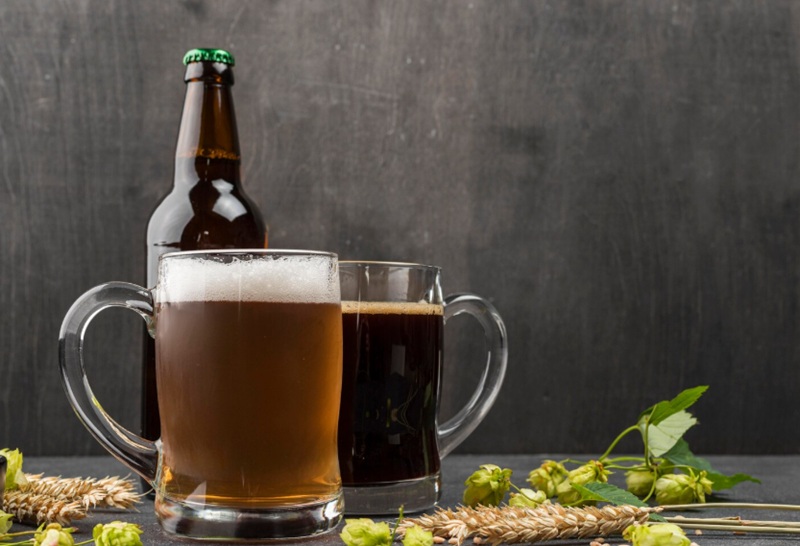
On a rainy Thursday in 2026, enter a mediocre pub in any English market town, and you’ll find something subtly noteworthy taking place there. It’s not announced with bright signs. There are no influencer launches. No stale hashtag campaigns. A row of handpumps has returned next to the lager fonts and the shiny nitro stout taps, offering a deep copper Yorkshire bitter, a tawny ordinary from a local brewer still using its Victorian liquor, and frequently a visitor from a microbrewery within ten miles. The bitter IPA has returned. Not very loudly. Not in a victorious manner. In the most English manner imaginable: simply return gently and modestly.
This seems like something worth taking note of for anyone who has observed the British pub trade over the past 20 years. For the greater part of fifteen years, bitter, especially the four percent session bitter that characterized British pubs for the most of the 20th century, drained off bar tops virtually unnoticed. Pubcos removed handpumps due to cost constraints.
| Category | Details |
|---|---|
| Beer Style | Bitter / English IPA (India Pale Ale) |
| Country of Origin | United Kingdom |
| Historical Roots | Late 18th century; Burton-upon-Trent and London (George Hodgson’s Bow Brewery) |
| Typical ABV | 3.4% – 6.0% (session to premium strength) |
| Dispense Method | Cask-conditioned, served via handpump (beer engine) |
| Serving Temperature | Cellar temperature (approximately 11–13°C) |
| Key Governing Bodies | CAMRA (Campaign for Real Ale), SIBA (Society of Independent Brewers) |
| Top-Selling Cask Brand (2025)** | Timothy Taylor’s Landlord (first time at #1 in chart history) |
| Cask Market Share (2025)** | 7.7% by volume of total UK beer market |
| Gen Z Cask Drinkers (2025)** | 25% — up from 16% the previous year |
| Notable Breweries | Timothy Taylor’s, Fuller’s, Harvey’s, Adnams, Moor Beer, JW Lees |
According to conventional thinking, younger consumers favored sweet flavors, hazy fruit forward cans, hard seltzers, and anything that didn’t have the word “bitter” written on the pump clip. For years, the branch pub bulletins of CAMRA read like a slow tolling bell, a roll call of lost handpumps from West Drayton to Welling. The headline figures appeared to support this: in 2025, cask ale volumes dropped to 1.28 million hectoliters, a 7.1% decrease, and cask’s volume share of the overall beer market was only 7.7%.
Those figures only provide half the picture, as a very different subcategory has been subtly growing within the declining total. According to SIBA’s own statistics, independently produced cask has grown by double digits. Independent brewers, small and regional businesses that survived the craft shakeout in the early 2020s, have seen their cask production rebound to and even surpass pre Covid levels. The narrative does not suggest that Britain has become resentful. It’s that Britain is rediscovering the true essence after going off industrial bitter.
The reappearance of Boddingtons on cask in late 2025 was the most symbolically significant event of the resurgence, one that even non drinkers in Manchester took notice of. Boddington’s The Cream of Manchester was iconic for everyone who grew up in the northwest between roughly 1970 and the mid 1990s. Like the Haçienda, its straw color, rocky cream head, and dry mineral bitterness were all ingrained in the surrounding cultural geography.
After years of corporate drift, the cask version was withdrawn in 2012 and is now only available as inexpensive retail cans and a nitrokeg shadow. It was impossible to overlook the symbolism when JW Lees of Middleton declared it would brew the cask version under license and relaunched it in front of a room full of Greater Manchester CAMRA branch officers who were about as harsh a critical jury as British beer can muster. The beer didn’t pass. In a way, bitter IPA was returning home.
The generational narrative that underpins all of this seems to have always been more nuanced than the trade press portrayed. In marketing slides, the presumption that Generation Z will not handle traditional cask was reiterated as gospel. Sober curious, they were. They favored flavors that were sweet. They preferred fruity, hazy IPAs in cans when they drank beer.
That narrative has fallen apart. By August 2025, 52% of Gen Z consumers preferred beer, according to GWI consumer research, with consumption frequency increasing after years of decline. Even more startling, according to SIBA’s 2025 Independent Beer Report, the percentage of 18 to 24 year olds who drank casks increased from 16% to 25% in just one year. It’s not a rounding error. That’s a change.
The explanations are interconnected. Bitter is still the cheapest competently produced beer on most pub bars, frequently by a pound or more when compared to craft keg. This difference has commercial weight in a cost of living squeeze that primarily affects younger drinkers.
Additionally, image is important. Independent brewers now sell bitter with trendy pump clip designs, social media fluent communications, and bar personnel who can talk about East Kent Goldings and Maris Otter bases without sounding like they’re reciting from a pre war advertisement. It’s also possible that something less measurable is taking place. It feels like theirs now, not their grandfather’s, so the same generation that watches 1990s TV with unironic pleasure while sporting baggy jeans and football shirts orders a pint of bitter to go with it.
It’s difficult to ignore the fact that this specific journey’s cask bitter is not exactly the same beer that nearly perished. In many cases, a hint of Citra or Mosaic, or new British hop types bred to produce citrus and tropical fruit characteristics while keeping the delicate underlying bitterness that cask demands, visibly rebalances the bitters and English IPAs gaining new audiences in 2026.
British brewers Jester, Olicana, Harlequin, and Ernest now have more options thanks to Charles Faram’s hop development program. Manchester’s Tūn Brewing produces a 6% English IPA on Maris Otter using modern English hops, marketing it as a beer that respects tradition while embracing the present. Small brew houses from Sheffield to St Ives, McIntosh Ales in Stoke Newington, and a surge of London micropubs all share the belief that English ingredients and the discipline of the beer engine are not sentimental limitations but rather the true foundation of a style that is still developing.
The data item that best captures the occasion is Timothy Taylor’s Landlord becoming the UK’s best selling cask ale in 2025 for the first time in the history of the Morning Advertiser’s Drinks List, surpassing Sharp’s Doom Bar, which saw a roughly 19% decline in volume.
A Molson Coors owned former mainstay in steep decline, this fiercely independent Yorkshire family brewer is ranked #1. The only other top 10 brand that saw an increase in volume was Fuller’s London Pride. The cask chart’s shape is gradually returning to what it was forty years before to consolidation: a roll call of regional and independent names that consumers can truly visualize as locations rather than as line entries on a multinational’s P&L.
This does not imply that the structural headwinds have vanished. In 2025, 137 independent brewers closed over three times a week, and the very pubs that give cask its stage are still under attack from business rates, employer National Insurance, and alcohol duty.
The stakes were significantly raised by the Fresh Ale debate, in which Carlsberg Britvic introduced a kegged beer intended to be served via a conventional handpull. CAMRA filed a complaint with Trading Standards, calling it an imitation and a hijacking of centuries of British history. The argument goes beyond purism: independent breweries whose cask offerings would normally occupy those lines are pushed out if pubs load their handpumps with kegged Fresh Ale. The audience is there for the beer. Whether the audience has the pub is the question, as it has always been.
As of right now, on a rainy Thursday in 2026, the answer seems to be: Yes, almost, in the bars that have made a commitment to doing it well. Someone may find for the first time that they enjoy a pint of bitter as the handpump is pulled and the beer rises in the glass with that slightly hazy, somewhat creamy, slightly tawny quality that no other dispense method quite achieves. This is what a quiet rebirth looks like, multiplied over hundreds of thousands of similar moments in market villages, city micropubs, and free houses on the south coast. It doesn’t yell. It is not need to.
i) https://www.beerandbrewing.com/style-school-cask-bitter
ii) https://www.beeretseq.com/pub-ale-or-pub-bitter/
iii) https://www.beervanablog.com/beervana/2024/4/30/cask-ale-is-now-officially-a-thing-in-portland-oregon
iv) https://londondrinker.camra.org.uk/wordpress/index.php/2026/05/27/camra-pub-information-update-74/