
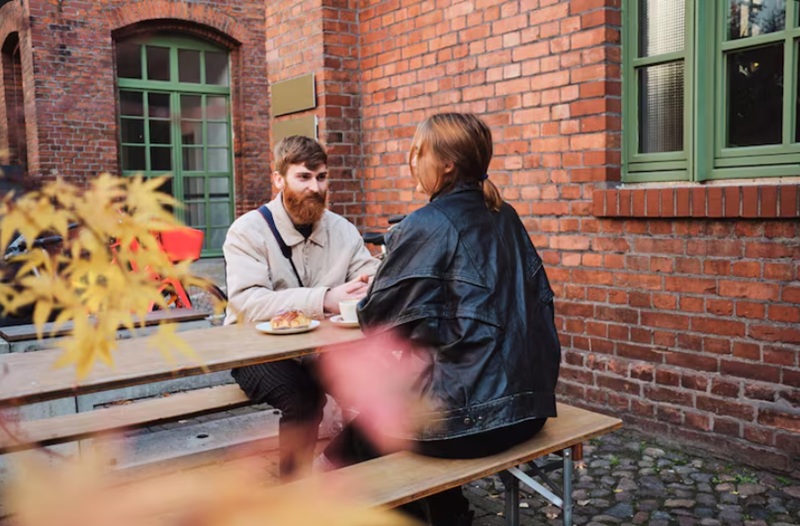
After entering a neighborhood’s bar for thirty seconds or less, you can typically learn a lot about it. illumination. The people in the pub. Regardless of whether the dog by the door is owned by a certain person or is simply there, it is accepted. Long before any real estate agent or council pamphlet can tell you who lives in the area, the bar can. When you consider that a single room with a counter and a few stools can have so much knowledge about the streets outside, it’s an odd thing.
On a Friday, the pubs in Soho overflow onto the sidewalk in a manner that seems theatrical, almost performative. When you stroll through a Cotswolds village, the same institution takes on a slower, calmer quality, with people whispering under low ceilings and a fire that no one can quite recall lighting. It’s a pub. They both serve roughly identical cocktails. Even so, they were unable to feel much more apart. There’s a feeling that the neighborhood shapes the pub, year after year, pint after pint, until the establishment resembles a condensed version of the streets it occupies.
The bar in Kilburn does not use Irish accents as a marketing tactic. The bass that is passing through the rear room in Brixton is the same bass that is passing through the homes two blocks away. There’s a pub in Hackney where no one has been a regular for more than eighteen months due to the neighborhood’s constant change, and a pub in Walthamstow where the regulars still discuss a fire from the early 1990s as if it happened this spring. It’s difficult to ignore the similarities between the turnover of For Sale signs outside and the turnover of faces within.
| Detail | Information |
|---|---|
| Subject | British Pubs as Cultural & Neighbourhood Identifiers |
| Origin of the “Public House” | Roman taverns, evolved through medieval alehouses |
| Total Pubs in the UK | Approx. 45,000 |
| People Employed by the Sector | Over 900,000 |
| Key Cultural Function | Community hub, social anchor, neighbourhood marker |
| Recognised Pub Types | Traditional, gastropub, free house, tied house, sports pub, micropub |
| Notable Advocacy Group | CAMRA (Campaign for Real Ale) |
This is referred to by sociologists as the “third place” a location where people are free to just exist yet are neither at home nor at work. In Britain, pubs have served that purpose for centuries, long before the name was coined. They gained factory workers from the Industrial Revolution, suburban residents from the post war expansion, and gastropubs from the 1990s, which initially caused controversy before subtly becoming commonplace. The cellar, the menu, and the wallpaper were all impacted by every change in British life. Today, if you walk into a bar, you’ll find layers of Victorian etched glass behind a Smeg refrigerator, a chalkboard with options for oat milk above a brass rail that has been polished over a century of use.
The economics provide their own narrative. Over 900,000 people are employed by more than 45,000 pubs nationwide, which contribute billions to the economy in ways that aren’t always clearly visible in the numbers. Within two weeks, the bakery next door becomes aware of the closure of a pub. Within a month, the flower shop a few doors away will send out a note. Eventually, the houses on the street notice that there is research indicating that properties close to a beloved local hold their value better. Although this is the kind of claim that always deserves a little skepticism, anyone who has experienced the closure of their closest pub will tell you that the street feels different afterward. Thinner, in some way. Reduce itself.
It’s intriguing how the bar maintains its essence while adjusting to each new customer. The bar itself remains the same height, shape, and common surface where strangers can stand next to each other and start a discussion that neither of them intended, even as the craft beer crowd moves into the area and the taps change. Incorporate a Thai kitchen at the rear, switch up the music, and display some fresh artwork so the pub can absorb it. It is a framework. The bar finds a way to reflect the neighborhood’s changes, whether they are more affluent, quieter, younger, or more diverse, without drawing attention to them.
It all comes down to a tiny ritual. After two visits, your drink was remembered by the landlord. The nod from the regular at the end of the bar, who has never talked to you and most likely won’t. The way you were in the same room for an hour and a stranger held the door for you as you left. These items don’t sound big. They’re little. Week after week, generation after generation, they are also the soft machinery that allows a community to identify itself.
The downfall of the British pub may be more gradual than the headlines portray. It’s also possible that the recent surge of micropubs, takeovers by local businesses, and quietly resurrected residents indicate a reversal. The relationship endures in either case. Without a bar, a community would be losing one of its mirrors. Additionally, mirrors are usually worth preserving, even if they have a little cracked surface, a faded carpet, and an unused jukebox.
i) https://journals.sagepub.com/doi/10.1177/00380385231185936
ii) https://www.sciencedirect.com/science/article/abs/pii/S0278431918303840
iii) https://www.anthonyjonesproperties.co.uk/news/the-vital-role-of-pubs-in-local-communities-and-housing-markets