
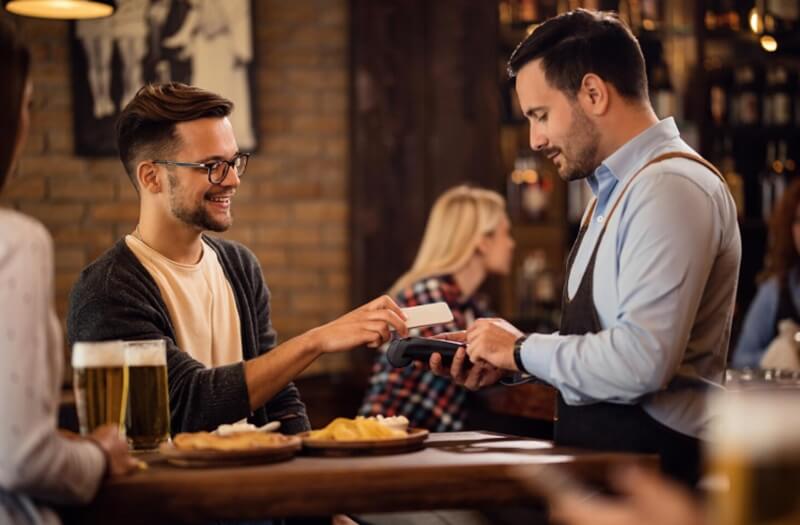
The bar at a local pub fills up as usual on a soggy Thursday night in South London. At the corner table, a couple considers ordering another round. A tiny green checkmark appears on the screen as a man wearing a tweed suit taps his phone against the bar. A bartender yells a name across the room from somewhere behind him.
The old process of ordering a pint, the sound, or the fragrance of hops have not changed. The way loyalty functions has changed. For many years, reputation was the key to the success of British pubs. Advertising wasn’t necessary for an excellent pub. People talked if the landlord knew your name and the ale was fresh. Word spread across football terraces, into workplaces, and down streets. One suggestion sparked another. It was disorganized, casual, and oddly potent.
| Category | Information |
|---|---|
| Industry | UK Hospitality & Pub Industry |
| Focus | Digital Loyalty Programs in Pubs |
| Notable Example | Young’s “On Tap” App Loyalty Programme |
| Key Trend | Personalised rewards replacing traditional referral culture |
| Data Insight | 4 in 5 consumers more likely to recommend brands with strong loyalty programs (Bond & Visa study) |
| Location Context | United Kingdom |
| Reference Source | https://www.youngs.co.uk/on-tap |
These days, more bars are subtly switching to something much more structured: loyalty cards, which are frequently digital and housed inside mobile apps. Additionally, the change reveals an intriguing aspect of the development of the hotel industry.
Basic economics has a role in the explanation. In Britain, operating a bar has become very competitive. Customers have a plethora of options within walking distance, energy costs are high, and rents are unyielding. Although it’s uncertain, a friendly advice is nevertheless important. On the other hand, loyalty programs produce data, which bars are becoming more and more interested in.
These days it’s difficult to ignore how often bartenders bring up applications when giving out receipts. They remark nonchalantly, almost as an afterthought, Download it and you’ll get points. However, there is a larger concept hidden beneath that modest pitch. Every drink that is scanned provides trends, such as what people order, when they come, and how frequently they come back Operators are observing.
Consider the increasing number of pub groups experimenting with loyalty programs that are integrated. Chains such as Young’s and Stonegate have developed systems that integrate booking, ordering, payment, and rewards into a single digital environment. Offering a free pint after 10 purchases is not enough. It involves creating a map of consumer behavior It can also be surprisingly detailed.
A customized offer for a new single malt can appear out of nowhere for someone who consistently orders whiskey on Wednesdays. Holiday menus may be announced ahead of time to a group that frequently reserves Sunday lunch. Theoretically, it feels intimate. It is algorithmic in practice nonetheless, a lot of consumers appear to be very at ease with the compromise conventional point based loyalty programs have traditionally had trouble maintaining interest. The issue is familiar to anyone who has ever opened a wallet full of misplaced stamp cards. Rewards frequently seemed ill defined or unattainable. Seldom did the effort equal the reward.
Digital loyalty cards make an effort to address that. On a phone, rewards show up instantaneously. Notifications occasionally arrive at the perfect time, which can be annoying. Customers are encouraged by the system to try something new, spend a bit more, and return sooner It’s behavioral engineering done subtly.
Root cause of these programs growth can be more cultural than technological. In a world molded by cellphones and internet reviews, word of mouth marketing once the lifeblood of pubs has become less reliable Of sure, people still tell their friends about pubs. However, the procedure has evolved. A conversation is replaced by a text message. An informal tip over a cigarette at the door is replaced by a Google review.
Loyalty cards have a different function in such setting. They fabricate a sense of familiarity this appeals to pub owners. Although strong, word of mouth is unpredictable. Conversely, loyalty schemes produce predictable behavior. Consumers gradually form habits around a certain venue, gain points, and pursue rewards four out of five consumers are more inclined to recommend firms with robust loyalty programs, according to an industry research. That figure raises an interesting possibility: the initiatives intended to supplant word of mouth could actually increase it however, the dynamic has changed.
Loyalty was an emotive concept in the ancient bar culture. The mood was right, so you went back. because your drink was recalled by the bartender. because your buddies had a connection to the location loyalty is becoming more and more transactional Pubs seem to be experimenting with a hybrid model that combines the precision of contemporary shopping with the coziness of traditional hospitality.
Some even create product focused loyalty programs. By rewarding customers who purchase ten pints of a specific beer, a brewery can use consumer preference as a tiny marketing tool One can’t help but feel a subtle tension as they watch things play out. Although data can track consumer behavior, it is unable to fully capture the sense of community that used to characterize neighborhood bars.
This could be the reason why the most effective loyalty programs attempt to imitate human gestures. Birthday beverages. early entry to events. invitations to tasting events. The experience feels intimate despite the technology operating silently in the background. It’s still unclear if that equilibrium will hold from smoky Victorian alehouses to gastropubs with craft menus and digital payment displays, the pub industry has always changed.
It’s possible that loyalty cards are only the most recent innovation, another strategy to thrive in a competitive industry even still, it’s difficult to ignore the changes when you stand at the bar and observe patrons scanning their phones there is still word of mouth. However, more and more, allegiance starts with a notification rather than a dialogue and that little change may have a greater impact than anyone anticipated in the contemporary pub industry.