
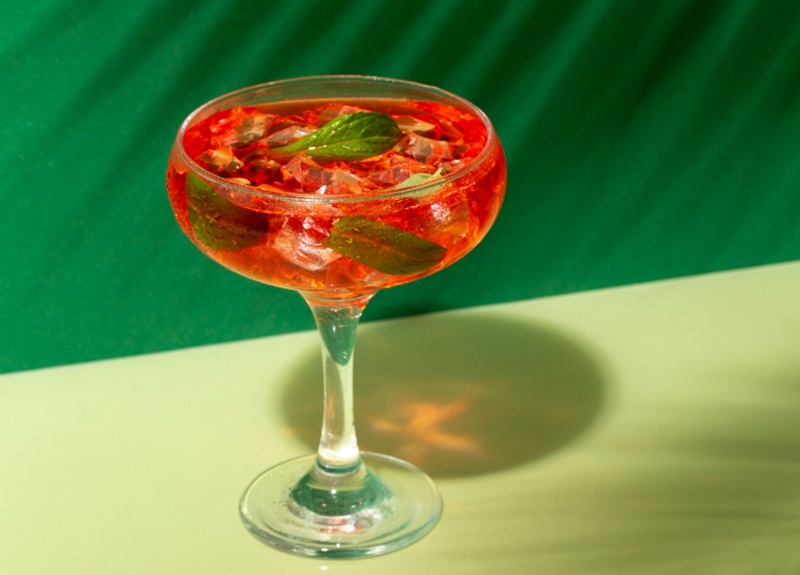
There is a pleasant, slightly salt bitten afternoon that can only occur near the British coast, with plenty of light shining on the water. Someone at the bar is asking whether they do a spritz at a table outside a restaurant that hasn’t had its carpet changed since 2003. Two years ago, the question would have received a blank face. This summer, it’s the most intriguing question a publican will hear in terms of commerce.
Lillet Spritz has entered the UK at a rate that only occurs once every ten years in terms of drinking patterns. In fact, a Google Summergeist 2026 survey shows that in only one month, the number of searches for instructions on how to make a Hugo spritz at home rose by 2,200%. The Lillet rose Spritz, a 150 year old French aperitif from Bordeaux, is now positioned on numerous food and lifestyle websites as the next big seasonal beverage in a lineage that has continued through Hugo, Limoncello, and now, supposedly, a 150 year old French aperitif. When Pernod Ricard acquired the brand in 2008, it was selling 70,000 cases annually; by 2024, that number had risen to 1.3 million. It’s not a passing fad. That’s a thriving category.
| Detail | Information |
|---|---|
| Drink Name | Lillet (Aromatised Wine) |
| Founded | 1872, Podensac, near Bordeaux, France |
| Founders | Raymond and Paul Lillet |
| Owned By | Pernod Ricard (acquired 2008) |
| ABV | 17% (results in 5–6% when mixed as a spritz) |
| Varieties | Lillet Blanc, Lillet Rouge (1962), Lillet Rosé (2011) |
| Global Sales Growth | 70,000 cases (2008) 1.3 million cases (2025) |
| UK Pub Context | Listed on Greene King and Young’s menus for two consecutive summers |
| Key Cultural Moment | Emily in Paris Season 4, Episode 7 product placement |
The fact that the search data indicates both consumer curiosity and purchase intent makes this particularly noteworthy. According to Google’s own data, 78% of local mobile searches result in an offline purchase within 24 hours, and the company holds a 91.47% market share in the UK search industry. If someone in Tenby or Broadstairs searches for “Lillet Spritz near me” on a Tuesday afternoon, there’s a good chance they want one somewhere walkable right now. This is practically a gift to the struggling beach bar. There is already demand. Just whether the supply is there to meet it is the question.
The extent to which many of the coastal bars require this kind of care cannot be overstated. In the UK, more than 400 pubs closed in 2024, and 366 more in 2025. According to some industry projections, up to six venues per day could close in 2026 if significant action isn’t taken. Operating margins in the industry were between 12 and 15 percent prior to the outbreak, but they are currently less than 4 percent.
Rateable values in England and Wales are predicted to increase by an average of 30% in the 2026 business rates revaluation, with increases of almost 500% in some coastal locations. According to the Office for National Statistics, 114 of the 169 coastal towns in England and Wales that were examined had high levels of deprivation, indicating that almost 3.8 million of the 5.4 million people who live close to the sea live in areas that are experiencing significant economic hardship. Even though 2025 was the UK’s warmest summer ever, that doesn’t account for the 28% drop in British seaside spending from 2022.
In this context, cocktail economics start to seem heroically surprising. In the UK, the average on trade price of a cocktail is £23.36, compared to £12.85 for beer. The range of cocktail gross margins is 76–85%. The operator spends about £2.20 on a 50ml bottle of Lillet rose Spritz, 50p on a 100ml premium tonic, and 20p on a slice of pink grapefruit. If you sell it for £8.50, each drink will yield a gross profit of £6.30. The argument for stocking a bottle of Lillet becomes evident when you contrast it with a pint of premium lager earning about £2.80 with the same refrigeration, storage, and service costs.
The demographic narrative is another, and it may be the one with greater structural significance. In comparison to previous generations, Generation Z over indexes cocktails by 11 percentage points. (CGA from NIQ) According to the 2025 Bacardi Cocktail Trends survey, over half of UK Gen Z would choose a cocktail over Champagne on a special occasion, and 35% would choose one over beer in the on trade. According to Lumina Intelligence, the number of alcohol related incidents among individuals aged 18 to 34 actually increased by 4.2 percentage points in 2025 compared to the previous year.
This finding directly contradicts the fundamental assumption that young people had given up drinking. More accurately, it appears that they have stopped drinking in large quantities and started drinking for occasion, flavor, and visual appeal. The Lillet rose Spritz, which is served over ice in a large wine glass and has a lovely blush color with a hint of citrus, scores highly on all three counts.
This may have been put up by the Aperol generation. Due to the drink’s ten year dominance, consumers have developed a deep understanding of the spritz format, ritual, visual language, and unique afternoon promise. Additionally, at some point it ran out of steam. According to the New York Times, it wasn’t a decent drink in 2019, Campari’s stock price fell, and the industry was left with millions of skilled spritz drinkers hoping for something new.
Lillet came at the ideal moment thanks to Pernod Ricard’s €2.4 billion yearly marketing budget, the Emily in Paris product placement in Season 4, and Taylor Swift’s alleged fondness for the French Blonde kind. According to trading director Danny Ayton, spritzes accounted for 45% of cocktail sales at Greene King last summer, and he anticipates that percentage to increase this year.
For the seaside pub in particular, the fit is practically conspiratorial. The aperitivo tradition naturally makes sense in these settings: the seaside terrace, the afternoon light, and the idea of being on vacation, even for a short while. A recent study conducted by the restaurant chain Polpo found a significant correlation between patrons buying spritz drinks and sitting outside. Since the 1980s, the temperature in the UK has also been rising by roughly 0.25 degrees Celsius every ten years, making it much more practical to drink outside than it was a generation before.
However, none of these translates into a Lillet Spritz policy solution. The fundamental needs of Britain’s coastal pub economy are not a drink but rather a reset of business rates, improved assistance with energy expenses, and a robust domestic tourism strategy. The issue of six closures every day cannot be solved by a bottle of aromatized Bordeaux wine.
i) https://www.theguardian.com/food/2026/may/27/forget-limoncello-how-lillet-became-the-fruity-floral-drink-of-the-summer
ii) https://www.voscap.co.uk/news/inside-the-perfect-storm-facing-uk-hospitality