
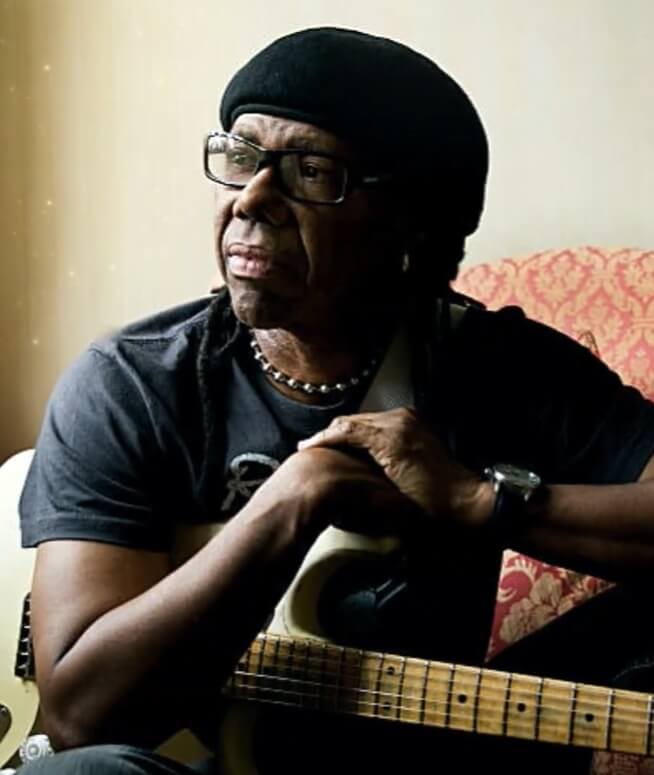
Nile Rodgers’ wealth is almost misleading. There are no continual stories about billion dollar mergers or ostentatious acquisitions unlike the way contemporary celebrity fortunes frequently do. However beneath decades of studio sessions and guitar riffs a silent cash engine has been running for years.
Around $200 million is the most frequently mentioned amount which seems both massive and yet inadequate. When you see grainy footage of Chic playing in the late 1970s or stand backstage at festivals it’s difficult to think that those tight funk rhythms would eventually translate into a financial legacy that rivals tech entrepreneurs. However music has a tendency to accumulate over time particularly when it remains a part of culture.
| Category | Details |
|---|---|
| Full Name | Nile Gregory Rodgers Jr. |
| Date of Birth | September 19, 1952 |
| Birthplace | New York City, USA |
| Profession | Musician, Producer, Songwriter |
| Famous For | Co-founder of Chic, global music producer |
| Estimated Net Worth | $200 Million |
| Major Works | “Le Freak”, “Good Times”, “Like a Virgin”, “Get Lucky” |
| Awards | 3 Grammy Awards, Rock & Roll Hall of Fame |
| Website | https://www.nilerodgers.com |
Rodgers’ early years don’t seem to be the start of a story of financial triumph. He learnt instruments nearly as a means of escape while growing up in New York City and navigating a turbulent home impacted by addiction. It’s possible that his restless and unsettled early years gave him a sense of creative urgency. He was already playing guitar in bands by the time he was in his midteens taking in sounds that would come to define a time period.
Chic was the game changer but even that success had an odd twist. Le Freak and Good Times two of the band’s classics did more than just fill dance floors; they set standards. If you listen attentively you can detect traces of their DNA in both contemporary pop and early hip hop songs. In particular Good Times appears to reappear every few years transformed sampled and presented to new audiences who might not even be aware of its original source.
The financial tale becomes intriguing at that point. In contrast to musicians who primarily rely on touring or one time album sales Rodgers’ repertoire functions more as a long term asset. Even decades after their release songs are still earning royalties. It seems as though his riches is constantly replenishing itself rather than merely growing.
Both monetarily and creatively things changed in the 1980s. As he entered the production industry Rodgers collaborated with musicians like David Bowie and Madonna to create records that would eventually come to define pop music. It was a strategic as well as an artistic achievement to produce Like a Virgin. It established him not only as a musician but also as someone who could influence entire careers and make money doing so.
When you watch interviews from that era you’ll note that Rodgers discusses success with a certain calmness. It is not romanticized by him. He has really been candid about his early financial frustrations such as not receiving payment right away following significant releases. The band members apparently received their first sizable salary of about $8 million but it arrived late and rapidly vanished into real estate. It’s difficult to ignore the fact that success in the music business doesn’t often translate into instant cash.
When Rodgers worked with Daft Punk on Get Lucky in 2013 he had already experienced multiple musical lifetimes. Nevertheless that track slick polished and distinctly his introduced him to a new generation. Millions were sold it won Grammys and perhaps most importantly it confirmed his continued importance. An artist sustaining that kind of influence over forty years is almost uncommon.
Then there is Hipgnosis Songs Fund an endeavor that seems more like a planned evolution than a side project. Rodgers’ co founding of a business that specializes in purchasing music collections indicates that he recognizes something that many musicians fail to recognize: songs are assets not merely works of art. The fund’s aggressive acquisitions spending billions on rights reflect a growing conviction that music especially well known hits behaves like a reliable investment.
However there are still some ambiguities. Due to private transactions shifting asset valuations and the erratic nature of royalties the precise composition of Rodgers’ net worth is still not entirely clear. Music collections appear to be gaining popularity among investors but it’s still uncertain if this approach will be profitable in the long run.
Resilience is a frequent theme in his narrative. It doesn’t appear that addiction unstable finances or changing musical tastes have permanently derailed him. If anything the interruptions seem to have improved his intuition encouraging him to reinvent himself at the appropriate times.
It’s difficult to ignore the impression that Nile Rodgers’ actual fortune is more than just money. It’s ingrained in the way his music keeps coming up on streaming services in samples and in live concerts with audiences of all ages. The money moves in a steady nearly silent manner.
And perhaps that’s the most telling information of all. In a field that is fixated on the next big thing Rodgers created something enduring. Even while his net worth is enormous it appears to be the result of something more profound a profession that never truly stabilized never really stopped moving and nevertheless continually coming up with new methods to make money.
i) https://www.celebritynetworth.com/richest-businessmen/producers/nile-rodgers-net-worth/
ii) https://www.therichest.com/celebnetworth/celeb/producer/nile-rodgers-net-worth/
iii) https://www.ladbible.com/entertainment/nile-rodgers-net-worth-20220527
iv) https://www.birminghammail.co.uk/news/showbiz-tv/nile-rodgers-live-how-rich-23349720