
The fragrance of a pub that still provides appropriate bar food is rather distinctive. Not the refined, zesty aroma of a contemporary cocktail bar, but that subtle blend of salted peanuts, malt vinegar, and fried batter that lingers in the air like a memory that never quite goes away. It’s difficult to ignore the fact that, like the treats themselves, this odor is fading.
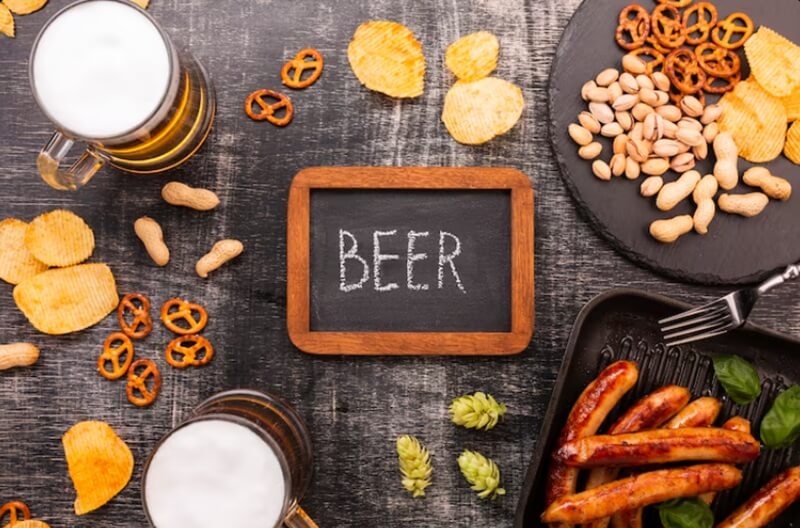
Bar snacks were never intended to be flashy for many years. They sat silently on counters or behind the bar bowls of peanuts that, if one is honest, occasionally provoked concerns about hygiene, jars of pickled eggs clouded with vinegar, and packages of crisps stacked like playing cards. However, they were effective. They kept people intoxicated. The pub’s rhythm came from them. There’s a feeling that something is changing right now.
| Category | Details |
|---|---|
| Topic | Traditional Bar Snacks in the UK |
| Cultural Origin | British Pub Tradition (19th Century onwards) |
| Popular Classics | Crisps, peanuts, pork scratchings, pickled eggs |
| Modern Alternatives | Olives, gourmet crisps, biltong, popcorn |
| Industry Insight | Snack sales still strong but shifting toward premium options |
| Economic Role | High-margin items supporting pub revenue |
| Reference | https://www.theguardian.com/food |
Nowadays, the menu at many pubs, particularly in places like Manchester or London, tells a different picture. Garlic marinated olives. Crisps prepared by hand with sea salt and rosemary. Even tiny platters that resemble restaurant appetizers like slow cooked meats, croquettes, and calamari. Although it doesn’t feel exactly the same, it is nevertheless referred to as bar food.
This shift appears to be partially motivated by expectations. Consumers become less inclined to accept a simple packet of ready salted food as they grow accustomed to dining in restaurants. Social media may have contributed to this; snacks are often photographed, shared, and evaluated in addition to being consumed. A perfectly runny yolk on a Scotch egg attracts attention more than a bag of peanuts.
The narrative is more complicated than just absence. Traditional snacks haven’t actually disappeared; they’ve simply been shifted into a more complex area. For example, crisps continue to dominate sales in many bars. Pork scratchings are still popular because they defy trends. That has a certain comforting quality. Almost rebellious.
Even yet, the changes are apparent in more subdued ways. There once was a Sheffield bar landlord who only carried regular crisps and nuts. Gourmet popcorn and jalapeño pretzel pieces are now found on the same shelf. Pubs seem to be attempting to strike a balance between two identities one based on tradition and the other pursuing novelty as this evolution takes place.
It is difficult to overlook the economics involved. Bar snacks have long been an effective business strategy. It’s inexpensive to make, simple to serve, and incredibly successful in promoting another round. However, high end snacks like charcuterie, spiced nuts, and artisan crisps have higher profit margins. As long as the product feels unique, customers appear to be willing to spend extra. With a slightly different approach, the goal is still to retain customers at the bar.
In the background of all of this is the issue of health. In an era of dietary consciousness, the old model salt heavy foods meant to induce thirst feels almost antiquated. Nuts, baked crisps, and even protein based snacks like biltong are becoming more popular. It’s unclear if this is a permanent change or just another stage.
The emotional reaction is more fascinating. A tone of skepticism is frequently present when discussing the disappearance of pub nibbles. It’s as though something subtly familiar has vanished without warning. These shifts may not be solely connected to food, as evidenced by the response to the decline of mixed grills, a different but related pub mainstay. They have to do with identity.
These snacks are associated with a memory. Splitting a packet of chips with friends at a somewhat sticky table while the salt sticks to your fingers. Or opening a bag of pork scratchings while acting indifferent to the repercussions. These moments seem insignificant, nearly unimportant. However, they’re not.
Pubs, however, have never been static spaces. They have always changed, sometimes gradually and sometimes quickly. A change occurred when crisps were introduced in the early 20th century. So was the introduction of sausage rolls, peanuts, and eventually heavier bar fare. In that way, the current situation is more of a continuance of change than a vanishing.
However, this moment feels different in some way. Maybe it’s the rate at which things are changing or the manner that tradition is being repackaged rather than just displaced. A Scotch egg is better now than it was twenty years ago, but it’s also more thoughtful. more carefully chosen.
So, are classic bar snacks going extinct? Most likely not However, they are changing sometimes unrecognizably. Somewhere, the peanuts are still there. The crackers are still there. However, they now coexist alongside a new type of offering that may represent a different kind of pub experience and a distinct set of tastes.
Depending on where you are, that could be a loss or just a step forward. When you observe someone order olives rather than scratching’s while sitting in a quiet corner of a pub, it’s difficult not to notice that something subtle has changed and that it might not change again.
i) https://www.dailymail.co.uk/news/article-9918869/Traditional-bar-snacks-way-pubgoers-turn-gourmet-flavoured-crisps-olives.html
ii) https://www.theguardian.com/food/2021/sep/30/plight-of-the-pickled-onion-how-pub-snacks-went-from-simple-nosh-to-properly-posh
iii) https://www.morningadvertiser.co.uk/Article/2020/07/16/How-have-pub-snacks-changed
iv) https://www.mirror.co.uk/lifestyle/food-drink/people-just-realising-popular-british-36173348