
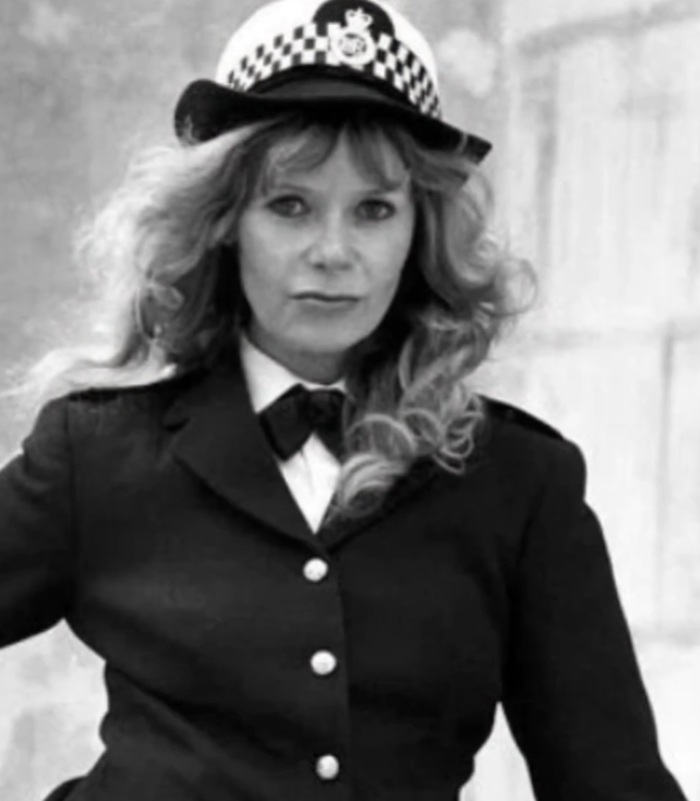
Mary Millington’s death is a perfect example of the neon lit, somewhat sleazy, tabloid hysterical British tragedy of the late 1970s. After ingesting a lethal combination of anafranil, paracetamol, and alcohol, she passed away on August 19, 1979, in a bedroom in Walton on the Hill, Surrey. Her age was thirty three. The following morning, her husband Robert discovered her. Four letters, written in her tiny, slanted hand, were scattered about her body, accusing the tax authorities, the police, and the type of institutional brutality that goes unnamed in coroner’s reports.
The official narrative on overdose suicide tells you very nothing. The intriguing aspect, which the inquest was unable to fully convey, is how a thirty three year old lady who had been the most photographed woman in British men’s magazines for five years found herself besieged in her own bedroom, believing that Holloway jail was waiting for her on Tuesday morning.
| Bio Data | Details |
|---|---|
| Full Name | Mary Ruth Maxted (née Quilter) |
| Stage Name | Mary Millington |
| Date of Birth | 30 November 1945 |
| Place of Birth | Kenton, Middlesex, England |
| Date of Death | 19 August 1979 |
| Age at Death | 33 |
| Place of Death | Walton-on-the-Hill, Surrey, England |
| Cause of Death | Suicide — overdose of Anafranil (tricyclic antidepressant), paracetamol, and alcohol (vodka) |
| Nationality | British |
| Spouse | Robert Maxted (m. 1964) |
| Occupation | Model, actress, call girl |
| Notable Films | Come Play with Me (1977), The Playbirds (1978), Queen of the Blues (1979) |
In November 1945, Mary Ruth Quilter was born in Kenton, Middlesex. She was raised without her father and endured bullying at school due to her illegitimacy, a little but severe humiliation in postwar suburban Britain that appears to have stuck with her forever. She spent more than ten years caring for her dying mother, and it was this role rather than ambition that led her to pursue glamor modeling in the late 1960s. At four feet eleven, she was just too short to pursue her dream of being a fashion model. The expenses were covered by the pornography. Her entry into the profession seems nearly ordinary not glamorous or rebellious, simply a daughter attempting to provide for her mother.
The years she spent with David Sullivan altered everything and most likely broke her. He rebranded her, placed her on the cover of *Whitehouse* and *Playbirds*, met her in February 1974, and cast her in *Come Play with Me* in 1977. Despite receiving negative reviews from critics and being financially unsuccessful, the movie played for more over 200 weeks at the Moulin Cinema in Soho a record that is still debatable. She opened stores, signed autographs, and raised funds for the People’s Dispensary for Sick Animals, making her a household figure by 1978. According to all accounts from persons who knew her, she was warm in a way that didn’t quite match her public character, liked dogs, and backed Fulham.
Then there was the unraveling. According to those closest to her, her mother never fully recovered from her cancer related death in May 1976. Sullivan and she broke up. She founded her own store in Tooting Mary Millington’s International Sex Centre in March 1978, and according to her repeated accounts, the Metropolitan Police started searching it often. Officers, she said, wanted money for protection. Whether it is entirely or partially accurate, the harassment was so severe that she began posting Scotland Yard officers’ home phone numbers in her publications, which is hardly the behavior of someone who believes they have nothing left to lose.
A cocaine addiction developed. A peculiar, depressing kleptomania also occurred; she had money and didn’t need to steal, yet she continued to be caught. In June 1979, an arrest was made. Then, on August 18, the day before she passed away, she was discovered stealing a jewelry from a Banstead jeweler. She was informed by the police that she would probably be transferred to Holloway. She was already unable to pay a £200,000 tax debt. After picking her up from the station, her spouse took her home.
The portion of the narrative that lingers is what transpired that evening. According to all reports, she made frantic phone calls, including to publicist John M. East, who allegedly informed her she was being paranoid and stopped the call. By that time, her spouse was sleeping in a different bedroom. Four notes were written by her. First, to Sullivan: * “I’ve been set up by the police once more.” I’m terrified of them. The idea of going to prison is unbearable to me. The Nazi tax man has also destroyed me.”* After being battered by the police, she told her attorney that the tax inspector was a “religious maniac.” She also requested Sullivan to continue advocating for the legalization of pornography.
Now that I’m reading those notes, it’s difficult to decide how much to take literally. The raids, the tax demands, and the fear were all true. There was also a cocaine addiction, a mental condition, and unresolved sadness that had persisted for three years. In actuality, she was likely running out of space and feeling the pressure of everything at once.
She was laid to rest in the same grave as her mother at St. Mary Magdalene Church in South Holmwood. Her married name, Maxted, rather than Millington, appears on the gravestone, which ultimately seems to be the most truthful aspect of the entire narrative. David Sullivan contributed to the development of Mary Millington. The deceased was Mary Maxted from Dorking.
The location of the former Moulin Cinema on Great Windmill Street currently has a blue plaque. Unaware, people pass by it. That seems appropriate for her half mythologized, half remembered self, with the real person someplace below, just waiting to be fully revealed.
i) https://www.marymillington.co.uk/
ii) https://bioinkling.com/mary-millington/
iii) https://timenote.info/en/Mary-Millington