
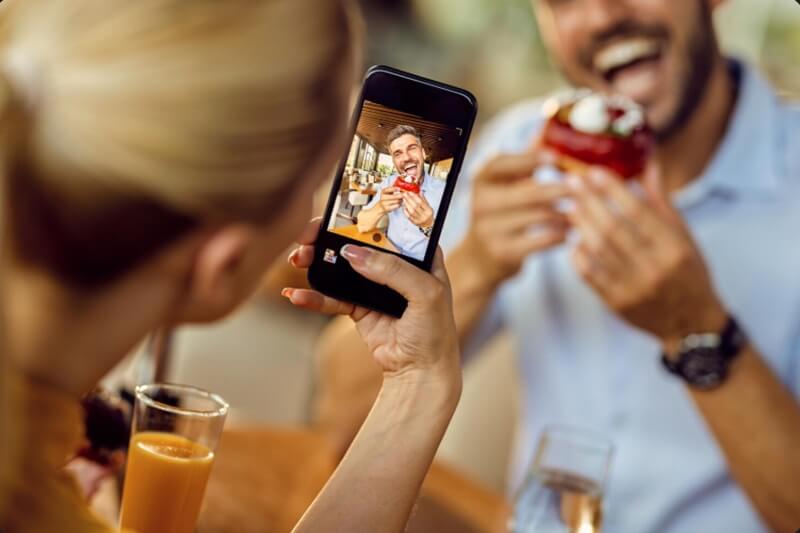
The bar has long been a social institution in Britain. Long before hashtags or viral videos, folks met beneath dim lighting and polished wood to tell stories over a pint. However, something strange has recently occurred in those same establishments. The glasses continue to clink and the talks continue, but a phone rings just before someone takes a drink of a neon colored cocktail or a mouthful of loaded chips. The event is recorded. uploading. Thousands of people sometimes watch.
It’s hard to avoid the feeling that what ends up on our tables is being subtly shaped by pub influencers, a rising group of social media personalities who review pubs, drinks, and pub food. A small group of people gathered over a platter of enormous nachos the kind piled high enough to crumble under their own weight outside a packed gastropub close to Shore ditch on a recent evening in East London. The stretch of cheese was captured on camera as it rose into the air. Another gave a TikTok audience a real time description of the flavor. This would have seemed strange ten years ago. It hardly gets noticed these days.
| Category | Details |
|---|---|
| Topic | Pub Influencers and Changing Food & Drink Culture |
| Industry | Hospitality, Social Media Marketing, Food & Beverage |
| Regulatory Context | UK HFSS (High Fat, Salt, Sugar) Advertising Restrictions |
| Enforcement Authority | Advertising Standards Authority (ASA) |
| Regulation Effective | January 5, 2026 |
| Platforms Involved | Instagram, TikTok, YouTube |
| Key Trend | Influencer-driven restaurant and pub discovery |
| Reference Source | https://www.asa.org.uk |
Pubs and restaurants have taken note. Nowadays, many create dishes with the camera in mind, using vibrant colors, eye catching toppings, and impressive presentation. Of course, taste is still important, but aesthetic appeal is now kind of an unofficial component. The shift isn’t hypothetical, according to statistics. Approximately 75% of diners have selected a restaurant based on something they saw on social media, according to research that is regularly quoted in the hospitality sector. When you stop to consider it, the figure is astounding. For many years, suggestions came from family, friends, or even a reliable critic. These days, a stranger on Instagram might instantly create a hunger.
Observing this develop over the past few years, it seems that food has gradually evolved into an element of identity and amusement. Ordering the correct dish something photogenic, something trending carries a certain social currency. Influencers are at the center of this change. Their suggestions feel more intimate than those of traditional advertising. They gripe about expensive cocktails, sit at the same tables, and drink the same craft brews. That’s the perception, at least. It generates a familiar, casual, and frequently compelling digital word of mouth.
Behavioral science research has long demonstrated that people mimic the behaviors of persons with whom they identify. Others tend to follow a group’s apparent preferences for particular foods or beverages. Social media magnifies this impact. A single video endorsing an enormous burger or hot margarita can influence thousands of people to make the same decision. The impact can be modest at times. A popular beverage makes an appearance in enough videos to start feeling commonplace. At times, the impact is instantaneous. When a tavern or cafe becomes popular, lines start to form down the street.
System and regulations are beginning to clash. Stricter advertising regulations targeting foods heavy in fat, salt, and sugar were implemented in the UK in early 2026. Influencer postings and other paid online advertisements for such products are prohibited under the regulations. Reducing exposure to harmful foods, especially for younger audiences, is the clear objective. The shift has caused uncertainty for influencers who made their living reviewing decadent pub meals. A sponsored film extolling a deep fried food platter can now fall into forbidden territory.
Sometimes in an inconvenient way, brands are changing. Campaigns are increasingly emphasizing environment, such as the history of the pub, the music, and the vibe of a busy Friday night, rather than showcasing particular menu items. Instead of promoting a product, it’s storytelling. A marketing manager in the hospitality industry recently defined the change as “selling the vibe, not the burger. It’s unknown if audiences react in the same manner.
This is another intriguing tension. Excess is often rewarded on social media: larger burgers, sweeter drinks, and more vibrant colors. Although they are becoming more and more popular, healthier solutions never have the same visual appeal. Simply put, gooey cheese oozing over fries goes through algorithms more enthusiastically than a platter of grilled vegetables.
Older generations may recall a time when heavy drinking was associated with being a student and smoking was popular in bars. These days, younger audiences tend to favor plant
based foods, low alcohol beers, and craft mocktails. Social impact can be reciprocal. It’s difficult not to question if pub influencers are genuinely influencing culture or just reflecting it when observing these changes from the sidelines.
The experience of eating and drinking out has undoubtedly been irreversibly changed by the digital lens. There are now two locations for a meal: the table in front of you and the internet audience. Additionally, the contemporary pub influencer has subtly emerged as one of the new tastemakers of British food culture in that second space the scrolling feeds, the fast replies, the viral films.